
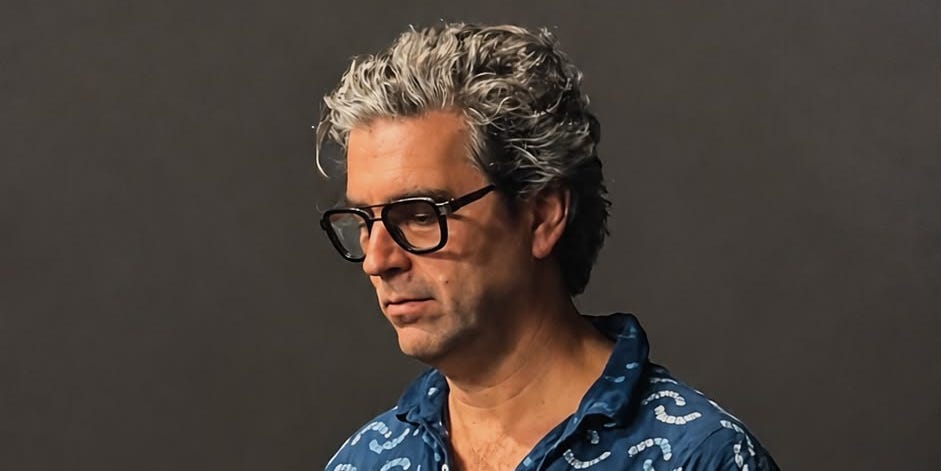
AI is helping this Hollywood veteran make videos that would never have existed before Ari Kuschnir Ari Kuschnir Ari Kuschnir spent more than two decades making videos for some of the world's biggest brands. Now he's doing something rather different: using AI to make hilarious videos mocking the tech industry's most powerful executives.His satirical creations, posted on YouTube and X, have gone viral, attracting millions of views. They feature AI-generated versions of tech leaders in bizarre situations, often presented as cheesy 1980s infomercials or retro crime dramas.The most remarkable thing about Kuschnir's videos is how little time and money they take to produce.A decade ago, creating something similar would have required a production team, several weeks of work, and a budget of about $200,000, he told me in a recent interview.Today, Kuschnir can make one all by himself in six to eight hours, with direct costs of roughly $1,000.That extraordinary difference illustrates something important about AI: it can strip away much of the process of a job, leaving people to focus on the core skills that make their work valuable.For Kuschnir, those skills are storytelling, humor, editing, and an instinct for what makes people laugh.Without AI, most of these videos would never get made. Kuschnir simply wouldn't have the time or money to produce them. Rather than AI slop, this has the potential to become a new form of creative expression online."Other dreams"Kuschnir, 46, comes from a more traditional filmmaking background than most internet video creators. Born in Colombia, he studied filmmaking before moving to New York in 2005 and building a successful commercial production company called m ss ng p eces (typos intentional). He spent years working with major brands and talented directors before selling the business in 2021.As the company grew, however, he found himself increasingly occupied with management rather than making things."It starts with your dream, and then it becomes this real big machine, and you're like, 'But I have all these other dreams,'" he said.Kuschnir's life also changed dramatically after the Palisades fire in Los Angeles. His house survived, but his daughter's school and much of their surrounding community were destroyed. He eventually sold the smoke-damaged property and moved his family to Ojai, California.Now he's rediscovering the creative freedom that originally drew him to filmmaking.AI has made that possible on an extraordinary scale.Previously, Kuschnir would have needed actors, cameras, sets, lighting crews, and extensive editing to realize his ideas.Today, he uses AI tools such as Seedance to help write scripts, generate images, and turn them into moving scenes. He still makes the key creative decisions, choosing what works, refining jokes, and assembling the final videos.In one recent project, he realized a scene needed changing. Rather than organizing an expensive reshoot, he used AI to create an entirely new section in about 40 minutes.His decades of experience are crucial to making this work."Editing is the superpower," he said.Not another AI remixKuschnir is particularly keen to distinguish his work from the flood of AI-generated videos recycling familiar TV shows.It's relatively easy, he explained, to take an existing scene from "The Office" or "Seinfeld," clone the characters' voices, and make them say something new."To me, that's a remix," he said. "I don't think what I'm doing is a remix."Instead, he's creating original characters, stories, and formats, including his recurring series "The Everything Computer," which satirizes the AI industry's ambitions.No AI slop hereHis work also challenges the assumption that AI-generated entertainment must be low-quality "slop."Kuschnir acknowledges that AI makes it easier than ever to produce terrible content. Indeed, he argues that the technology can make people worse at their craft if they rely on it too heavily.What matters is having something original to say. And AI allows him to create something entirely new, without asking anyone for permission or a production budget."We just got the keys to the imagination castle," he said.Sign up for the AI Insider newsletter here. Reach out to me via email at abarr@businessinsider.com Read next Business Insider tells the innovative stories you want to know Business Insider tells the innovative stories you want to know Business Insider tells the innovative stories you want to know Business Insider tells the innovative stories you want to know Alistair Barr is the driving force behind Business Insider's AI Insider franchise, including the AI Insider newsletter. Sign up here. Before that, he was Business Insider's Global Tech Editor and the Big Tech team leader at Bloomberg, following a reporting career at The Wall Street Journal, USA Today, Reuters, and MarketWatch. Alistair covers all things Big Tech, along with startups and venture capital. He writes analysis and columns about topics including AI, cloud computing, data centers, semiconductors, online search, e-commerce, EVs, robotics, and autonomous vehicles. Hollywood Social Media Twitter More Media AI Insider Artificial Intelligence Generative AI Creator economy
AI is helping this Hollywood veteran make videos that would never have existed before
Full Article
Original Source
Read the full article at Businessinsider →KhanList aggregates and links to publicly available news content. We do not host full articles from third-party sources. Always verify important information with original sources.