
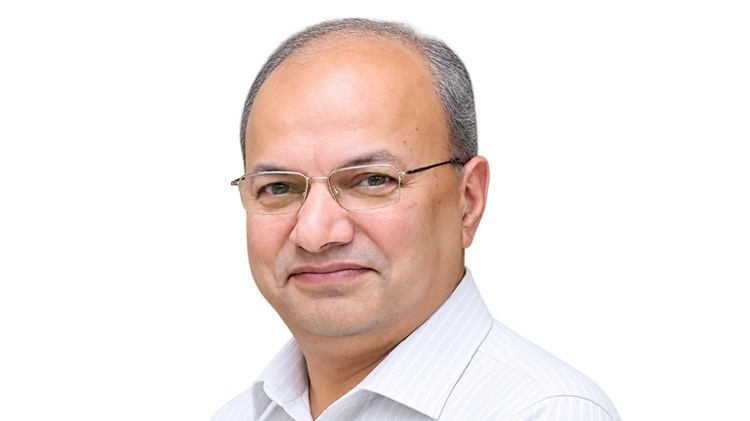
IIT Kanpur director Manindra Agarwal, in an exclusive interview with India Today Digital, outlined how AI is changing learning at IITs and how his interest in mathematics shaped his research path. He said institutions must move beyond assignments, use new AI tools and build stronger training in mathematics.(Image: Manindra Agarwal)India’s mathematical tradition has often moved ahead of its institutions. From Aryabhata and Brahmagupta to mathematicians like Srinivas Ramanujan and Harish Chandra, who shaped modern science, the country has mass-produced brainpower whose work altered how the world understood the concept of computation to mathematics. Manindra Agrawal, Director of IIT Kanpur, is part of that continuum.A Padma Shri awardee and Fellow of the Royal Society. Agrawal is known for his work in theoretical computer science, including the leading light AKS primality test, which provided a deterministic method for establishing whether a number is prime.Today, Agrawal’s work extends far beyond the orthodox confines of computer science. As AI1 reshapes the practice of mathematics, he is also examining what mathematical thinking means in an age of machines capable of reasoning, computation and, increasingly, generating proofs.The shift is already visible in the classroom. Agrawal argues that AI has diminished the value of conventional assignments as a measure of a student’s understanding. “The assignment era has gone,” he says, pointing to the limited meaning such exercises now carry when AI can complete them with ease.For Agrawal, the answer is not to resist the technology but to rethink how students are taught and assessed. He is advocating new approaches to education that place greater emphasis on problem-solving, originality and the skills students will need in a rapidly changing technological landscape. At IIT Kanpur, that inquiry is also taking an institutional form. The institute is building research around what Agrawal describes as a fusion of mathematics and biosciences—bringing mathematical methods into the study of living systems.In an interview with India Today, Agrawal discusses his journey, the changing place of mathematics in the age of AI and why he believes the meeting of mathematics and biology could define an important part of 21st-century science.Q1. You have spoken about your strong interest in mathematics. What was it about mathematics that attracted you, and how did that eventually shape your academic journey?I was always interested in mathematics. I really enjoyed doing mathematics, because in my mind, I like precise things that you could say that this is correct, and it's not that there is ambiguity. And mathematics was one domain where there is no ambiguity, something is either true or false. There's nothing in between.So that really appealed to me. I enjoyed doing math. When I came to computer science, I realised that there is a part of computer science called theoretical computer science, which is heavily connected with mathematics.So I started really enjoying that. I was not very, let's say, a big fan of programming, programming that is. So, by the third year, I had realised that I'm not going to build a career writing programme.So then the other option was to go to the mathematical side of computer science and do research, which is what I did.Q2. Several countries are now investing in institutions dedicated to mathematics. What kind of approach does India need to take to strengthen mathematics as a discipline?Yeah, so we need a strategy similar, that is we need to create institutions. Of course, there are already several. Lodha is one, but prior to that, there has been Tata Institute of Fundamental Research in Mumbai, ICTS in Bangalore, CMI in Chennai, Indian Institute of Mathematical Sciences also in Chennai.So, there have been several in ISI in Kolkata and elsewhere. So, there have been many institutions focusing on mathematics.One challenge that exists with both of these institutions is that there is very little training.So, they have researchers and a small PhD programme, that's it. So, the transfer of knowledge or the training of younger generation, it doesn't happen by these experts. They have very strong experts in different domains.So, that component has been missing. So, what we ideally need is our mathematics institutes with a significant training component. CMI is one institution that is doing it, and we do see results of that.The graduates of CMI today are doing very well. I'm not sure what Lodha Institute is planning to do, whether they will have a strong academic program. But that's what we need.And there, existing institutions like ISC, IITs can also step up. Each one of them have strong math departments. Each one of them have strong training programs.What is required is build strength in the new domains of mathematics. A lot of it has to do with AI.Q3. Artificial intelligence is now changing the way students learn and institutions teach. How do you see AI reshaping education at IITs?AI is impacting the education in multiple ways. First is that the learning by assignment is pretty much dead. There is almost no point in giving assignments to students, because most of them will use some AI model to solve it, and today AI models can do a great job.Therefore, so that's one impact. So, one has to find alternative ways of making students learn.The second is the availability of the AI tools.So, that's the positive side of these tools, that this availability of these very powerful tools makes it possible to create learning environments that were not existent earlier. For example, we can have, there is a lot of talk these days of AI tools solving big mathematics problems. We can have such tools.So, think of a budding mathematician, a young person who is interested in mathematics, learning there, and this person can start interacting with such a tool, and very quickly build up an understanding and knowledge about a specific domain through this interaction.And this is kind of, it becomes a unique personal interaction for one, unlike a teacher who is available only at certain periods of time and may not be available on one interaction. So, this opens up new avenues of learning for those interested.The third aspect is the design aspect of AI. For example, we can have the students build things much more quickly.Earlier, if a student was to, let's say, had to make some device, which we didn't call includes mechanical and electronics components, it would be a tremendously tedious task for the student.Even if you can design it, actually manufacturing it will be a nightmare. Now, if you can design it, manufacturing it is a lot easier. We have 3D printers, and we have AI tools which can take a design and translate it into a printing sequence, which a 3D printer can print and build it up.Similarly, electronic side, you can have an AI tool that can, once you have a design, it can lay out a circuit diagram to be printed on a PCB, and then one can give it for PCB printing.So, a lot of these things have become easier, faster because of the availability of AI. So, these are the multiple dimensions to which AI is impacting education, and we have already started seeing the glimpses of its effect, but over the next couple of years, we'll see a lot more.And all of the institutions need to adapt to this.Q4. With AI, new technologies and even areas such as medical sciences increasingly entering the academic conversation, how should institutions such as the IITs think about the future of education?AI is impacting the education in multiple ways. First is that the learning by assignment is pretty much dead. There is almost no point in giving assignments to students, because most of them will use some AI model to solve it, and today AI models can do a great job.Therefore, so that's one impact. So, one has to find alternative ways of making students learn.The second is the availability of the AI tools.So, that's the positive side of these tools, that this availability of these very powerful tools makes it possible to create learning environments that were not existent earlier.The third aspect is the design aspect of AI. For example, we can have students build things much more quickly.So, a lot of these things have become easier, faster because of the availability of AI. So, these are the multiple dimensions to which AI is impacting education, and we have already started seeing the glimpses of its effect, but over the next couple of years, we'll see a lot more.And all of the institutions need to adapt to this.- EndsPublished By: Rishab ChauhanPublished On: Aug 29, 2026 08:17 IST
AI is ending assignments at IITs: IIT Kanpur director on the future of education
Full Article
Original Source
Read the full article at Indiatoday →KhanList aggregates and links to publicly available news content. We do not host full articles from third-party sources. Always verify important information with original sources.