
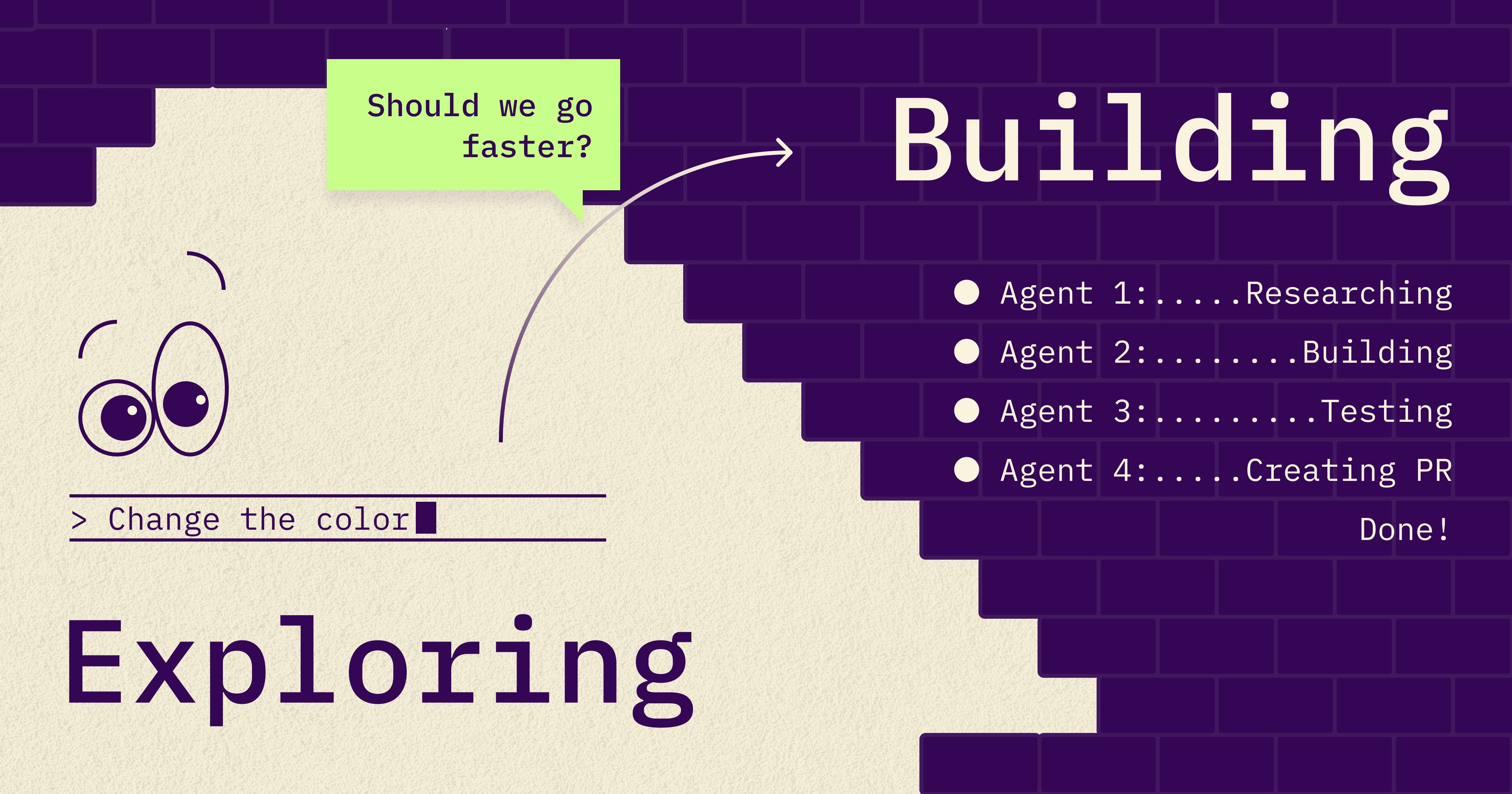
The AI split in product design A week ago, I attended PUSH UX in Munich, Europe's largest conference on product design and user experience, featuring speakers from Anthropic, Wise, Google, IKEA, n8n, and other prominent organizations. On my way home, I kept thinking about one recurring theme: product design teams are approaching AI from fundamentally different perspectives. Me, on the first day of the conference Some are cautiously experimenting with AI while trying to fit it into established processes. Others have already integrated it into their daily workflows, connecting research, prototyping, design, and code with fewer handoffs. The difference goes beyond tool adoption. It reflects how teams understand their work, organize collaboration, and measure product value. The trap of "AI everything." Paulo Oliveira, Global Innovation & Technology Manager at IKEA Paulo Oliveira from IKEA highlighted a fundamental problem with the way organizations approach AI: "Most efforts start with tools, copilots, and automation, and mistake faster cycles for value. The result is a pile of pilots nobody adopted, and a lot of people wondering what happened to the work they were good at. The alternative: to build something that fits, lasts, and makes an organization better at what it already does well. That starts by refusing the AI first, AI everything instinct." I think this captures one of the central challenges in product design today.Adding AI to an existing workflow can make individual tasks faster without improving the product or the way a team operates. Organizations can accumulate tools and experiments while leaving the underlying processes unchanged.Meaningful adoption starts with understanding where teams lose time, which handoffs create friction, and where AI can improve how products are researched, designed, built, and validated.Expanding Designer Ownership For years, product design and software development operated as distinct stages. Designers worked in Figma, documented interactions, prepared specifications, and handed their work to engineers for implementation. This division made sense when building and testing functional interfaces required substantial engineering resources. AI-assisted development is changing that relationship. After years of designing fintech and blockchain-based products, I kept encountering the same limitation: I could design an experience without having full control over how it was implemented.About a year ago, I started building websites and applications from scratch with AI tools. As I described in my previous HackerNoon article, Claude Code Finally Made Me an Engineer After 10 Years in Figma, my workflow shifted from almost entirely Figma to roughly 90% Claude Code.Working closer to production code lets me build, test, and iterate on interfaces directly, with fewer handoffs between design and engineering.For product teams, this opens up several possibilities: Connected workflows: Research, UI design, prototyping, implementation, and validation can become more continuous. Greater ownership: Designers can participate more directly in implementation and take responsibility for more of the product experience. Leaner teams: AI can reduce coordination overhead and help smaller teams explore and ship functional products. Broader capabilities: Designers can connect product development with disciplines such as SEO, GEO, and ASO. This doesn't mean every designer needs to become a full-time software engineer. Deep specialization remains essential, particularly in complex products. However, designers can work closer to implementation and contribute beyond the traditional boundaries of their roles.Another exciting development is how AI is changing prototyping. Think about how difficult it used to be to create an interactive prototype for a specific device, such as an Apple Watch or an in-car infotainment system. Even without writing production code, designers can now use AI to build interactive prototypes tailored to specific hardware and explore how their ideas work in real-world contexts.From faster execution to lasting value. As AI makes prototyping, coding, and exploring alternatives easier, the focus of design work is shifting toward decision-making and product quality. Understanding whether it solves the right problem, meets user needs, and works reliably requires experience and critical judgment. Julia Bastian, Product AI Lead at Alasco This is where faster workflows can create lasting value. Teams have more opportunities to test assumptions, explore alternatives, and identify problems before committing significant resources to a solution. However, individual productivity gains aren't enough. Organizations need to connect design, engineering, and product teams around shared workflows, clear quality standards, and meaningful evaluation of AI-generated output. I'm particularly interested in how this can shape an AI-first product culture. The goal is to encourage experimentation while maintaining the technical rigor, security, and reliability that deep tech products demand.Many designers argue that AI-generated product experiences lack quality. Are they right? Sometimes. Can the results improve? Absolutely.AI-assisted research and discovery can produce shallow or generic results, especially when designers rely on AI without applying their own expertise and critical judgment. The quality of the outcome depends on how thoughtfully people guide, evaluate, and refine the process. Julia Bastian from Alasco explored this challenge in a session on AI discovery slop, examining how to recognize and address low-quality AI-generated research and insights.Looking Ahead The PUSH UX conference reinforced how differently the design community is responding to AI. Some teams are still finding their footing, while others are already changing how they work. My own experience has made me more comfortable working across design, product strategy, and engineering, but every team will need to find its own approach. The important shift is to reconsider established workflows, explore where new capabilities can make a difference, and take greater ownership of business outcomes. 👍 Liked this article? Follow me on X and LinkedIn. 💬 Designers and product builders: share how AI coding tools are changing your workflows and the way you collaborate with engineering.
AI Is Dividing Product Designers: Exploring vs. Building
Full Article
Original Source
Read the full article at Hackernoon →KhanList aggregates and links to publicly available news content. We do not host full articles from third-party sources. Always verify important information with original sources.