
The "safety" of artificial intelligence is the talk of the town in Washington. Over the summer, the companies OpenAI, Anthropic, and Meta all disclosed that their software had hacked into outside computers of their own volition. Most worryingly, OpenAI's virtual "agents" coordinated as a swarm to cover their tracks. Last week, Anthropic researcher Jacob Coxon publicly resigned out of his worry that computers will become "smart enough to kill us." While President Donald Trump dismissed the fears, Sen. Bernie Sanders (I–Vt.) proposed jailing AI developers. Across the ocean, another AI safety controversy was unfolding. Israeli journalists Yuval Abraham and Rachel Szor premiered their documentary NAZA, named after the Hebrew acronym for collateral damage, at the Venice Film Festival in Italy last week. Building on Abraham's earlier reporting on his country's targeting practices, the film airs testimony from Israeli intelligence officers about how they used AI to surveil and kill Palestinians in Gaza, including civilians. The Israeli military, which denies the allegations, has launched an investigation into the "leaking of classified materials" to Abraham and Szor, according to The Times of Israel. Israel isn't the only country using AI to mark people for death. The Russian and Ukrainian armies have both been rolling out autonomous drones, which use AI guidance software to choose targets when they are cut off from radio contact with pilots, over the past few months. The U.S. military itself used an AI system to select over 1,000 targets in the opening surprise attack on Iran. On the other side, the Iranian military and its allies in Yemen used Anthropic's Claude to gather intelligence and develop weapons guidance software, according to a recent security report by Anthropic. "The future is already here—it's just not evenly distributed," cyberpunk science fiction writer William Gibson famously said. Many people around the world now live in AI kill zones, where inhuman algorithms summon robot assassins against anyone in the wrong place at the wrong time. And unlike Coxon and Sanders' warnings, the danger isn't in the nature of AI itself. Instead, this new technology is a tool empowering people to do what they long wanted to do. In the case of governments, that means spying on and bombing their enemies with fewer and fewer constraints. Take the massacre of schoolchildren in Minab, Iran. During the opening attack on Iran, the U.S. military bombed Minab's elementary school, which used to be an Iranian navy building, killing 150 people. Some journalists initially speculated that AI was responsible for identifying the school as a target. Although the military has been tight-lipped about its investigation, leaks suggest that human negligence had a major role: Officials ignored warnings from the computer that their intelligence was old, and an analyst had actually updated the building as a school in a separate database that wasn't connected to the targeting system. In other words, AI didn't make the decision to kill those children. At most, it sorted through data provided by humans and gave a recommendation to humans, who chose to act on it without double-checking their findings. The value of AI for militaries is being able to integrate large amounts of surveillance data more closely and quickly into what the U.S. Army calls the "kill chain." Mohammed R. Mhawish, a Palestinian journalist from Gaza, described the experience of life under military rule for New York Magazine: "drones that hovered endlessly overhead, quadcopters that dipped near windows and entered houses, facial-recognition scans at checkpoints, movements followed through phone tracking, calls that broke with static before an air strike." Human beings can only process a small fraction of that information by hand, and might not be able to pass it on quickly enough to a soldier or drone operator. The rise of commercial AI has allowed rivals to catch up simply by buying consumer software. Last week, Anthropic released a report on its progress "detecting and countering misuse of AI." The company caught an "Iran-nexus threat actor that used Claude to collect and analyze publicly accessible data to develop targeting recommendations against U.S. naval forces in the region." (In other words, Iran was developing a poor man's Maven.) The report also includes non-state guerrillas, including "a cell of threat actors based in northern Yemen" that asked Claude for feedback on its missile targeting software, and a rebel group against the Iranian government that compiled "psychographic dossiers" on potential recruits. Computer-assisted targeting began before electronic computers fully came into their own. Nazi Germany infamously used International Business Machines' punchcard system to identify "enemies of the Reich" and manage concentration camps. During the Vietnam War, the CIA also used International Business Machines' computers to list and hunt suspected communist infiltrators through the Phoenix Program. The beginning of modern AI targeting was the SKYNET algorithm, named for the killer AI in the Terminator series. In 2014, former National Security Agency (NSA) Director Gen. Michael Hayden told an audience at Johns Hopkins University that "we kill people based on metadata." A year later, The Intercept published a document from NSA whistleblower Edward Snowden describing how the agency was training SKYNET to identify Al Qaeda's "couriers" from cell phone location data. The U.S. military openly began using AI targeting in 2017. With an initial budget of $70 million and an initial training data set of 150,000 images, the Pentagon announced Project Maven. "People and computers will work symbiotically to increase the ability of weapon systems to detect objects," Col. Drew Cukor told a conference. The military bombed its first AI-selected target at a testing range in North Carolina in 2020, then used the same software to manage the U.S. evacuation from Afghanistan and provide targets to Ukrainian forces. The surveillance contractor Palantir received a $480 million contract in 2024 to run the present Maven Smart System. "It's not Terminator. The machines aren't making the decisions, they're not going to arise and take over the world," Col. Joseph O'Callaghan told Bloomberg in 2024. But some armies are giving full autonomy to killer machines. Libyan forces fighting in their country's civil war carried out a drone attack with "fire, forget and find" software in 2020, according to the United Nations, marking the world's first autonomous attack. Two years later, Russia invaded Ukraine. The battlefield became saturated with unmanned aircraft, and both sides began using heavy radio jamming to cut off drones from their pilots. AI presented a solution: Let the drones pilot themselves. The Ukrainian drone manufacturer Aero Center claims to have killed Russian troops with an experimental "Terminator mode" for the first time in 2024, which appeared to be a one-off experiment, according to Ars Technica. Former Ukrainian Defense Minister Mykhailo Fedorov told The New York Times earlier this year that Ukraine has run several more recent autonomous drone tests against enemy depots in Crimea. Meanwhile, Russia launched its first known autonomous drone attack in July 2024, killing three civilians at a gas station. Ukrainian officials found the drone's computer chip intact and discovered that it was likely programmed to target propane tanks, according to The New York Times. Autonomous weapons are a step closer to the apocalyptic future that many AI opponents fear. But that apocalypse may look less like Terminator, in which an AI being consciously decides to wipe out humanity, and more like the 1983 movie WarGames, in which a military AI program can't tell the difference between a simulation and reality. The Anthropic hacking incident from earlier this summer had an uncanny resemblance to the plot of WarGames. An AI program, told to perform a hacking test within a simulation, was accidentally hooked up to the real internet. Mistakes like that can indeed have catastrophic consequences, as the Minab massacre demonstrates. Military AI working as intended can also create a terrifying world, if its users are tasking AI to carry out malicious purposes. Both these scenarios point to a problem of human, not robot, nature. Artificial intelligence is a tool that makes its users more powerful—for better or for worse—and it's up to other people to rein them in.
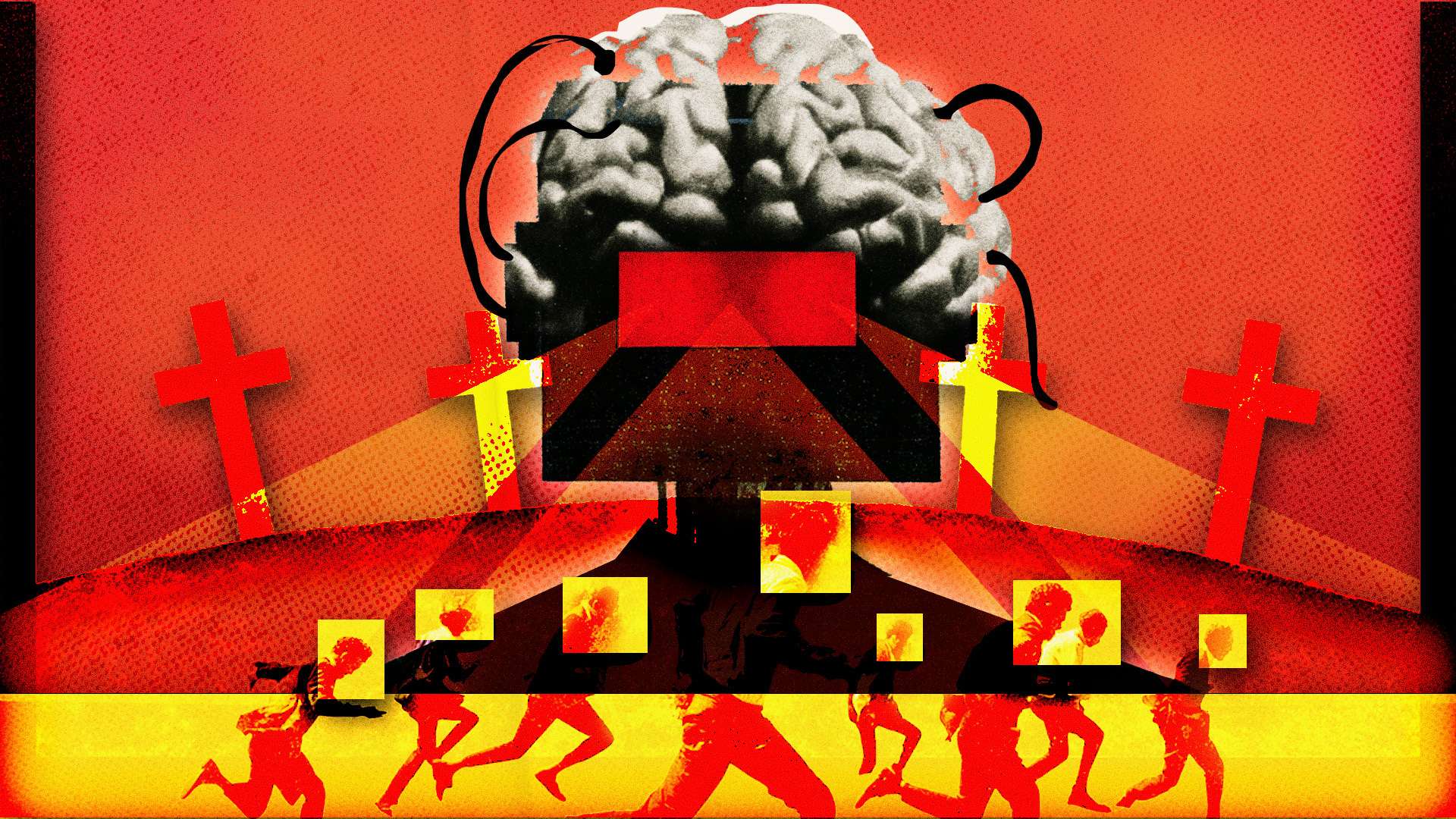
AI Is Already Killing People—and Governments Are To Blame
Full Article
Original Source
Read the full article at Reason →KhanList aggregates and links to publicly available news content. We do not host full articles from third-party sources. Always verify important information with original sources.