
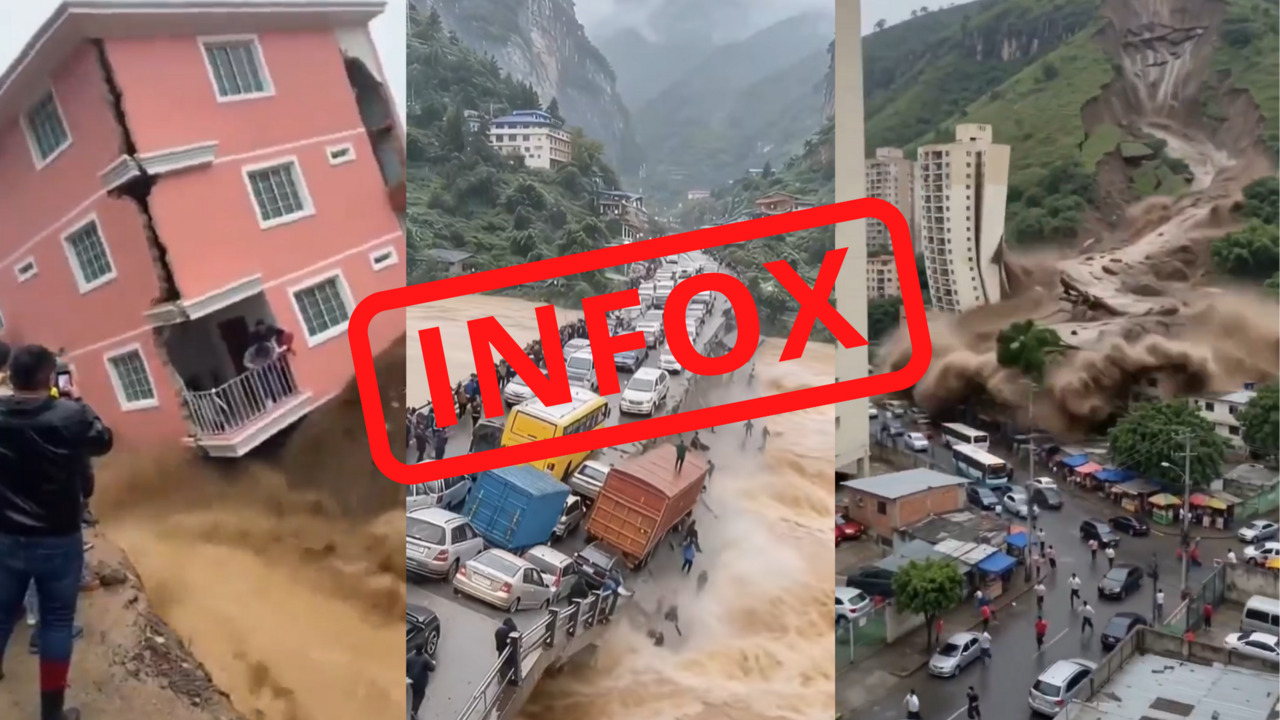
Artificial intelligence and the growing difficulty of telling real photographs from fake ones are at the heart of this year’s Visa pour l’Image photojournalism festival, which opens in the southwestern city of Perpignan on Saturday. Issued on: 29/08/2026 - 15:26 2 min Reading time Visa pour l’Image, now in its 38th year, says its mission is to show and document “the real world”. But that world is increasingly affected by artificial intelligence. For the first time, the festival is organising a “journalism convention” to “reflect on and defend the future of press photography” at a time when “generative artificial intelligence technologies are challenging the very notion of visual evidence”. Threat to trust A series of workshops will explore the changes and challenges AI is bringing to the industry, including the threat it poses to the way news photographs are made and shared and to the trust the public places in them. "2026 began with a fake image" writes festival director Jean-François Leroy in his editorial, referring to a photograph of former Venezuelan president Nicolás Maduro, apparently bloodied and handcuffed and surrounded by US soldiers. The image was picked up by established media organisations and experienced journalists and widely circulated on social media. Its circulation illustrates a wider problem – AI tools can now create images of events that never happened, while many people, particularly the young, rely on social media as their sole source of information. Yet Leroy does not see AI only as a threat. He describes the technology as “perhaps the greatest opportunity journalism has to save itself”, arguing that AI models need reliable, recent and verified information to work properly. That gives professional journalists and established news organisations an important role because they produce photographs under rules designed to ensure accuracy. The camera never lied... until AI told it to Conflict and change This year’s festival continues its traditional focus on major conflicts and crises, with the theme of “society in transition”. The 27 free exhibitions include work on Gaza, Syria, Sudan, Ukraine and Lebanon, as well as climate change, migration and the situation of Afghan women. Two exhibitions are devoted to Lebanon. Local photographer Mohammad Yassine captures the country’s most recent crisis since March, while photographs by Diego Ibarra Sanchez for The New York Times document the period from 2015 to 2026. Philémon Barbier, winner of the Perpignan-Rémi Ochlik Visa d’Or for his work, has an exhibition on Syria, while photojournalist Yoray Liberman documents Israel in his War Diary. Khames Alrefi has turned his lens on Gaza with an exhibition on the “first victims” – civilians – which received the International Committee of the Red Cross’s Humanitarian Visa d’Or award. ‘Smoking to survive’: How Sierra Leone’s youth got hooked on kush Forgotten conflicts Other exhibitions cover war zones making fewer headlines, including the Donbass, Cambodia and Sudan. French-Syrian photographer Abdulmonam Eassa, who documents Sudan, won this year’s World Press Photo in the Stories category. Danish photographer Mads Nissen explores “the geography of cocaine”, while Gaël Turine documents the ravages of the synthetic drug kush in Africa. The festival also showcases more intimate stories, including Jérome Gence’s Virtual Weddings in Japan and Jérémy Lempin’s long-term project on illiteracy. Laurent Ballesta, winner of the Ecologie 360 – Reporters d’Espoir prize for his exhibition Far from the Sky, traces 25 years of underwater expeditions. The festival is also marking 200 years since the invention of photography. ► Visa pour l'Image runs from 29 August to 13 September, 2026.
AI challenges trust in photography as Visa pour l’Image festival opens
Full Article
Original Source
Read the full article at Rfi →KhanList aggregates and links to publicly available news content. We do not host full articles from third-party sources. Always verify important information with original sources.