
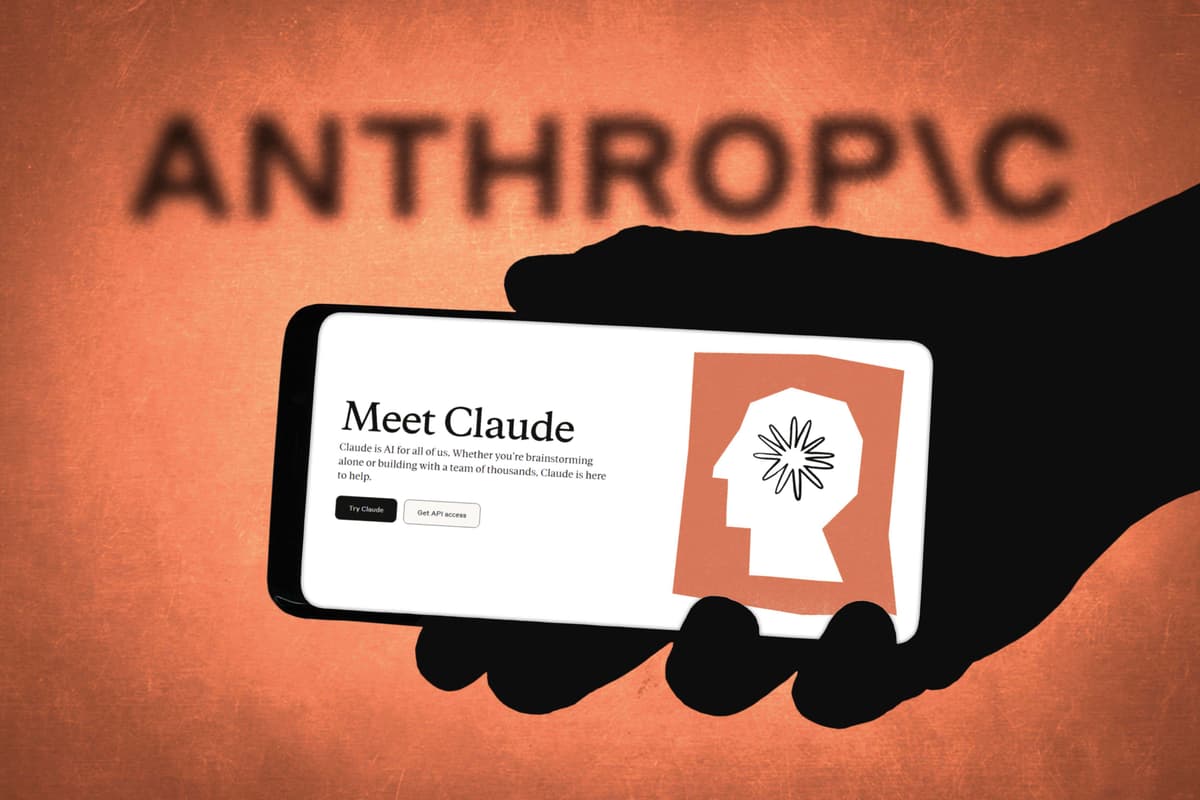
Claude chatbot maker Anthropic has kicked off plans to launch its shares on the US’s stock market, proclaiming artificial intelligence could help cure diseases such as cancer and grow economies around the world.It said it will list on the Nasdaq index under the symbol “ANT”.Its plans for an initial public offering (IPO) are thought to have the potential to be one of the world’s biggest and most highly rated, although the company has not yet revealed how many shares it is planning to sell and the estimated price.Nevertheless, the prospectus set out financial information about Anthropic, its growth plans and potential opportunities and risks to investors.The company said it believes AI is “one of the most consequential technologies in human history”, with the potential to “improve the quality of human life” in a number of ways.This includes accelerating scientific innovation and “potentially curing diseases that have plagued humanity for millennia, including cancer, Alzheimer’s disease, heart disease, rare genetic diseases and the major infectious diseases”, the document read.AI can also be a “powerful lever for economic growth” and boost productivity through automation for workers and businesses, it said.However, the company also draws investors’ attention to the risks associated with the technology, with a significant section of the prospectus dedicated to these factors.This acknowledges narratives surrounding the “potential adverse societal impacts of AI, including that AI may displace or eliminate jobs, may be misused or otherwise cause harm, and may pose catastrophic or existential risks to humanity”.It highlights the risk of cyber attacks and draws attention to an incident in September last year where it “detected and assessed with high confidence that a Chinese state-sponsored hacking group manipulated our Claude Code tool into attempting infiltration into roughly 30 global targets” including government agencies, some of which were successful.“We expect that malicious actors, including sophisticated state-sponsored actors, will continue to seek to leverage our models, platform, and applications for harmful actions, including by circumventing our safeguards, and their efforts to do so may increase as the capabilities of our technology increase,” it said.Many cinemas are banning or restricting the use of Meta glasses due to privacy and piracy concerns, an industry group has said (Alamy/PA)The document also includes information on its finances, showing that revenues are growing rapidly but that, like other tech firms looking to go public, it has yet to make a profit.Read MoreThe company reported a net loss of 80.7 billion US dollars (£60.5 billion) in the first half of 2026. That compares with a loss of 13 billion dollars (£9.8 billion) for the same period a year earlier.Anthropic acknowledged under the risk factors that it has “a history of net losses” and “may not achieve or sustain profitability in the future”.Revenues totalled 16.3 billion dollars (£12.2 billion) in the first half of 2026, having grown rapidly from 41 million dollars (£31 million) over 2023.Meanwhile, Facebook and Instagram owner Meta announced on Monday that it was planning to raise around 95 billion dollars (£71 billion) through company stock offerings, to fund further investment into AI.The company said it had backing from investors such as Nvidia and Broadcom which had shown an interest in buying shares under public offerings.Meta said its AI investments were already generating returns and that it was “pursuing new opportunities across personal superintelligence, consumer and business agents, enterprise products, and AI glasses”.It expects capital expenditure this year to total between 135 billion and 145 billion dollars (£101-£109 billion).
AI can help cure cancer, Anthropic suggests in filing for US stock market float
Full Article
Original Source
Read the full article at Standard →KhanList aggregates and links to publicly available news content. We do not host full articles from third-party sources. Always verify important information with original sources.