
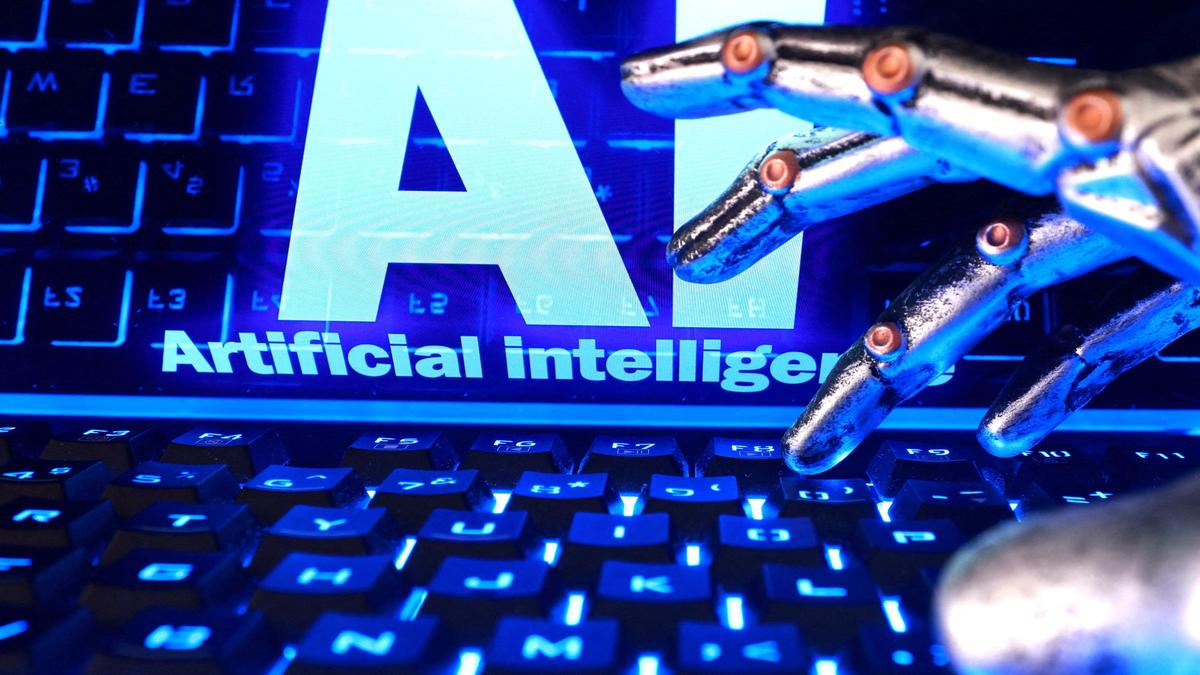
Whatever AI intelligence is, or may evolve to be, for now we only have the human to fear. File. | Photo Credit: Reuters Every day, artificial intelligence (AI) surmounts some feat that was once exclusively human. In its early days, ChatGPT’s ability to spit rhyme and spin stories resembled a parlour trick, reminiscent of an 18th-century craze called the Mechanical Turk. This was a chess-playing ‘automaton’; a life-size figure in turban, robes and moustache, seated behind a wooden cabinet with a chessboard on top. Its doors opened to reveal cogs and clockwork, after which the performance began, where the Turk took on and decimated human challengers. Charles Babbage, credited with conceiving the first mechanical computer, the Analytical Engine, lost three games in London in 1819. The Turk’s conceit was that cogs and wheels could synthesise an ‘intelligence’ that outdid humans, and spectators were convinced they were in the presence of a devilish, otherworldly “intelligence.”The secret survived 84 years until Edgar Allan Poe revealed what should have been obvious: a human chess master crouched inside in claustrophobic, candle-lit darkness, following the game by moving magnets beneath the board and working the Turk’s arm by levers. Published - November 16, 2026 01:07 am IST
AI and the consciousness illusion
Full Article
Original Source
Read the full article at Thehindu →KhanList aggregates and links to publicly available news content. We do not host full articles from third-party sources. Always verify important information with original sources.