
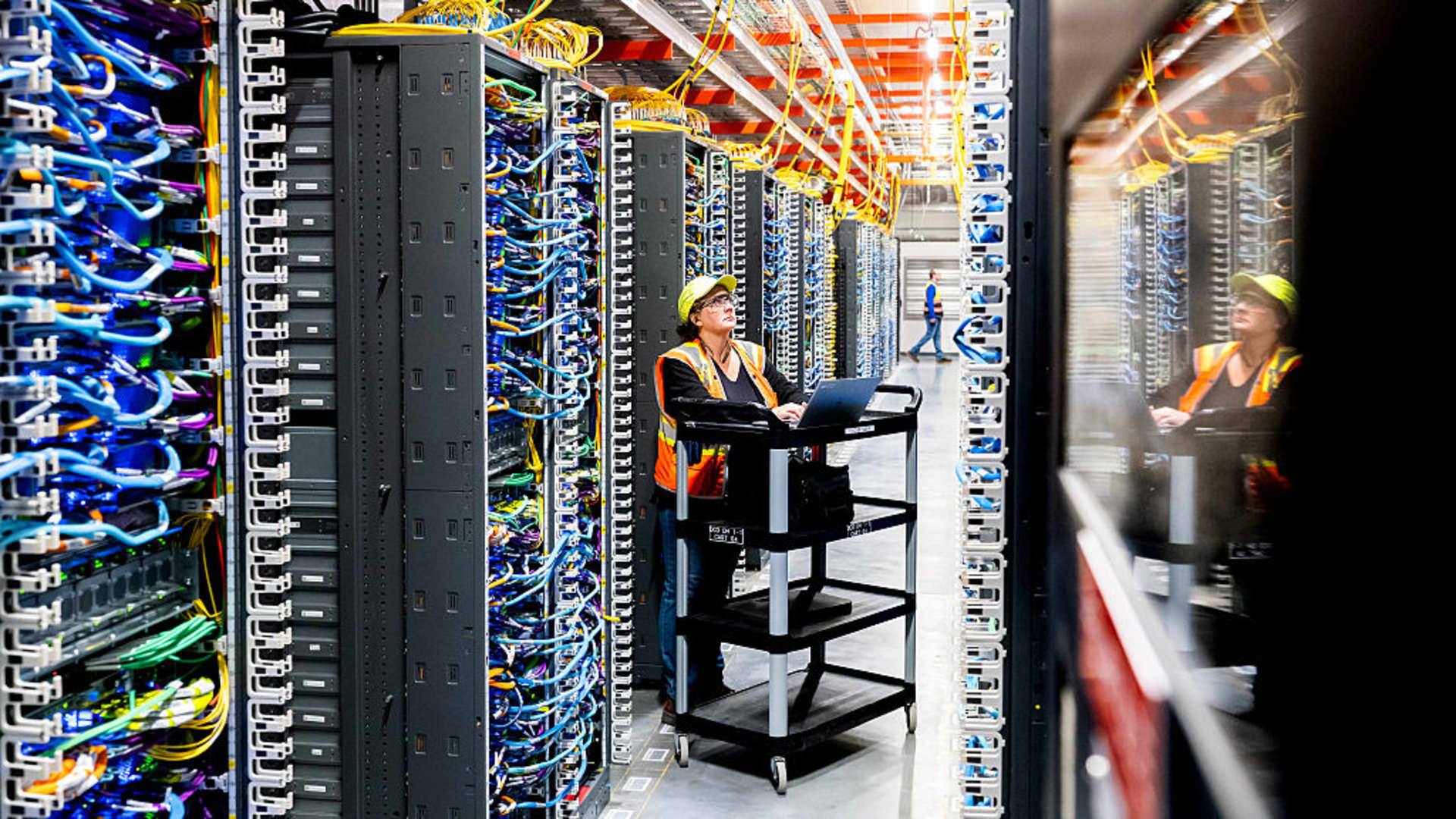
An Amazon Web Services AI data center in New Carlisle, Indiana, on Oct. 2, 2025.Noah Berger | Getty ImagesBusinesses across Asia-Pacific say their investments in artificial intelligence are paying off, with the technology helping boost productivity and revenue. But putting a number on those gains is proving far less straightforward.Some 58% of businesses using AI said their investments had already surpassed their initial costs, yet just 12% were very confident in their ability to accurately measure their return on investment, according to research conducted by Strand Partners for Amazon Web Services.APAC, to make it simpler, has all the ingredients to be in my view the core or the center of worldwide innovation.Jaime VallésVP, Amazon Web ServicesThe survey included 9,750 business leaders across 10 Asia-Pacific markets: Australia, Indonesia, Japan, Malaysia, New Zealand, the Philippines, Singapore, South Korea, Thailand and Vietnam.The biggest shift over the past year has been the growing number of companies moving AI projects into production, Jaime Vallés, AWS vice president for Asia Pacific, Japan and China, told CNBC in an exclusive interview."From year over year, probably the biggest difference is you're seeing a lot of ideas put into production," Vallés said.From pilots to resultsDespite the reported financial benefits, many businesses remain in the early stages of AI adoption.The survey found that 64% of businesses using AI across Asia-Pacific and Japan still rely on general-purpose AI tools or ready-made solutions for specific tasks, while only 19% of businesses have a formal and comprehensive AI strategy.Among those with such an AI strategy, 35% had reached the most advanced stage of adoption, compared with just 8% of businesses without one, according to the research.Technology alone is not enough to turn AI investments into meaningful business outcomes, Vallés said. He pointed to what he called the "four Rs of readiness": technological, cultural, skills and personal readiness."Where we see more meaningful impact is when you see the leadership using AI, building a culture of using AI and using AI to transform and not automate," Vallés said.Financial services is among the sectors seeing stronger AI adoption. Vallés pointed to Vietnam's Techcombank as an example, saying the bank is using AI to assess loan applications and expand access to credit for small businesses.The technology has helped the bank to analyze more data and approve some loan applications that might otherwise have been rejected, he said.Techcombank, one of Vietnam's largest commercial banks, serves more than 16.5 million retail and corporate customers. According to an AWS case study, its modernization of digital banking infrastructure using AWS improved application response times by up to 35% and cut the time needed to launch new product features by 30%.What's next for Asia?AI adoption continued to expand across Asia-Pacific, with all 10 markets surveyed recording increases from the previous year.Australia led the group with an adoption rate of 61%, followed by Singapore at 59% and South Korea at 58%.Still, businesses face significant obstacles to scaling AI investments. A shortage of AI and digital skills remains a key barrier, cited by 48% of respondents as an obstacle to adoption or expansion.Despite those challenges, Vallés expressed optimism about Asia-Pacific's role in AI innovation, pointing to the region's cultural diversity and range of perspectives."I am convinced that most of the innovation in the fullness of time will come from our region," he said.Vallés added that Asia-Pacific has the ingredients to become a global center for innovation, citing its diversity, talent, startup ecosystem and technology."APAC, to make it simpler, has all the ingredients to be in my view the core or the center of worldwide innovation," he said.
AI adoption grows in Asia, but measuring the gains remains tricky
Full Article
Original Source
Read the full article at Cnbc →KhanList aggregates and links to publicly available news content. We do not host full articles from third-party sources. Always verify important information with original sources.