
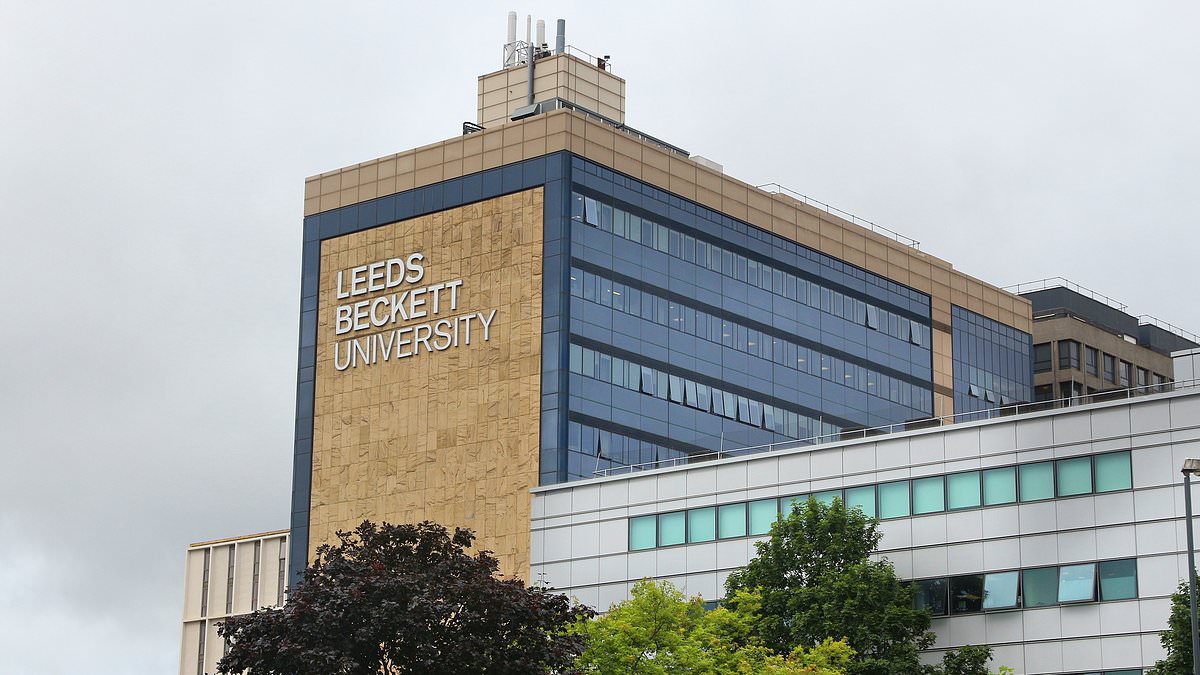
An agoraphobic university worker who had to be on campus just four days a year claimed she was discriminated against when her parking spot was taken away.Amanda Barrow claimed it was not 'unreasonable for her to have onsite parking for the odd event' when she was denied parking for the first time after losing her permit two years earlier.She admitted her permit had expired and she had never tried to renew it, but when the university suggested she get a blue badge she said she 'did not need it for anything else'.The university tried to make adjustments for her, including letting her book twice as far in advance as other staff members, but she claimed she had been discriminated against.She argued she needed the parking space because of her agoraphobia, which is an anxiety condition that causes people to be scared of leaving environments that they consider to be safe.But her claims were both dismissed and she was ordered to pay £20,000 in costs.Ms Barrow began working at Leeds Polytechnic – now Leeds Beckett University – in 1984 where she was employed as a learning technologist. The university employs over 2,500 people and has a parking policy specifically for disabled workers. Amanda Barrow accused Leeds Beckett University of disability discrimination after her parking spot was taken away following her move to working from homeThose with a valid blue badge can park for free.But those with an 'occupational health need' have to apply annually for a space which costs 1 per cent of the worker's annual salary.Since 2013, Ms Barrow 'worked mostly from home', and would have a call with occupational health annually to check if she still needed the parking space.However after the Covid pandemic in 2020, people with her job role were expected to attend campus just four or five times a year.In March 2020, Ms Barrow's 'last annual on-campus parking permit expired', and she never applied to renew it, according to a tribunal judgment.Because she did not have a blue badge, she would be unable to park in the disabled bays.It was not until over three years later in 2023 that she next requested a parking space, which she did with a week's notice in line with an ad hoc arrangement to secure staff parking.That request was granted – but a year later she was required to attend a seminar at the university, which she was 'looking forward to'.This time her parking request was denied due to the car park already being fully booked.Ms Barrow replied saying it was for her disability and a parking space was arranged for her on a one-time basis.Even after being granted the space, Ms Barrow continued to complain, writing: 'When I worked onsite, I had a permanent parking place organised by OH [occupational health] for 36 years without a break.'Now I work at home I need a parking space occasionally. However, you have made it clear in your email that this is not to be the case.'It is of some concern to me that people without disability have priority over those that do.'I don't need a blue badge for anything else and as I said, I have had onsite parking for 36 years without a break until Covid.'I'm sorry but I don't think it's unreasonable for me to have onsite parking for the odd event, when I used to take up a place full time.'A manager promised to look into her situation and in the meantime assured her she could book parking two weeks in advance – a week more than most people – so she should always be able to get parking.However this was not good enough for Ms Barrow, who went on sick leave in May 2024 and then quit her job.She later took the university to an employment tribunal in Sheffield alleging indirect disability discrimination and failure to make reasonable adjustments.But Employment Judge Andrew James dismissed the claims.He concluded: 'The ad hoc arrangements had worked for [Ms Barrow] and the University until April 22 2024.'[Ms Barrow] retained the option of applying for an annual pass; she was reminded of that in April 2023. She declined to make an application. Had she done so, the matters which gave rise to these allegations may well never have arisen.'Requiring claimants with disability issues to make an annual application was a reasonable requirement, given the demand for car parking spaces.'After March 2020, [Ms Barrow] chose to rely on ad hoc parking arrangements, in relation to which no problems were experienced until one occasion in April 2024.'[Ms Barrow] was able to apply for an annual pass as an alternative, something which she was reminded about in April 2023, but chose not to do so, presumably because the ad hoc arrangements were working perfectly fine for her.'Allowing [Ms Barrow] to apply two weeks in advance meant it was even more likely that in future, the ad hoc arrangements would continue to be sufficient.'
Agoraphobic university worker claims discrimination after campus parking spot taken away - because she only used it four days a year
Full Article
Original Source
Read the full article at Dailymail →KhanList aggregates and links to publicly available news content. We do not host full articles from third-party sources. Always verify important information with original sources.