
Four years after pushing through a sweeping change in military recruitment, the government has significantly reworked the Agnipath scheme, opening the door to regular service for all Agniveers willing to continue in the armed forces and meeting the prescribed selection criteria. Military veterans have welcomed the move, which some see as a "rollback" of the recruitment scheme after the military's assessment.The decision on the Agnipath scheme marks a substantial departure from the original framework, under which only 25% of recruits were eligible for permanent absorption after completing four years of service. The remaining 75% were to leave the forces with a one-time financial package and assistance in finding employment outside the military.Under the revised arrangement, this second category will now be offered an additional two-year engagement. At the end of the extended tenure, they will also be considered for enrolment as regular soldiers, subject to their willingness and the armed forces' objective selection criteria.Chief of Defence Staff (CDS) General N S Raja Subramani said the decision followed a continuous assessment of Agniveers and their performance over the past four years. In effect, a provision that had made the exit of three out of every four Agniveers a defining feature of the scheme has now been substantially altered. The change comes after years of objections from military veterans, defence experts and aspiring recruits, who questioned the implications of short-term contractual recruitment for both the soldiers and the armed forces.The government has maintained that the Agnipath scheme itself will continue. The initial four-year engagement and the first stage of selection for retaining 25% of Agniveers remain in place. The latest decision, however, gives those who do not make it through that first selection an additional opportunity to serve and qualify for regular enrolment. The selection process at the end of the extended period will take into account factors such as adaptability, discipline and the absence of vigilance cases, among other service-specific requirements.A COURSE CORRECTION AFTER SUSTAINED CRITICISM OF AGNIPATH SCHEMEThe change addresses one of the most persistent objections raised against Agnipath since its introduction in June 2022 — the prospect of trained young soldiers being released into civilian life after just four years, at an age when they would otherwise be building a long-term military career.Major General Yash Mor (Retd), among the most vocal critics of the scheme, welcomed the latest decision but described it as a "rollback".In a video message following the announcement, Major General Mor (Retd) said he had spent four years highlighting the scheme's shortcomings. He argued that the existing recruitment system had been functioning well and did not require such a fundamental alteration."Now, this is a major rollback of the scheme," he said in a video posted on X.Mor also drew a parallel with the repeal of the three farm laws, saying, "The government had effectively had to reverse a major policy decision." He questioned why young aspirants had been put through such uncertainty in the first place.In 2024, Mor had flagged the sharp reduction in annual Army recruitment, arguing that the numbers being inducted across all three services were substantially lower than the Army's earlier annual intake alone.Before Agnipath, he had pointed out, the Army recruited approximately 60,000-65,000 soldiers every year. The combined annual intake for the Army, Navy and Air Force under the new system was around 46,000. He argued that the scheme should first have been tested on a smaller scale, with regular recruitment continuing alongside it.Mor had also questioned whether six months of training was sufficient, given that it could take eight to nine years for a soldier to acquire the experience required to lead small teams, including tank and artillery gun crews.He had raised concerns about the implications of moving away from traditional military recruiting regions such as Rajasthan, Uttarakhand, Haryana and Maharashtra. More importantly, he warned that soldiers serving on four-year "contracts" could remain preoccupied with their future employment prospects, potentially affecting their commitment and unit cohesion.These concerns were not confined to just one General-rank officer. Many Generals (Retd), and senior rank officers, have been vocal about the Agnipath Scheme.In 2022, Lieutenant General Vinod Bhatia (Retd), former Director General of Military Operations (DGMO), had questioned the absence of a pilot project before such a significant change was introduced."There has been no pilot project, on-ground implementation and analysis of such a serious and significant change," he had said, describing the scheme as a potential "death knell" for the armed forces. He had also warned that releasing a large number of young recruits every year after a short stint could create a pool of semi-trained and disillusioned former soldiers.Lieutenant General H S Panag (Retd), former General Officer Commanding-in-Chief of the Northern and Central Commands, had questioned the design of the Agnipath scheme when it was introduced in 2022. While acknowledging that short-term military engagement could help manage manpower and pension expenditure, he argued that the scheme in its original form was neither sufficiently attractive nor adequately protective of recruits' career prospects.The objections of some of the veterans centred on a common concern — the armed forces require more than physically fit recruits. Experience, specialised training, familiarity with equipment and the ability to function cohesively within a unit take years to develop.Lieutenant Colonel N Thiagarajan (Retd), who served in the Indian Army for 28 years, including as a Recruitment Selection Officer and Training Officer in an Army Training Regiment, said the latest changes still do not address the fundamental flaws in the Agnipath Scheme. Having personally selected and trained thousands of soldiers, he said, "...The earlier recruitment system was time-tested, professionally structured and well-designed to ensure operational effectiveness, preserve regimental ethos and provide career progression for our Jawans."WHAT THE GOVERNMENT IS ACKNOWLEDGING ABOUT AGNIVEERSThe latest decision comes as the first batches of Agniveers approach the end of their four-year engagement. The first batch from the Navy is due to complete its tenure this month, followed by the Army and Air Force batches towards the end of next month.More than three lakh Agniveers are currently undergoing training at different stages across the three services, including approximately 2.8 lakh in the Army. The decision will therefore have implications for a substantial pool of recruits who entered the forces under the original arrangement.CDS General Subramani said the services had conducted regular assessments and maintained a centralised database to track the performance of Agniveers across the three forces. Their performance was reviewed annually, he said."Our objective assessment of the scheme, taking into account organisational efficiency and operational requirements, has highlighted the outstanding performance of Agniveers in physical fitness, motivation, morale and technological proficiency," he said."In four years, we assessed them and received very positive feedback about their performance," said Subramani.The government has maintained that the revised arrangement is intended to improve operational efficiency, meet organisational requirements and address the aspirations of Agniveers. Defence Minister Rajnath Singh described the additional engagement as a "Second Tour of Duty", thanking Prime Minister Narendra Modi for approving the change.The government has also argued that the revised structure will preserve competition among recruits, with Agniveers striving to qualify for regular service through successive assessments.The original scheme was built around a four-year engagement for all, with permanent absorption restricted to a quarter of the intake. The revised framework gives the entire intake a potential route to a longer military career, while extending the service period for those who would otherwise have been discharged.Agnipath, as the government insists, is "not being discontinued". But four years after its introduction, one of its most defining provisions has undergone a fundamental change, paving the way for permanent absorption.- Ends
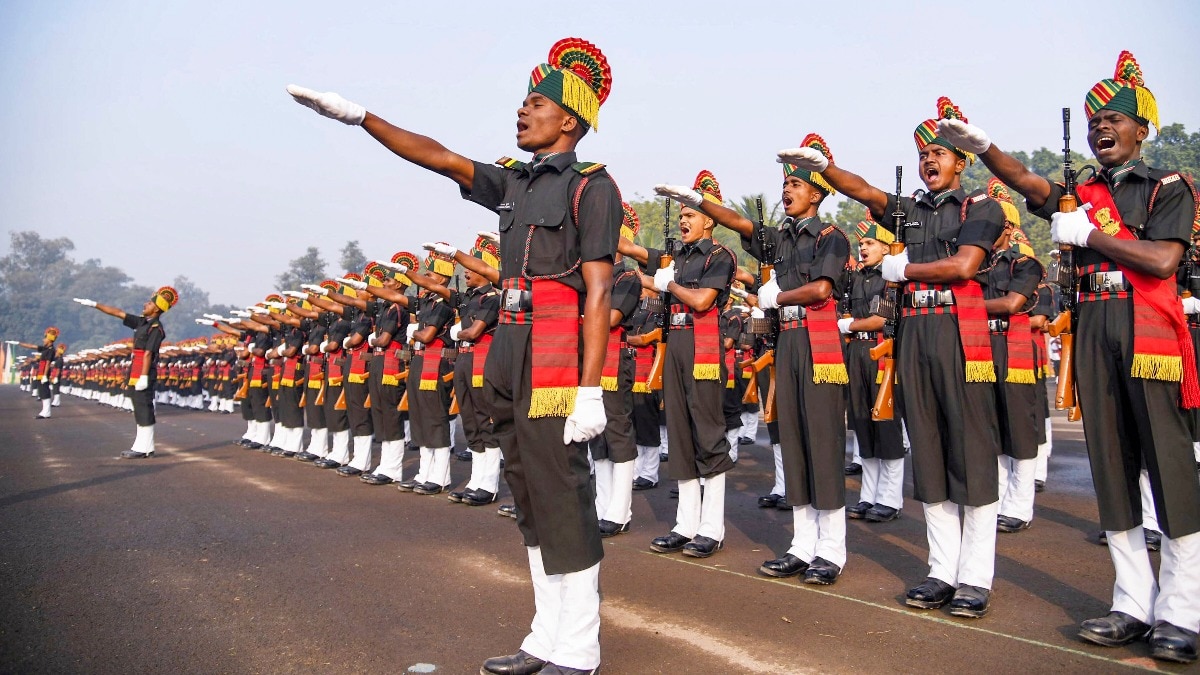
Agnipath gets a course correction, veterans welcome permanent pathway for soldiers
Full Article
Original Source
Read the full article at Indiatoday →KhanList aggregates and links to publicly available news content. We do not host full articles from third-party sources. Always verify important information with original sources.