
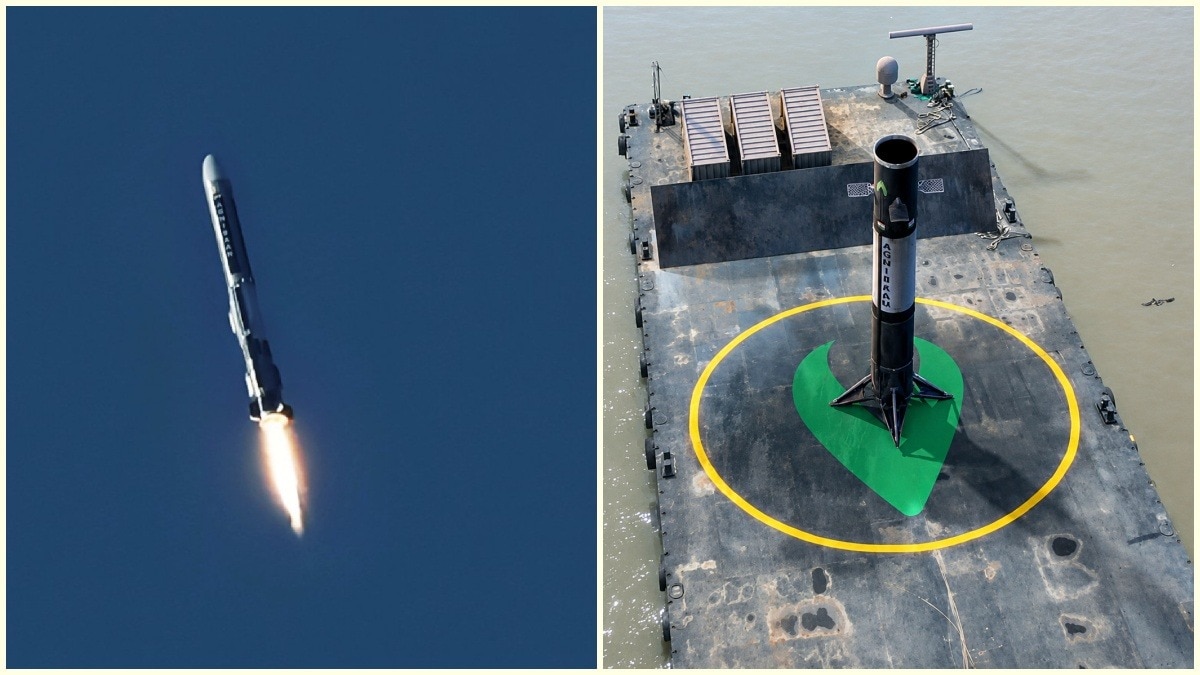
Agnikul Cosmos has opened two new assembly and testing facilities in Chennai for reusable launch systems. The expansion adds in-house stage testing, recovery assessment and pressure-vessel manufacturing as it prepares for Mission-02.Mission-02 would place Agnikul among a select group of companies worldwide attempting reusable orbital rocket technology. (Photo: Agnikul)Indian space startup Agnikul Cosmos has inaugurated two new assembly and testing facilities in Chennai, strengthening its ambitions to develop a reusable launch vehicle capable of flying, recovering and flying again.The company unveiled the Stage Testing & Inspection Facility (STIF) and the Pressurant Tank Realisation, Over-wrapping and Outfitting Facility (PROOF) at its Assembly & Testing Facility.The facilities were inaugurated in the presence of Group Captain Shubhanshu Shukla, one of India's Gaganyaan astronaut-designates.The new infrastructure could place Agnikul among a small group of companies globally working towards full-stack reusable launch capabilities. The startup said it is also the only Indian private space company with infrastructure to inspect and requalify rocket stages after flight. Agnikul hopes to reduce its dependence on external suppliers while gaining greater control over quality and production timelines. (Photo: Agnikul) At the heart of the expansion is STIF, a facility designed and fabricated entirely in-house to test reusable rocket stages under conditions similar to those experienced during an actual mission.The facility can conduct full-stage tests with propulsion and avionics integrated, including clusters of Agnikul's patented single-piece, semi-cryogenic, electric pump-fed and 3D-printed rocket engines. STIF supports thrust levels ranging from 1 kN to 200 kN, liquid oxygen sub-cooling down to 73 Kelvin and full-duration engine burns lasting up to 150 seconds.More importantly, it will allow engineers to inspect and requalify rocket stages recovered after flight. The capability is critical for Agnikul's plans to establish a cycle of building, testing, flying, recovering, inspecting and preparing a rocket stage for another mission.The second facility, PROOF, brings the manufacturing of high-pressure composite overwrapped pressure vessels in-house. It can produce more than 10 vessels every month, including vessels with capacities of up to 3,500 litres and pressures of up to 350 bar.By manufacturing these critical components internally, Agnikul hopes to reduce its dependence on external suppliers while gaining greater control over quality and production timelines."India's space programme is entering an exciting phase, with capabilities being built across the country that will enable increasingly ambitious missions," Gp Capt Shubhanshu Shukla said, adding that advanced manufacturing and testing capabilities would help build a deeper and more self-reliant space ecosystem.Srinath Ravichandran, Co-founder and CEO of Agnikul Cosmos, said reusable launch systems require capabilities that go beyond a single flight.Agnikul's Mission-01, launched on May 30, 2024, demonstrated a controlled ascent using the company's single-piece 3D-printed engine and in-house autopilot architecture.With STIF and PROOF, the Chennai-based startup is now expanding its in-house capabilities from engines and vehicle systems to stage-level testing, recovery assessment and critical component manufacturing as it prepares for Mission-02.- EndsPublished By: Sibu Kumar TripathiPublished On: Sep 8, 2026 10:42 IST
Agnikul inaugurates assembly & testing facilities to build reusable rockets
Full Article
Original Source
Read the full article at Indiatoday →KhanList aggregates and links to publicly available news content. We do not host full articles from third-party sources. Always verify important information with original sources.