
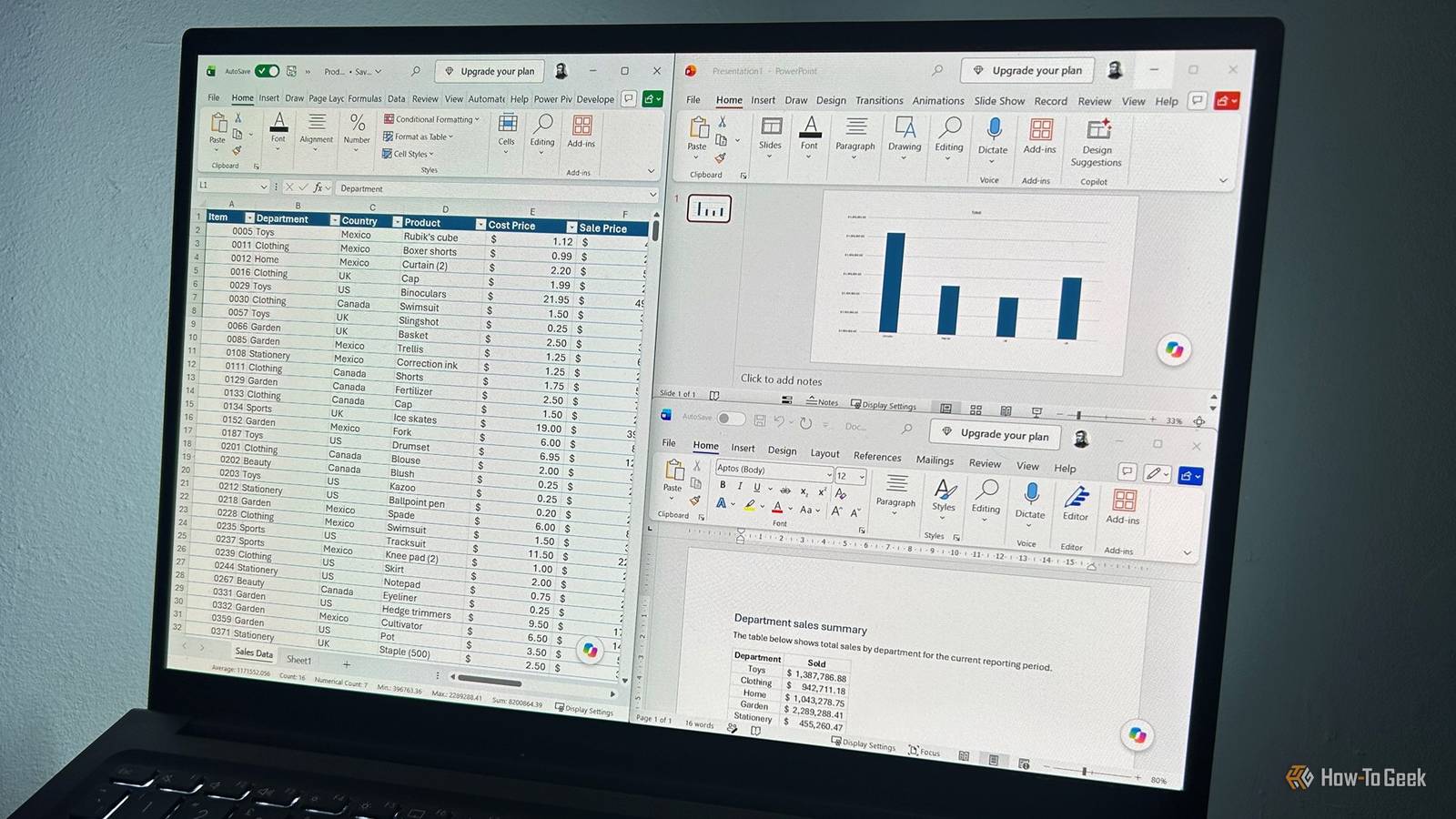
Published Oct 10, 2026, 7:00 AM EDT Tony Phillips is an experienced Microsoft Office user with a dual-honors degree in Linguistics and Hispanic Studies. Prior to starting with How-to Geek in January 2024, he worked as a document producer, data manager, and content creator for over ten years, and loves making spreadsheets and documents in his spare time. Tony is also an academic proofreader, experienced in reading, editing, and formatting over 3 million words of personal statements, resumes, reference letters, research proposals, and dissertations. Before joining How-To Geek, Tony formatted and wrote documents for legal firms, including contracts, Wills, and Powers of Attorney. Tony is obsessed with Microsoft Office! He will find any reason to create a spreadsheet, exploring ways to add complex formulas and discover new ways to make data tick. He also takes pride in producing Word documents that look the part. He has worked as a data manager in a secondary school in the UK and has years of experience in the classroom with Microsoft PowerPoint. He loves to encounter problems in Microsoft Office and use his expertise and legal-level training to find solutions. Outside of the Microsoft world, Tony is a keen dog owner and lover, football fan, astrophotographer, gardener, and golfer. One of the best things about Microsoft 365 is how its apps can work together. Loop can talk to Teams, Lists can talk to Power Automate, and Word can talk to Outlook. But when I thought about the cross-app connections I use most—and the ones that save me the most time—I noticed something: they all involve Excel. The integrations below all work with my Microsoft 365 Personal subscription. That means I'm using the suite's desktop apps (where appropriate) and leaving out features and apps that typically require a Business or Education subscription. Excel and PowerPoint Charts that keep themselves updated Pretty much every presentation has a chart, and Excel is a great place to build them. Yes, you can create charts in PowerPoint, but I find it's much quicker in Excel, especially when the numbers are likely to change. For a long time, I created a chart in Excel and pasted it into PowerPoint. But then the numbers would change, and I'd have to go back to Excel, find the chart, copy it again, and replace the old version in PowerPoint. It worked, but it was painfully repetitive. Now, when I know the data is likely to change, I use Paste Link instead. That way, I still use Excel to work with the numbers, while PowerPoint keeps a link to the chart. When I reopen the presentation, PowerPoint can retrieve the latest information from Excel, so I don't have to rebuild the chart from scratch or paste it again. Excel and Forms Let everyone else enter the data I use Microsoft Forms when I need other people to give me information, because the alternative is usually me collecting their answers and then typing them into Excel myself. Some other form-building apps like Jotform and Cognito can send new submissions into Excel, but you often have to set up that connection yourself. With Microsoft Forms and Excel for the web, the connection is already there. When I open a form's responses in Excel, Microsoft creates a workbook that stays connected to the form. New responses appear as new rows as people submit them, so I don't have to copy and paste anything or reformat somebody else's answers. The people filling out the form are also entering their own information, which cuts out the typos and transcription mistakes I'd risk making myself. The important bit is that the live connection is to Excel for the web. If I download the workbook and open the copy in desktop Excel, I've got a static version of the responses rather than the live response workbook. That's fine once I've finished collecting responses, though, because I can then work with the finished data in desktop Excel. Excel and Outlook Make Excel write the emails Emails I send in Outlook often include data already stored in an Excel sheet, so why type it all out again when I can get Excel to prepare the email for me? I use a HYPERLINK formula with a mailto: link to turn information from an Excel table into a ready-to-send Outlook message. The formula can pull in the person's name, email address, item, amount, status, and anything else I need from that row. It can even change the subject or message depending on what's in the data. I don't have to start each email from scratch: I click Create Email, and Outlook (my default email app) opens with the recipient, subject, and message already filled in. Then I review everything, make any last-minute changes, and click Send. There are more elaborate ways to automate this, including VBA and Power Automate, but I don't need them for the relatively small batches of emails I send. Power Automate Desktop means using Classic Outlook (I use the "new" version of Outlook), while cloud-based Power Automate isn't available with my Microsoft 365 Personal account. With my formula-based method, Excel does the boring typing while I make the final decision about whether each message is ready to go. Excel tables and Word Stop building tables twice Word can create tables, and I've even used its formulas when I've needed them. But tables in Word can be frustratingly finicky, and Excel has an entire suite of tools for working with tabular data. I can sort and filter, use formulas, format the data as a table, add validation, and create charts. That saves me time because I'm not trying to do the data work inside a document. If the information needs changing, I can update it in Excel, where the source data already lives, rather than hunting through a Word document to figure out what needs updating. And if the table is likely to change, I can use Paste Link to connect the Word version to Excel. I update the source in Excel, update the linked table in Word, and carry on. That means I'm maintaining one table rather than manually keeping two copies in sync. Excel and Word mail merge Build dozens of documents at once Mail merge has been around for longer than I've been alive, but that doesn't mean it's stopped being useful. I've used it in pretty much every job I've had, as well as at home, to create individualized versions of everything from school reports and data summaries to invitations and letters. What I like about mail merge is that the documents don't have to be nearly identical. I've used Excel to build individualized school reports, for example, with different comments for every student. I kept those comments in Excel alongside each student's results, grades, and attendance figures, then used formulas to construct the wording around that information. Instead of opening every report and typing or pasting each student's information into the right places, I could organize everything in Excel and let Word assemble the finished documents. At home, I've even used the same idea for things like job applications. I could keep different skill and experience paragraphs in Excel, then use the data for each application to choose which pieces of content Word should pull into the finished document. Word remained the place where I created the application, but Excel gave me a structured way to manage the parts I wanted to tailor for different roles. Excel doesn't have to stay inside Microsoft 365 Excel's usefulness doesn't stop at connections between Microsoft 365 apps. I use Power Query to turn a folder into a data source that keeps my weekly report up to date, while another Excel project lets me catalog and analyze everything stored in my Windows user folder on my PC. Excel integrations let me connect the things I already use instead of manually moving information between them. Microsoft 365 gives me plenty of ways to do that within its own ecosystem, but Excel can reach much further when I let it.
After years in Microsoft 365, my best cross-app time-savers still have one thing in common: Excel
Full Article
Original Source
Read the full article at Howtogeek →KhanList aggregates and links to publicly available news content. We do not host full articles from third-party sources. Always verify important information with original sources.