
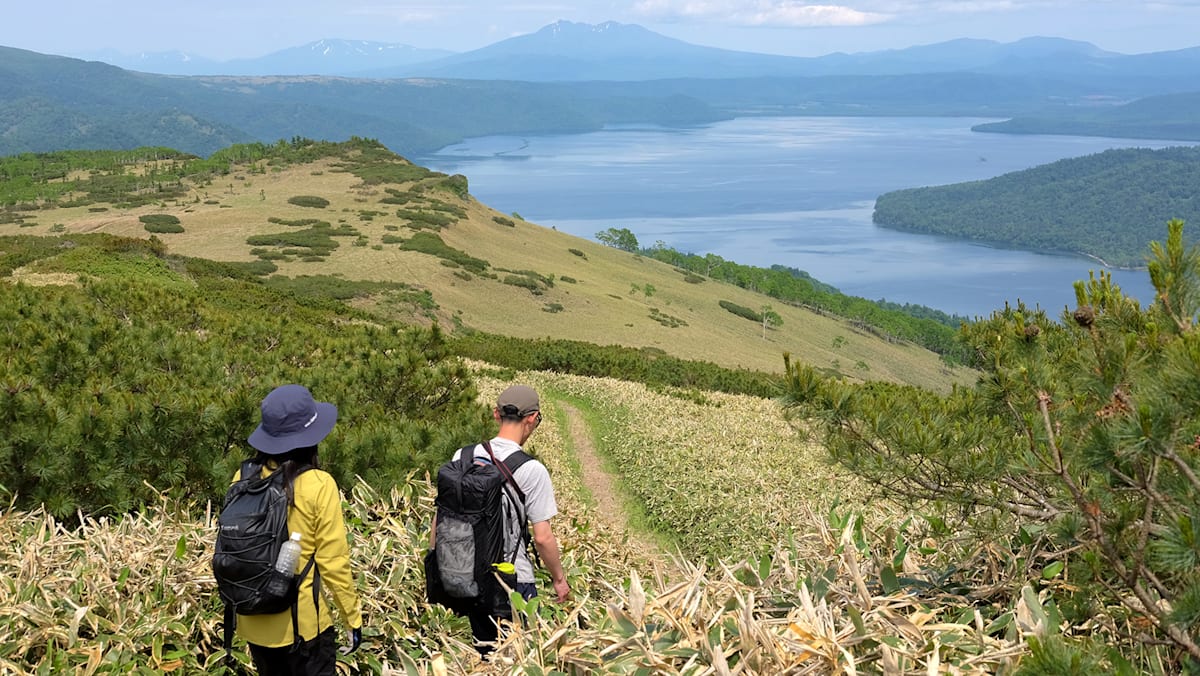
If you’re reading this, chances are you’re a Japan travel addict. And the stages of addiction will sound very familiar.On your very first visit to Japan, you probably hit up one (or more) stops along the Golden Route: Tokyo, Kyoto and Osaka. You ate your body weight in sushi, spent more than you care to admit on snacks at Don Quijote and basics at Uniqlo, and returned home plotting your next trip.Then came Japan trips number two, three, four… you get the idea. Suddenly, you realise you’ve made a dozen jaunts to Japan, and the question becomes: “Where haven’t I been?”That may explain why Singaporean travellers are increasingly looking beyond Japan’s major cities and familiar tourist hotspots. In 2025, a record 726,200 visitors from Singapore travelled to Japan, up 5.1 per cent from the previous year. Efficient public transport, extensive shopping options and a vibrant food scene are among the reasons Japan’s major cities remain popular with international travellers. (Photo: iStock) The Japan National Tourism Organization (JNTO) notes that Singapore has a high proportion of repeat visitors. While the Kanto, Chubu and Kinki regions remain popular, Hokkaido and Kyushu are also attracting considerable interest.Travellers are also becoming more curious about Japan’s lesser-known destinations. In JNTO surveys conducted in 2025, Singaporeans identified prefectures like Nagasaki, Okayama, Saga, Shimane, and Yamaguchi “underrated”. Japan is also encouraging international visitors to explore beyond its most crowded destinations. Its 2026 tourism strategy places greater emphasis on attracting travellers to regional areas, particularly repeat visitors – a group that includes many Singaporeans.The question is, are Singaporeans ready to go “country”? While there is no readily available official data showing how many are venturing into rural or remote parts of Japan, anecdotal evidence suggests that interest is growing.Paul Christie, 64, CEO of walking tour operator Walk Japan, has had a front-row seat to the evolution of tourism in Japan. The British national has been based in rural Kyushu since 2002 and has spent nearly four decades exploring the country. Paul Christie, CEO of walking tour operator Walk Japan. (Photo: Walk Japan) His company offers guided and self-guided walking tours through lesser-known parts of Japan, giving him a perspective on how Singaporeans’ travel preferences are evolving.“Singaporeans are sophisticated travellers to Japan, and many have visited several times,” he told CNA Luxury via email. “Increasingly, the question is not whether they will return, but what they will do differently when they do.”Singaporeans have been joining Walk Japan’s rural tours for decades, with numbers continuing to grow, he added. Some have ventured as far as the Kunisaki Peninsula in Kyushu – Christie’s home turf – a region that remains unfamiliar even to many Japanese travellers.“I think people are becoming less interested in simply collecting destinations,” he said. “Japan resonates with many Singaporeans. They still want to explore the breadth of Japanese cuisine, for example, but they also want to learn more about the place and the people who live there.”BEYOND THE CROWDS, BEYOND THE CHECKLISTYou’ve seen the TikToks and Instagram reels. You’ve watched the news and documentaries. Overtourism is a real problem in Japan. country welcomed a record 42.7 million international visitors in 2025 – equivalent to more than one-third of its population.To ease pressure on popular destinations, the Japanese government has been encouraging travellers to explore other parts of the country through tourism initiatives and policies promoting regional travel. In September 2026, Japan also topped the World Economic Forum’s Travel & Tourism Development Index, which assesses the conditions supporting sustainable tourism development. Singaporeans now have more flight connections to regional Japan, although exploring its rural areas may still require local trains, buses or journeys on foot. (Photo: Walk Japan) Christie, however, doesn't believe avoiding other tourists is the main appeal of lesser known regions in Japan. “Undoubtedly, people prefer to avoid crowded places when they can,” he said. “That is a fairly universal human instinct, but it does not mean they want to avoid other people, or other Singaporeans in particular.”Instead, he believes the appeal lies in making connections. “By venturing beyond the familiar, Singaporeans can discover how deep that affinity [for Japan] runs through the countryside, its food and culture, and the people they meet.”Getting to regional Japan has also become easier. Under the Singapore Airlines (SIA) and All Nippon Airways (ANA) joint venture, which began offering revenue-sharing flights in September 2025, SIA customers can connect to 30 destinations within ANA's domestic network, including Kagoshima, Kochi, Matsuyama, Oita, Tottori and Yamaguchi.Of course, there’s a catch.Japan’s urban centres are popular because they are ridiculously convenient – something that Singaporean city slickers find particularly appealing. Efficient airports and rail connections, affordable subway networks, depato (department stores) stocked with everything imaginable, konbini (convenience stores) every five steps, endless food options… the list goes on.Rural Japan doesn't quite offer the same level of convenience. “You may need to take a local bus or train, walk between communities, or accept that everything is not available exactly when you want it,” Christie explained. For the average Singaporean, that might not sound like the makings of a great holiday. But Christie believes the slower pace is precisely the appeal. “When you travel slowly, you notice things you would otherwise pass straight through: A small shrine beside the trail, somebody tending a field, the changing landscape between two villages or perhaps a conversation you never expected to have.”For Singaporeans accustomed to the relentless pace of life back home – or trying to squeeze 56 things into a single day – that change of pace might be just what they need.You don’t necessarily need to go full rural hermit, either. Regional Japan offers plenty of experiences between megacities like Tokyo and villages where the train stops only once a day.Prefectures such as Nagasaki, Okayama, Saga, Shimane and Yamaguchi offer a different side of Japan, with historic sites, centuries-old pottery traditions, feudal-era architecture, samurai heritage, dramatic coastal landscapes and distinctive regional cuisine.For those willing to venture deeper into the countryside, the reward can be a more immersive experience of Japanese life and culture.WHAT IS “LUXURY” IN A RURAL SETTING? Luxury in rural Japan takes on a different meaning, with experiences such as exploring the historic streets of Narai post town along the Nakasendo Way. (Photo: Walk Japan) Far from the bright lights of Ginza, with its luxury boutiques, traditional kimono shops and premium fruit parlours, the concept of luxury in rural Japan takes on a different meaning.“To me, luxury in rural Japan is not necessarily about private access or the most expensive accommodation,” Christie said. “It is something more human: Having time, not being hurried and knowing that everything has been thoughtfully arranged for you.”Travelling through rural Japan doesn't mean forgoing a stay at a luxury ryokan. But on a walking tour, guests may spend only eight to 12 hours at their accommodation – much of it asleep.The real luxury, then, lies in the connections made with locals who know the region intimately – people who can point you towards the best viewpoints, little-known places to eat and experiences you’re unlikely to find on a travel influencer’s page.That’s where guided and self-guided tour operators come in. Options include Japan-based companies such as Oku Japan and Walk Japan, as well as international operators like Intrepid Travel and Backroads.Walk Japan offers walking tours across regions including eastern Hokkaido, Kyushu, Shikoku and Tohoku, with an emphasis on connecting travellers with local communities rather than simply moving them between attractions. Usa Jingu, one of Japan’s most significant Shinto shrines, is among the cultural treasures awaiting visitors who venture into Oita Prefecture. (Photo: Walk Japan) On the Kunisaki Peninsula in Kyushu, where Christie has lived for 24 years, spiritual traditions run deep. Meander through its hills and you might come across a cave containing stone Buddha statues, believed to mark the spot where a monk meditated some 1,300 years ago.There are no signs pointing to it, or snack-and-souvenir stalls lining the trail. No parking lots filled with tour buses, or crowds of camera-toting tourists. You sort of just… chance upon it, with the help of locals giving directions. And that’s part of the charm.THE LUXURY OF MOVING AT HUMAN SPEEDGiven Singapore’s heat and humidity, many of us might baulk at the idea of spending a holiday walking outdoors. Especially when we're supposed to be relaxing.But Christie says a walking holiday should be enjoyable, not a route march reminiscent of National Service. “We are not on a forced march through Japan,” he emphasised. “The pace is gentle and appropriate to the terrain and the season.”In Aizu, western Fukushima Prefecture, travellers can trace the region’s samurai heritage along old highways and through historic villages, against a backdrop of Mount Bandai and the Tadami River.Over in eastern Hokkaido, wetlands, volcanic landscapes and wildlife offer a very different sense of scale. Parts of the 2008 Chinese romantic comedy If You Are the One, starring Ge You and Shu Qi, were filmed in the region. Along Shikoku’s historic pilgrimage trails, travellers can discover Buddhist temples, forest paths and traditions that have endured for centuries. (Photo: Walk Japan) Shikoku offers another kind of journey through its centuries-old pilgrimage linking 88 Buddhist temples. Known as the Shikoku Henro, it provides an intimate glimpse into Japan’s spiritual traditions.And there’s nothing like a long walk to whet the appetite. “A day on foot makes the food prepared from local ingredients and served in the morning and evening all the more enjoyable.”LEAVING A PLACE BETTER THAN WHEN YOU FOUND ITWhile Japan’s tourism authorities are encouraging international visitors to explore rural areas, they are also mindful of the damaging effects of overtourism. Popular photo spots such as the Slam Dunk railway crossing in Kamakura, Kanagawa Prefecture, and the the Lawson store in Fujikawaguchiko, Yamanashi Prefecture, have become examples of the challenges posed by large crowds.If more travellers start exploring rural Japan, how can local communities benefit? Historic sites such as Fukiji Temple highlight the cultural heritage that makes Kunisaki distinctive, while Christie’s community initiatives aim to support the region’s long-term future. (Photo: Walk Japan) Christie has a personal stake in the future of rural Japan. Through Walk Japan’s Community Initiatives in Kunisaki, he has helped restore abandoned buildings, bring agricultural land back into use, clear invasive bamboo and create local employment.“We work with local people and use family-run businesses wherever possible,” he explained. “We pay the full rate, so there is a genuine economic incentive for those businesses to continue.”But Christie believes sustainable rural tourism must go beyond economic benefits. “Tourism becomes damaging when a community is reduced to scenery and visitors simply pass through in large numbers.”Ideally, visitors should leave with a deeper understanding of a place rather than simply having consumed it.That may ultimately be the most compelling argument for going beyond the Golden Route. It’s not because the big cities have lost their appeal. They haven’t. It’s because Japan is much, much bigger than the version most of us know. And if you’ve been five times already, perhaps you’ve earned the right to get a little lost.Christie has a simple response to Singaporeans who believe they’ve seen everything Japan has to offer after five visits: “If you believe that five visits mean you have seen everything, you have only begun.”Even after nearly four decades of exploring Japan, Christie is still discovering new parts of the country. Perhaps that’s the real luxury of travelling here: Savouring it bit by bit, much like a fine Japanese whisky, a cup of junmai daiginjo sake or an unhurried kaiseki meal.
After Tokyo, Osaka and Kyoto, Singaporeans are exploring Japan’s lesser-known regions
Full Article
Original Source
Read the full article at Cnaluxury →KhanList aggregates and links to publicly available news content. We do not host full articles from third-party sources. Always verify important information with original sources.