
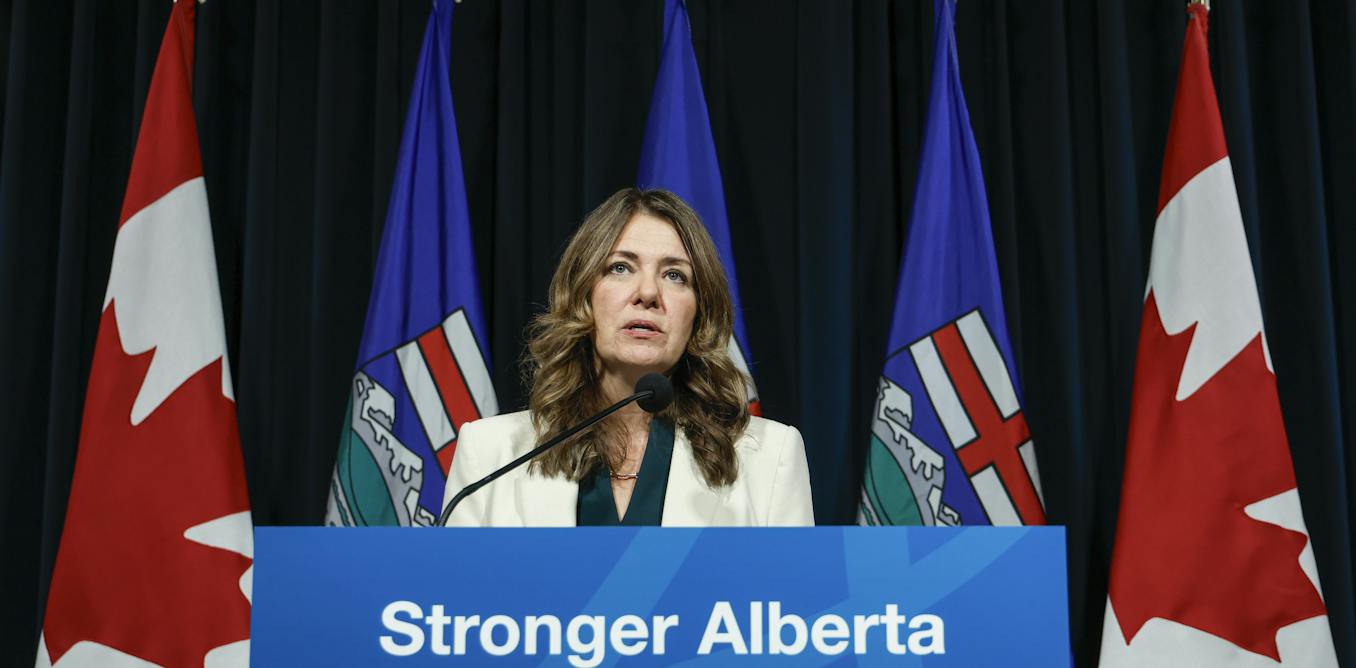
As expected, Albertans voted overwhelmingly in favour of remaining in Canada in the province’s recent independence referendum. While attention focused on the independence issue, nine other questions covering immigration and constitutional change topped the Alberta government’s agenda. Close wins on the immigration questions and the defeat of those on constitutional change have left Premier Danielle Smith struggling with how to proceed. In February, Smith announced a referendum on the nine questions, based on recommendations of a government-sponsored Alberta Next panel. The panel held town hall meetings across the province in 2025 to explore ways to increase Alberta’s autonomy. The nature of the questions Five questions asked whether Alberta should take more control over immigration, limit or impose residency requirements for non-permanent residents seeking social supports, charge fees for access to health care and education and require proof of citizenship to vote in provincial elections. Four questions asked whether Alberta should work with other provinces for constitutional amendments to let provinces appoint Superior Court judges, abolish the Senate, opt out of federal programs without losing funding and give provincial laws priority over federal laws in areas of shared jurisdiction. Left out were the creation of an Alberta pension plan, a tax collection agency and a provincial police force, which polls showed lacked public backing. “We’ve done that initial culling of the questions to make sure that we found the ones that are likely to get majority support,” Smith said. Her government also launched a $4 million ad campaign urging Albertans to vote yes to the questions. Urban/rural divide except on separation The five immigration questions narrowly passed, led by proof of citizenship in voting, with rural voters making up the majority of those who cast their ballots in favour of those measures. The four constitutional questions were defeated. Voters in Calgary and Edmonton, the province’s two largest cities where more than half of the province’s population resides, opposed all nine questions, the only exception being proof of citizenship to vote, which prevailed in Calgary. Smith observed: “We have to focus on the things that Albertans want us focusing on.” She says the government will “proceed with caution” on immigration. But the prospect of action on immigration has alarmed the business and immigrant communities, and prompted some United Conservative Party (UCP) members to leave the party. None of the immigration questions are on the government’s fall legislative agenda. A supporter waits for results at the pro-Canada watch party in Edmonton on Oct. 19, 2026. THE CANADIAN PRESS/James Maclennan ‘No’ to independence The independence question, which asked people whether they wanted to stay in Canada or move towards a binding referendum on separation, was added in May to keep Smith’s divided party together after separatists in the party launched a citizen petition calling for a vote on independence. More than half of the party’s members are separatist supporters. Smith said she would vote to remain after she and Prime Minister Mark Carney announced a climate and energy pact that would facilitate a West Coast pipeline to transport Alberta oil to Asian markets — a move she said shows federalism can work. Read more: Albertans disapprove of Donald Trump — and his brand is weakening separatism, too Some 75 per cent of Albertans, led by voters in Calgary and Edmonton with smaller majorities elsewhere, supported staying in Canada. Two rural ridings held by the UCP voted for separation. Smith says separatists must accept the results of the vote or leave the party, adding there will not be another independence referendum on her watch. The decisive remain victory appears to have defused a challenge to her leadership from pro-independence members at the party’s next annual meeting in November, but separatist sentiment remains. The NDP’s popularity The referendum vote has highlighted the sharp divide between urban Calgary and Edmonton and other parts of the province that form the UCP’s base. Smith’s government has not hesitated to involve itself in local issues in Calgary and Edmonton, ranging from education to housing, transit, bike lanes and library books, while downloading the costs of municipal services onto local governments. Smith has seen her popularity plummet to a record low in recent months and is facing an election in October 2027. She has belatedly recognized that her government needs to appeal to voters in Calgary and Edmonton to maintain its grip on power. The New Democrats, led by former Calgary mayor Naheed Nenshi, hold most of the seats in Calgary and all of them in Edmonton. Alberta NDP leader Naheed Nenshi leaves after casting his referendum vote at an advance polling station in Calgary on Oct. 13, 2026. THE CANADIAN PRESS/Jeff McIntosh Smith’s government, its revenue bolstered by high oil prices, has begun to respond, announcing a modest reduction in municipal education property tax rates that it had increased dramatically in recent years. The premier has upped her attacks on the surging NDP, which is even with the UCP in the polls and won a recent byelection in a Calgary riding previously held by Smith’s party. Smith has urged her party to unite to prevent the NDP from winning next year’s election, claiming it is under the thumb of its federal counterpart headed by fossil fuel opponent Avi Lewis — even though the Alberta NDP has severed membership ties with the national party and supports oil and gas development. Riding redistribution Smith’s government has caused another controversy with the newly released report of the Independent Advisory Panel on Electoral Boundaries, which favours the UCP in its proposed American-style riding distribution efforts. The panel was created after the government, in an unprecedented move, rejected the report of the officially appointed Alberta Electoral Boundaries Commission earlier this year. That report, which was endorsed by the commission chair (a judge), and two members named by the NDP, was challenged by its two government-appointed members, who offered a highly partisan report of their own. The Advisory Panel’s findings are supported by the chair (a retired judge) and two government-named members, with two NDP appointees opposed. The panel’s proposed electoral map, drawn up without public consultation, adds two rural seats and transforms three constituencies in Calgary and three in Lethbridge into hybrid ridings that stretch from those cities into the surrounding rural areas, which are populated with reliably UCP voters. The government has rejected the province’s chief elections officer’s request to delay implementation of the new map or postpone next year’s election to give the agency enough time to prepare. The report, which is expected to be adopted, is certain to be challenged in the courts. The stakes are high for Smith. Whether she and her government can successfully navigate the challenges facing them remains to be seen.
After the referendum: What’s next for Premier Danielle Smith and her United Conservative Party?
Full Article
Original Source
Read the full article at Theconversation →KhanList aggregates and links to publicly available news content. We do not host full articles from third-party sources. Always verify important information with original sources.