
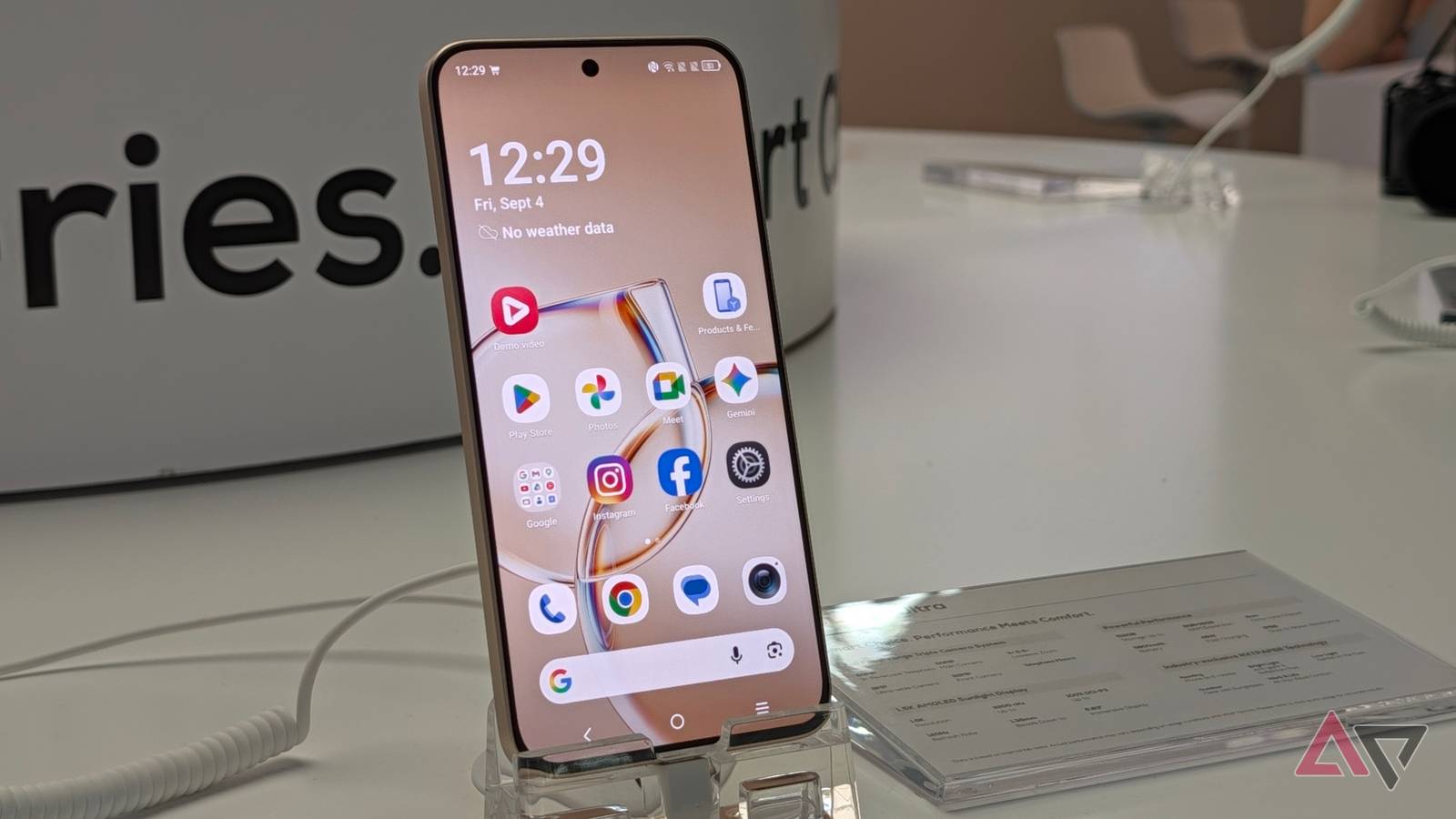
Published Sep 6, 2026, 6:30 AM EDT Rita is a Senior Writer at Android Police. Her love story with Android started in 2010 and has been going stronger with every update, device, tip, app, and game. She's a huge Pixel fan and has spent an inordinate amount of time using and testing Google's ecosystem, apps, and services. She lives in France, speaks more than three languages, follows Real Madrid, and spends any free time she has traveling. Once upon a time, she was a pharmacist as well. TCL's NxtPaper technology is not new. For many years now, the company has managed to create a hybrid experience on its phones and tablets with the benefits of both a colored display and an eye-friendly e-reader. It has had its fair share of limitations, though. With the latest TCL P80 Ultra, the company is eschewing most of these restrictions. Gone is the IPS LCD panel — we finally have a bright, vibrant AMOLED display that doesn't compromise when you're using your phone in its regular colored-display mode. And when you need a calmer environment to read or work, you just flip a switch to get a Kindle-like e-reader experience that's kinder on the eyes. It's the best of both worlds, and it made me wonder: Why is no one copying this experience? Why is TCL still the only company offering this at scale? The double-duty display is not a gimmick TCL got this working so well I was a little suspicious of TCL's claim about switching its NxtPaper technology to AMOLED before I tried it, but in my hands-on time with the P80 Ultra, I was quite impressed by what the company has managed to achieve here. In its full-on colored mode, the P80 Ultra looks like a regular 6.83-inch AMOLED phone with an upper midrange display. 3,200 nits max brightness and 120Hz refresh rate with a 447ppi make it easy to view indoors and should also do the trick outdoors. The switch to AMOLED obviously fixes all the previous issues TCL had with LCD panels. I noticed that the blacks are really black now, the colors are more vibrant, and contrast is much more pronounced compared to older NxtPaper phones. This is a display I would use every day, without complaining. I was happy to see that TCL's signature matte, anti-glare, and paper-like texture is still there, too. This is what makes NxtPaper panels so unique: They don't reflect light, and they feel like an e-reader under your finger. It's a special experience that you get addicted to once you use it. The NxtPaper key on the phone's right side is where the magic happens, though. I flicked it, and in an instant, I had a menu asking me if I wanted the Max Ink mode or Paper mode. The former is more drastic, but it's what I would go for, considering its extra battery life perks. Thanks to the coating, the key, and the software-based switch, the P80 Ultra morphs into an e-reader-like display experience with a black-and-white interface thought through to focus on the essentials (but with the option for you to add any extra app you need). Most apps disappear, the home screen cleans up, the Quick Settings area becomes more bare bones, there's a built-in Library and e-reader app, and battery life gets extended. I enjoyed getting in and out of Max Ink mode, and the P80 Pro handled the switch elegantly every time. Like on previous NxtPaper phones, TCL has packed in a bunch of settings and customizations to ensure you can tailor it to your needs. You can completely skip the mode picker and go immediately into the one you prefer. There are also a bunch of Eye Care settings to choose from, ranging from alerts when you're too close to the screen or lying down to forced pauses when you've been using your phone for too long. TCL has upped the rest of the specs, too Every upgrade makes the P80 Ultra better AMOLED isn't the only positive move TCL has made with the P80 Ultra. It would've been easy to implement this and call it a day, but I was surprised to see upgrades all around which, when added up, make this a very good midrange phone. The 4nm MediaTek Dimensity 7400 Elite is a good upgrade over the TCL NxtPaper 70 Pro's regular Dimensity 7300. RAM and storage are pretty much the same, but that's to be expected given the current RAM supply chain and pricing crisis. There's a massive camera upgrade, though, with the addition of a 50MP 3x telephoto lens. In my tests, inside a busy trade show floor with fluorescent lights and lots of people moving around, the results were fine. The jury is out on how it performs in the real world, though. But having the zoom lens is already a huge win. Few phones in that price range offer a telephoto camera, and I think most people will appreciate it for pet or kid photos, or snapping any kind of pic from a little further out. TCL has also managed to pack a larger 5,800mAh battery compared to the NxtPaper 70 Pro's 5,200mAh, and upgraded it with faster 45W charging compared to the 70 Pro's 33W. Perhaps the biggest change, though, is that TCL is finally improving its update commitment. The P80 Pro comes with a promise of three years of software updates and seven years of security patches. It's not Samsung or Google-level of support, but it's a big step in the right direction. TCL remains the undisputed king of dual-use phone displays For a few years now, I've looked at TCL's NxtPaper phones and wished I could make the move. I love reading and writing on my phone, and having an eyesight-friendly display would be tremendous for my aging eyes. But there were always too many compromises. The TCL P80 Ultra is the first time I look at what TCL is doing and think I wouldn't mind using this phone as my daily carry. Of course, there are still compromises compared to my Pixel 11 Pro XL, especially in terms of camera and Pixel software experience, but we're not that far off anymore. I would absolutely love to see more companies venturing into TCL's territory and emulating this idea. It's the best of both worlds between a smartphone and something like a Boox Palma 2 Pro or Xteink X4 Pro, but without the added bulk and without the slow e-ink interface. And at £480 — or around $650 — TCL keeps nailing the briefing again and again with the value proposition. So I repeat my question: Why is no one else doing this?
After seeing the TCL P80 Ultra, I have one question: Why is no one copying this?
Full Article
Original Source
Read the full article at Androidpolice →KhanList aggregates and links to publicly available news content. We do not host full articles from third-party sources. Always verify important information with original sources.