
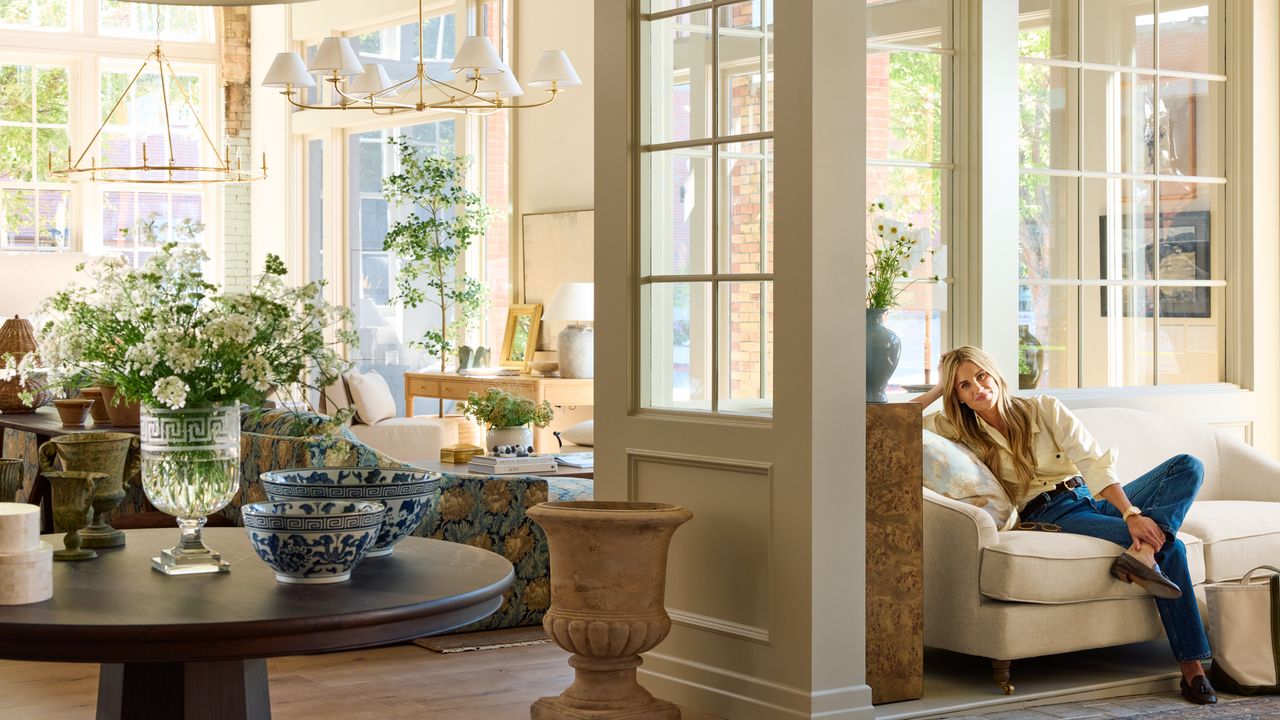
Opening the Salt Lake City flagship of McGee & Co. has been a baptism by fire—but we wouldn’t have it any other way. Here’s how we planned our first retail location for profitability, growth, and an experience that feels on-brandMcGee & Co.’s first retail store—a whole-home resource measuring in at 7,500 square-feet—recently opened in Salt Lake City.Photography courtesy of McGee & Co.My husband Syd and I are both lovers of retail, and have always known one day we’d have a McGee & Co. shop of our own. Over the years, we’ve spent a lot of time jotting down ideas for our own store. Our new flagship is a repository for all that knowledge that we’ve been squirreling away—but it also taught us a few lessons of its own.Speaking to you now, on the other side of its debut, there are some things we only learned through actually doing. From the importance of developing a training manual to the do-or-die value of a soft launch, here are eight hard-won learnings from our McGee & Co. store launch.Hold On (Loosely!) to Your Early VisionsIt was important to us that the shop feel like the homes we create for our clients—layered and collected, with a variety of patterns and objects for your eye to explore. Despite the fact that the dollars-per-square-foot model is the traditional method of conceiving an in-store assortment, it was more important for us to remain true to ourselves with this first location: we’re a designer-led brand, not a merchant-led one.“I’m getting to see our products through new eyes—and I was the one that concepted them!” says Shea. “When you see them in a store setting, pieces can have a lot more detail than you can see online.” Photography courtesy of McGee & Co.We started by coming up with the sections we envisioned, like a kids’ area, a kitchen zone, and so on. Then we created planograms to see how much we could actually fit, and reconciled with our merchandising team to see what made business sense. Sometimes, that meant pivoting from the early vision. A lighting gallery we had planned, for instance, ended up shifting: We loved the idea, but when we looked at the percentage of lighting to the rest of our sales, we could see clearly that it was a smarter business decision to use this space to showcase more furniture. Instead of the sprawling lighting gallery we had imagined, we created a moody lounge area that can flex to showcase different pieces.Hire Like Your Reputation Depends On ItWe don’t think small: Our aspirations are to grow nationwide. But however much we scale, it’s critical that we not lose the warm, personal feeling that comes from a standalone store. As McGee & Co. grows its brick-and-mortar operation, that’s one of my biggest goals. And there’s another layer here, too: Being a personality-led business, the team members in our store aren’t just representing our brand—they’re representing me, for better or worse. The design world can sometimes feel closed-off and unapproachable, and it’s always been the McGee mantra—in our content, in our personality on social media, in how we work with clients—to be warm and accessible. Now that attitude needs to trickle down to our store associates, too.Syd and Shea McGee in their office. Photography courtesy of McGee & Co.Document Your “Secret Sauce”Before we opened, I spent months developing a comprehensive training guide for our associates. It’s essentially Design 101, McGee-style, covering everything from how many inches I place a rug away from a wall, to how to pair and arrange accent tables, to how to layer bedding. We cover every level of the decorating process. Thank goodness for AI—it’s been a lifesaver: I’ll narrate as we go on our walk-throughs, and use those notes as the basis for the training manual. And it’s not a one-and-done deal. We’ll continue to add to this document as we evolve and grow.Access the AD ArchiveEvery issue, every era. Explore 100+ years of the Architectural Digest Archive, an unparalleled digital resource for research and inspiration. Start SearchingArrowTrack Learning Through CheckpointsHaving that Design 101 established is a first step, but how do you ensure that the team is really internalizing the lessons? For us, the answer was checkpoints. As our design associates go through training and familiarize themselves with our ways of doing things, we hold check-ins with them to make sure that they’re absorbing our ways of operating. It’s the exact same as we do for the junior interior designers at Studio McGee: The checkpoints allow us to build up mutual confidence, with the aim for them to eventually fly on their own.Shea plans to have the studio’s senior-level designers hosting regular check-ins with the shop’s design associates. Photography courtesy of McGee & Co.Personally dropping in myself can serve as another kind of checkpoint, too. With the flagship local, I’m able to stop by regularly in these early days to make sure that our standards are upheld, that our visuals are tight, and the operation is humming. That won’t work for us in every location, but it’s certainly a perk of opening up in our own hometown.Troubleshoot Early Snags With a Soft LaunchAs much as I love a good plan, there’s nothing like real-time feedback to show you what’s working and what’s not. Which is why we kicked off our flagship back in September with a whisper and not a bang. We did a very soft launch with no announcement, no social post. We just opened the doors. As folks wandered in, we learned, and we tweaked. And two weeks later, we opened officially. That soft-launch period was vital for us in getting the kinks out.Follow Your MarketOne benefit of having had an ecommerce business for so long is that we have rich data on exactly where our customers are. That means that from day one, we already know where we need to open next. While launching in Salt Lake City was a logical place for our flagship, we’re already thinking ahead to how we’ll expand to some of our other biggest markets, like Texas and California.Located in Salt Lake City’s Trolley Square, the “shop,” as Shea calls it, is 7,500 square feet. Photography courtesy of McGee & Co.We want to capitalize on the fact that the retail-ecommerce loop is an advantageous cycle: Where you have a retail store, your ecommerce sales lift. People who are aware of your product can go see it in person, give it a sit test, think about it, and then finish the sale online. In store, we can educate them, give them styling suggestions, and show off the quality of the product in ways we can’t online. Even for us, we’re discovering new things about our assortment by merchandising it in the store—we’re seeing it with fresh eyes, and we know our customers will too.Know That Some Victories Can Be Behind the ScenesAside from the obvious metric of profitability, to me, success in these early days means nailing down our systems and processes. It’s not the most glamorous side of this business, but it’s a must. I want to be able to say that we know what it takes to run a store and to make the shopper experience in it as smooth as possible. For instance, I want customers to know how to get to our free design services, and to have a great experience using them. If we can do that, we know we’re on our way to some of our loftier goals, too.Be Honest With YourselfI’m not under any illusions here: This first store is a baptism by fire. Not only are we opening a flagship and planting seeds for our future locations—we’re also doing it in Q4, right before the holidays. But my hope is that at the end of it, we can catch our breath and take a moment to reflect on what worked, what didn’t, and then get to work fixing it. In this business, honesty with yourself is the only way up.“The kitchen is a working kitchen,” says Shea, who envisions cooking demos and community events enlivening the space. Photography courtesy of McGee & Co.A Starter Guide on How to Hire for RetailRead MoreWhat’s the Secret to Customer Loyalty? (Hint: It’s Not Just About Shopping)In the age of instant gratification and easy comparison shopping, relationships matter more than ever. Here’s how retail pros across the country are building them—and keeping themHow to Spend Your Marketing Budget NowThe marketing landscape has changed. Here’s your roadmap to smarter spending, better client acquisition, and growth in 2027By Lila Allen, Stefanie Waldek, Jennifer Hunter, Meaghan O'Neill, and Julia Mitchem30 Ways to Get the Word Out About Your FirmMarketing your business right, according to design industry prosBy Meaghan O'Neill and Julia Mitchem5 New Retail Design Rules, According to ExpertsHow do you design a store enticing enough to lure people off their sofas and through the door? The creatives behind some of the year's buzziest shops reveal their strategiesKelly Wearstler on What It Takes to Be a Creative Entrepreneur TodayKelly Wearstler has spent her career expanding our idea of what an interior designer can be. Now, the AD100 Hall of Fame talent shares her secrets to successI Thought Slave Labor in Construction Was Not My Problem. I Was WrongForced labor—even slave labor—is woven into the materials supply chains feeding our profession. Here's what we can do about itThe Dirty Kitchen Is Still in Demand—Here’s How to Get It RightPros with deep experience designing the popular workhorse spaces share best practicesDesigners Are Rethinking These 8 Home Renovation IdeasLeading architects and designers reveal their home remodel no-gos—and what they suggest insteadIs the Open Floor Plan Really Dead?New demands on our homes—more multiuse than ever—have increased the desire for separation, but connected living is still very much in playAD PRO’s Home Renovation Report 2026Breathing new life into a home takes more than vision—it takes the right decisions at every turn. From historic preservation to climate-proofing to aging in place, AD PRO breaks down the planning, materials, and technologies behind today’s most thoughtful renovations.How Heidi Caillier Never Designs the Same Room TwiceThe AD100 designer on keeping her work fresh, building a remote team, and the power of a “limited options program” for clientsClients Want to Age in Place. These 8 Innovations Let Them Do So BeautifullyRenovating a home so clients can stay in the place they love is one of the most meaningful projects a designer can take on. Here, experts share eight thoughtful ways to prepare homeowners for the years ahead
After Launching McGee & Co., Shea McGee Shares 8 Lessons for Opening a Store
Full Article
Original Source
Read the full article at Architecturaldigest →KhanList aggregates and links to publicly available news content. We do not host full articles from third-party sources. Always verify important information with original sources.