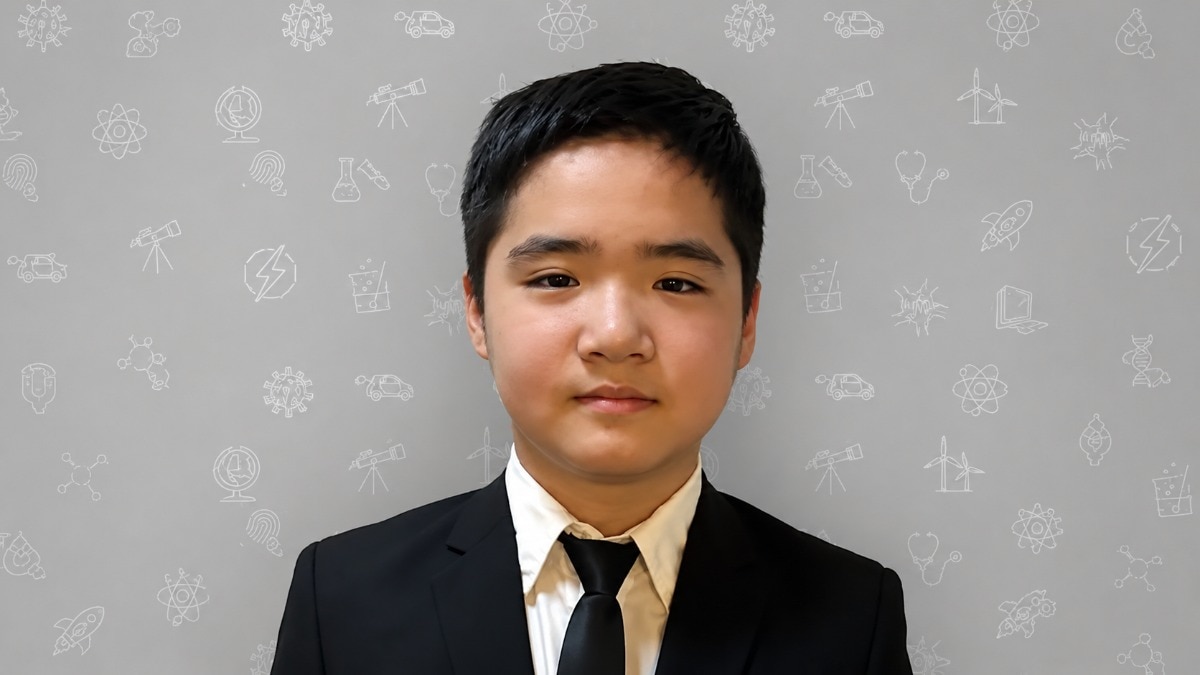
After watching his grandmother suffer a life-changing fall, Kevin Tang created FallGuard, an AI-powered system that detects falls in real time and alerts family members within milliseconds. The innovation has earned the young inventor a place among the finalists of the 3M Young Scientist Challenge.After watching his grandmother suffer a life-changing fall, Kevin Tang created FallGuard, an AI-powered system that detects falls in real time and alerts family members within milliseconds. (Photo: youngscientistlab.com | AI-enhanced)Five years ago, Kevin Tang's grandmother fell in her kitchen. By the time the family realised what had happened and called emergency services, it was too late."She was left with permanent brain damage," Kevin says in a video explaining his invention.That heartbreaking moment stayed with him. After researching the issue, he discovered that more than 600,000 people die every year from falls, many because help does not arrive quickly enough.Instead of accepting that reality, the young innovator decided to build a solution, one that has earned him a place among the finalists of the 3M Young Scientist Challenge, one of the world's best-known competitions for young innovators. (Photo: youngscientistlab.com | video screenshot) HOW FALLGUARD WORKSKevin's invention, called FallGuard, is an AI-powered real-time fall detection system designed to protect older adults living at home.Using artificial intelligence and computer vision, the system analyses video footage to recognise whether someone has suffered a fall. How FallGuard detects falls (Photo: youngscientistlab.com | video screenshot) Its custom two-stage algorithm first checks whether a person is lying down and then analyses body movement to determine if the event was actually a fall. Stage 1 of FallGuard's fall detection mechanism (Photo: youngscientistlab.com | video screenshot) Stage 2 of FallGuard's fall detection mechanism (Photo: youngscientistlab.com | video screenshot) Kevin tested the system on 260 simulated home videos using publicly available datasets. He also created his own low-light dataset to ensure the technology works at night, when many falls happen unnoticed. How FallGuard detected falls in public datasets (Photo: youngscientistlab.com | video screenshot) DETECTS A FALL IN JUST 50 MILLISECONDSKevin later transformed the software into a low-cost standalone device powered by a Raspberry Pi.After optimising the system, FallGuard can now detect a fall in around 50 milliseconds. Once a fall is confirmed, it immediately sends an email alert to a family member. Email sample and images from FallGuard (Photo: youngscientistlab.com | video screenshot) He is also developing a mobile app that will deliver instant push notifications. How the FallGuard app is supposed to look like (Photo: youngscientistlab.com | video screenshot) His long-term goal is even bigger: connecting the system directly with emergency services such as 911 to reduce response times. What the physical device of FallGuard looks like (Photo: youngscientistlab.com | video screenshot) A FINALIST ON THE GLOBAL STAGEKevin says he entered the competition because he wanted "to share my invention and see how far I could take it with the help of real scientists."Looking ahead, Kevin hopes to become "an engineer or scientist, creating technology that helps people in their daily lives."For him, FallGuard is more than a science project. As he puts it, it is meant to be "a guardian watching over your loved ones when you can't be there."The 3M Young Scientist Challenge, organised by 3M and Discovery Education, is open to legal US residents in Grades 5 to 8 studying in schools across the 50 states and the District of Columbia. It encourages students to use science and engineering to solve real-world problems.- EndsPublished On: Aug 7, 2026 20:19 IST
After grandmother's fall, this 13-year-old built FallGuard to protect seniors
Full Article
Original Source
Read the full article at Indiatoday →KhanList aggregates and links to publicly available news content. We do not host full articles from third-party sources. Always verify important information with original sources.