
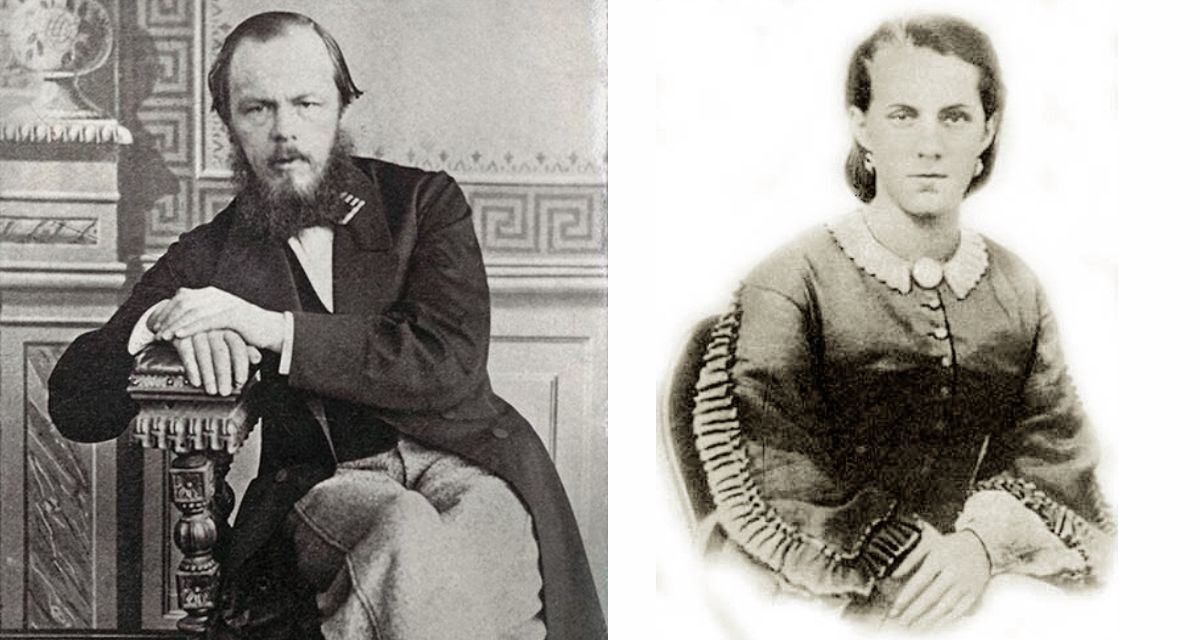
Russian author Fyodor Dostoevsky did not shy away from expressing his grief after the loss of his first child, Sonia. He mourned her passing after she died from pneumonia in May 1868 at barely three months old, writing gut-wrenching letters to his close friend Apollon Nikolayevitch Maikov that same month. Dostoevsky was married twice. His first wife, Maria Dmitrievna Isaeva, died on April 15, 1864. They did not have children together. On February 15, 1867, he married his second wife, stenographer Anna Grigorievna Snitkina. They had four children: Sofia (Sonia), Lyubov, Fyodor, and Aleksei (who also died young, at nearly three years old). Dostoevsky’s personal letters to Maikov give a raw account of his heartache over Sonia that still resonates and offers comfort to those going through grief. Here is the letter Dostoevsky wrote to Maikov: “My Sonia is dead; we buried her three days ago. Two hours before her death, I did not know that she was to die. The doctor told us, three hours before she died, that things were going better and that she would live. She was only a week ill; she died of inflammation of the lungs. “Ah, my dear Apollon Nikolayevitch, my love for my first child was probably most comical; I daresay I expressed it most comically in my letters to anyone who congratulated me. I have doubtless been ridiculous in everybody’s eyes, but to you, to you, I am not ashamed to say anything. “The poor little darling creature, scarcely three months old, had already, for me, individuality and character. She was just be-ginning to know me and love me, and always smiled when I came near. And now they tell me, to concole me, that I shall surely have other children. But where is Sonia? where is the little creature for whom I would, believe me, gladly have suffered death upon the cross, if she could have remained alive? I’ll speak of it no more. My wife is crying.” Dostoevsky grieves his daughter in a second letter In a second letter to Maikov dated June 1868, he continued to share his grief: “My dear friend Apollon Nikolayevitch, “I know and believe that your sympathy is real and true. But I have never yet been so profoundly unhappy as of late. I don’t intend to describe my state to you, but the more time goes by, the more painful does remembrance become, and the more clearly does my dead Sonia’s image stand before me. “There are moments in which I can hardly bear it. She already knew me; when I was leaving the house on the day she died, just to read the papers, and without the least idea that she would be dead in two hours, she followed so attentively all my movements, and looked at me with such eyes that even at this moment I can see them, and the memory grows livelier every day. “I shall never forget her; my grief will never come to an end. And if I ever should have another child, I don’t know, truly, how I shall be able to love it—I don’t know where the love could come from. I want only Sonia. I can’t realize in the least that she is no more, and that I am never to see her again.” Dostoevsky also grieved his son, Aleksei His son Aleksei, nicknamed Alyosha, also died young—from an epileptic seizure he reportedly inherited from his father. Alyosha died just a few months before Dostoevsky began writing his magnum opus, The Brothers Karamazov. According to The New Yorker, Dostoevsky struggled with guilt over his son’s death, and mourned him greatly. As Anna later wrote in her memoirs, he “loved Lyosha somehow in a very special way, with an almost morbid love, as if sensing that he would not have him for long.” His grief overwhelmed him, and he sought help from monks at the Optina Pustyn monastery, where a monk named Ambrose told him: “Weep and be not consoled, but weep.” Dostoevsky named the character Alexei “Alyosha” Fyodorovich Karamazov after his son and incorporated the lessons on grief he learned at the monastery into the novel.
After Dostoevsky’s daughter died, his devastating letters to a friend captured the raw pain of grief
Full Article
Original Source
Read the full article at Upworthy →KhanList aggregates and links to publicly available news content. We do not host full articles from third-party sources. Always verify important information with original sources.