
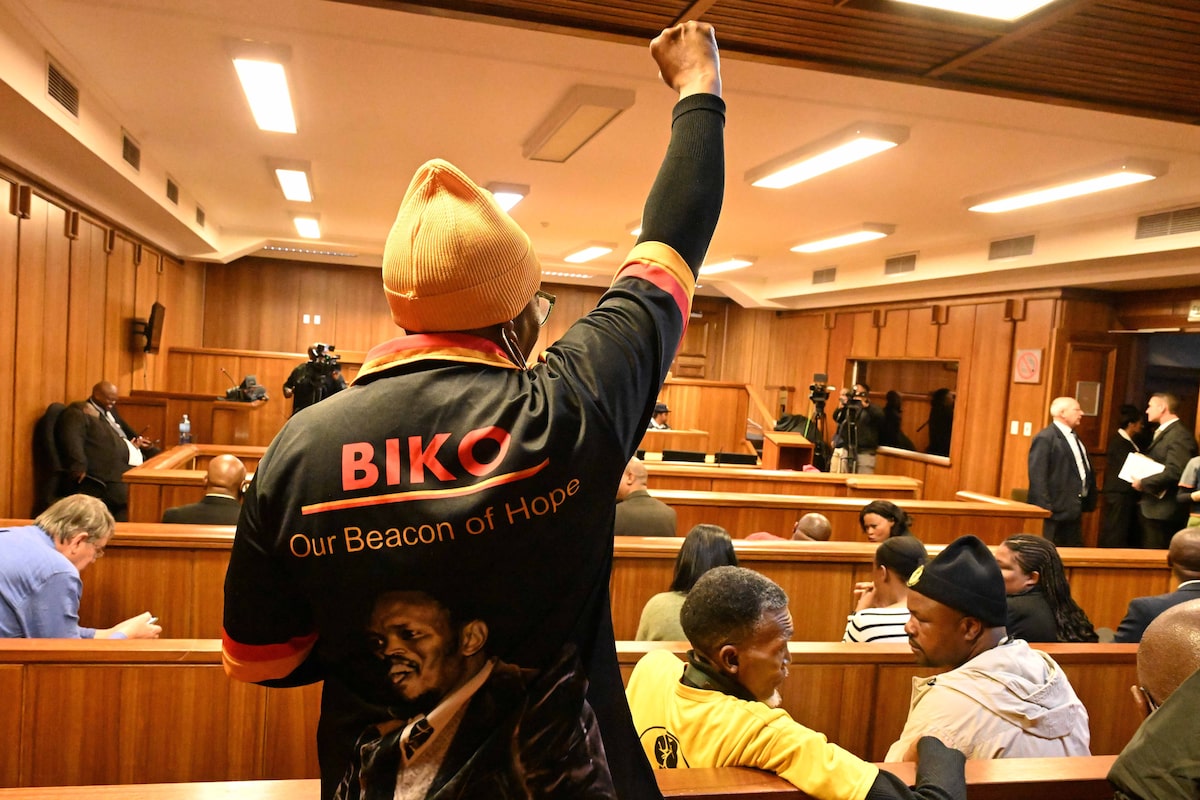
Open this photo in gallery:A supporter of Steve Biko attends the inquest into his 1977 death at the Gqeberha High Court in South Africa, on Monday. The proceedings revisit one of South Africa’s most painful chapters, as the search for truth and justice continues nearly five decades after Mr. Biko died in police custody.Lulama Mau Mau/The Globe and MailAn inquest in South Africa has begun the daunting task of unravelling the full truth about the brutal killing of Steve Biko, one of the most celebrated heroes of the anti-apartheid struggle.After months of delays, the inquest heard its first witness on Thursday, and the testimony exposed both the agony of Mr. Biko’s death and the challenges of uncovering the details of a killing that is nearly half a century old.Mr. Biko, a charismatic student leader who led the Black Consciousness Movement, died in police custody in 1977 at the age of 30. An inquest by apartheid authorities sought to hide the truth by concluding he had died from a mere “scuffle” with police after becoming aggressive during his interrogation.There was a worldwide outcry, and Mr. Biko soon became the most famous martyr of the liberation movement. His funeral drew 20,000 mourners. In North America and Britain, he was hailed in songs, movies, plays and artworks.South Africa’s Truth and Reconciliation Commission (TRC), which investigated the Biko case in the late 1990s, rejected the official verdict and described his death as a “gross human-rights violation” that helped create a “culture of impunity” among the apartheid police. But after the TRC report, authorities seemed to abandon the case.Open this photo in gallery:Mr. Biko’s son, Nkosinathi Biko, said testimony by the investigating officer on Thursday had exposed 'so many gaping holes' in the inquest preparations.Lulama Mau Mau/The Globe and MailThe death of Mr. Biko is one of many cases from the apartheid era that have never been properly investigated or prosecuted, even after apartheid ended in 1994. The TRC recommended criminal charges in several hundred of them, but the cases disappeared for decades. A separate state inquiry is now probing whether they were deliberately shelved by postapartheid politicians. In the Biko case, several police officers later admitted colluding to conceal the truth. But the inquest verdict has remained the only official record, so the South African government finally decided last year to reopen the case, a process that could lead to murder charges against two former policemen in the Biko case who are still alive.“The past refuses to lay down quietly – it has an uncanny habit of returning to haunt one,” prosecutor Devendran Govender said in his opening address to the inquest on Thursday, quoting the TRC’s report into apartheid crimes.“The death of Mr. Biko has left an indelible scar not only on his family but the country as a whole,” he said. “However painful the experience, the wounds of the past must not be allowed to fester.”The inquest is being held in a courtroom in the port city of Gqeberha, formerly known as Port Elizabeth. Supporters of Mr. Biko, waiting patiently on wooden benches in the gallery, sang rousing songs from the anti-apartheid movement of the 1970s as they sat through lengthy delays in the case this week. Outside the courthouse, they held signs saying: “Apartheid Crimes Do Not Expire” and “Who Blocked Justice for Biko?”Open this photo in gallery:Judge Isaac Madondo, the presiding judge for the Biko inquest, at the Gqeberha High Court. Mr. Biko, a charismatic student leader who led the Black Consciousness Movement, died in police custody in 1977 at the age of 30.Lulama Mau Mau/SuppliedMany South Africans have long suspected a deliberate cover-up of apartheid crimes. Thursday’s testimony seemed to support those fears.Sergeant Fundiswa Dingiswayo, the inquest’s investigating officer, testified about missing documents and photos in the police files on Mr. Biko’s arrest and interrogation. Many medical records and affidavits have disappeared, she said, and a crucial witness – the only surviving doctor who examined Mr. Biko’s injuries in police custody – cannot be found. Mr. Govender appealed for public help to locate the 87-year-old neurosurgeon.In a new revelation, Sgt. Dingiswayo disclosed that she had found and interviewed a former political prisoner, Gabriel Ndlovu, who saw Mr. Biko in a Pretoria jail after he was transferred from Port Elizabeth, shortly before his death. The ex-prisoner told her that Mr. Biko had facial bruises and was so weakened that he could not speak.While the Biko case was officially reopened last September, it has been plagued by delays since then, largely resulting from issues of funding for lawyers for the two surviving policemen and the Biko family.This week the Biko family argued that the entire inquest has been poorly prepared and needs to be postponed for months to allow key evidence to be located and analyzed, and to ensure that all documents are translated from Afrikaans, the main language of the apartheid government.Open this photo in gallery:Sergeant Fundiswa Dingiswayo, right, the inquest’s investigating officer, testified about missing documents and photos in the police files on Mr. Biko’s arrest and interrogation.Lulama Mau Mau/The Globe and MailThe presiding judge, Isaac Madondo, rejected the postponement bid. Only two of the eight policemen who interrogated Mr. Biko are still alive, and both are of “a considerable advanced age,” he said.“The risk is too great that by the time the matter comes for hearing again, there will be no witness of interest remaining,” Justice Madondo said. “Even if they were still alive, their memories would have completely faded out. ... This may result in great injustice.”The Biko family, unhappy with the ruling, is now asking the South African government to review the judge’s decision.Mr. Biko’s son, Nkosinathi Biko, said the testimony by the investigating officer on Thursday had exposed “so many gaping holes” in the inquest preparations.“This should be done correctly,” he told The Globe and Mail after the testimony. “I am not interested in this nation granting amnesty to my father’s killers simply because the matter was not handled correctly.”It is unlikely that the two surviving policemen will be charged and convicted, because of their old age, so the inquest must instead focus on revealing as much of the truth as it can uncover, Mr. Biko said.
After 49 years, South Africa seeks justice for anti-apartheid hero Steve Biko
Full Article
Original Source
Read the full article at Theglobeandmail →KhanList aggregates and links to publicly available news content. We do not host full articles from third-party sources. Always verify important information with original sources.