
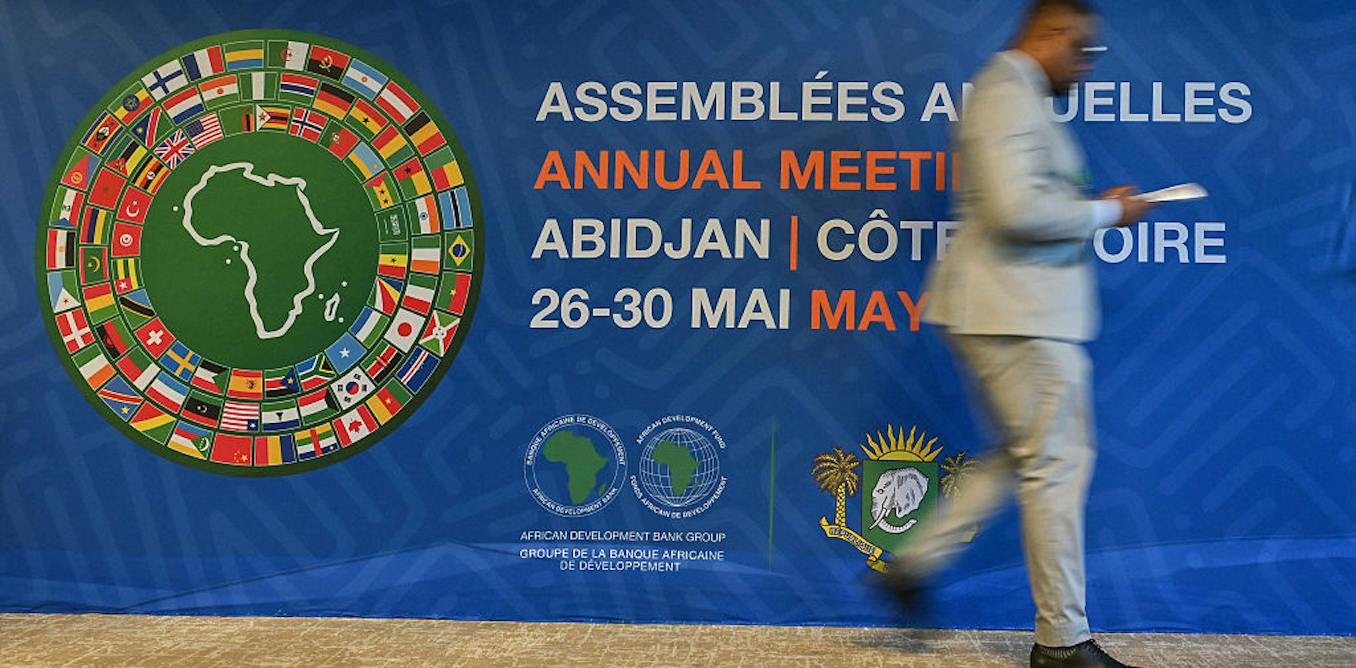
International development cooperation – external financial and technical support for economic and social improvements in lower-income countries – is shifting fast all around the world. Nowhere is this happening faster than in Africa. Aid cuts, natural and war-related shocks, unstable geopolitics, rapidly growing young populations and high external debt levels mean African leaders have to find new development paths. Central to this new agenda is easing dependence on external development finance. Africa has resources of its own – over US$1 trillion in pension assets across the continent, as a recent African Development Bank (AfDB) report highlighted. Much of it is invested outside the region. Relying more on Africa’s own resources is no easy fix for the region’s many development challenges. But it can reduce dependence on fickle (and hard-currency) external financing. And perhaps more importantly, it signals that African countries want to build a new kind of growth model that is truly “country owned”. The region’s leading multilateral development bank, the African Development Bank, has been central to driving this agenda under its president, Sidi Ould Tah, who took office in 2025. AfDB’s decades-long trajectory, mix of African and external government ownership and active engagement across the continent mean it can play a key role in the fast-changing development landscape. Mobilising home-grown financial resources One of Tah’s initiatives has been aimed at mobilising financial resources from across Africa. This includes the New African Financial Architecture for Development which was supported at the African Union summit in February 2026 and the Africa Forward Summit in Nairobi in May. The bank went on to adopt it later that month. The ambitions of the initiative are to build a shared, continent-wide framework for reorganising how capital and risk are mobilised, structured, and deployed across Africa’s financial ecosystem – grounded in the principles of subsidiarity, complementarity, coordination, and risk transformation. That all sounds very nice. But what does it mean in practice? Is this just another vague declaration of good intentions that will quickly run up against the structural problems that have long held back Africa’s ability to finance its own development? Early signs are positive. The African Development Bank is launching several practical new initiatives to build up other African development finance institutions. This is a logical first step to more ambitious efforts to join up the regional financial system more broadly. Scaling up Sub-Saharan Africa has had a diverse set of multilateral development finance institutions, beginning in the 1970s. The African Development Bank was a shareholder of several and provider of credit lines for on-lending. For most of their history, they have been relatively modest in scale. Nevertheless, several have begun growing rapidly in recent years. These include the Africa Finance Corporation, the West African Development Bank, African Trade Insurance Agency, Africa Export-Import Bank (Afreximbank) and Trade and Development Bank. The African Develpment Bank is ramping up its engagement with these institutions. Its aims are: to accelerate their growth; strengthen their ability to mobilise domestic capital sources; and encourage greater collaboration. The bank has already launched new financial investments and operational agreements with several of them. They include: an agreement with the Development Bank of Central African States to provide technical support, sub-market credit lines and backing to reinforce its capital base. joining the Ecowas Bank for Investment and Development as a shareholder and approving a US$70 million credit line to the bank. This was quickly followed by a one-notch bond rating upgrade in August from Moody’s, showing the value of AAA-rated African Development Bank’s backing. building up the African Trade Insurance Agency to become a pan-African insurance and guarantee provider at a meaningful scale. The African Development Bank has increased its capital share of the agency to 14% of the total (up from 3% in 2025). It also played a role in encouraging Germany and France to become shareholders. The goal is for the agency to help de-risk African investments for domestic and overseas institutional investors like pension funds and sovereign wealth funds. New thinking on next steps The next step is to roll out a new programme to invest in hybrid capital issued by multilateral development finance institutions and, potentially, some national development banks in the region. Hybrid capital is similar to a regular bond but has attributes that allow it to be counted as equity capital by development finance institutions and by rating agencies. Hybrid capital is a useful for several reasons: it is less risky than regular equity it generates a reliable income stream it doesn’t have any governance implications, since it does not offer any voting rights institutions have substantial room to expand its use, as it’s new. The hybrid programme will start by the end of 2026, targeting several regional development finance institutions. Another initiative supporting Tah’s agenda is to build a cross-institution securitisation platform with the Development Bank of Southern Africa. Securitisation – turning non-liquid assets like loans into tradeable securities – can allow multilateral development banks to originate loans and then shift them off the balance sheet to willing investors, thus clearing space for more lending. This could: help development banks recycle risk capital into new projects more quickly make deals more attractive for investors potentially bring down costs. Building up African multilaterals The key advantage of the development finance institution model is that it is sustainable. A well-run and capitalised one can channel commercial investment to development without needing regular budget injections from member governments. One hopes that other major multilateral development institutions join the African Development Bank by taking equity stakes and investing in development finance institution hybrids. The European Bank for Reconstruction and Development would be a perfect candidate: it is only now starting to move into sub-Saharan Africa. Joining forces in a committed, systematic way with African development finance institutions, rather than just looking for its own deals, would add to its strategic approach in the region. The example of the Development Bank of Latin America shows what is possible. Founded in 1970, it was a very small multilateral development bank relying on aid agency largesse in its early history. It now has a AA+ rating, issues bonds in 23 currencies and lends more in its countries of operation than either the World Bank or the Inter-American Development Bank in most years. The same is possible for Africa’s development finance institutions. A full version of this article, AfDB and the new African financial architecture, was first published by ODI Global.
Africa’s funding focus needs to change: the African Development Bank has plans to make that happen
Full Article
Original Source
Read the full article at Theconversation →KhanList aggregates and links to publicly available news content. We do not host full articles from third-party sources. Always verify important information with original sources.