
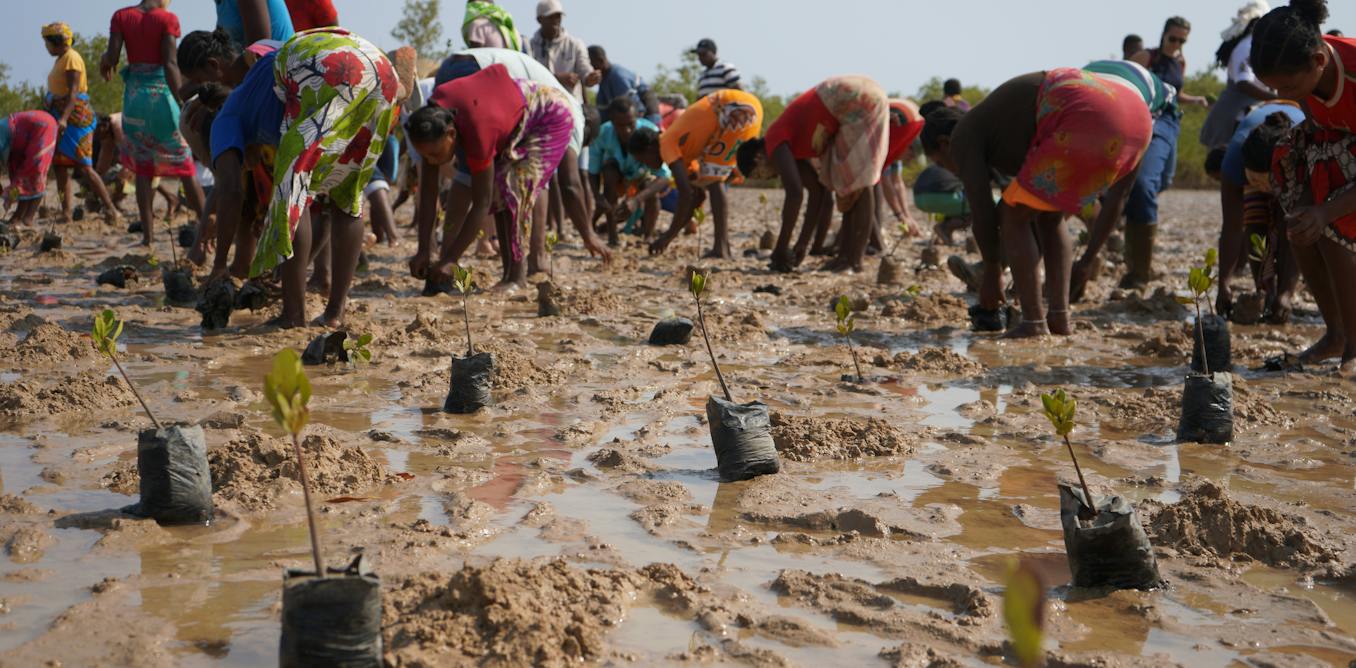
Across Africa, people are restoring and managing mangroves, grazing lands and urban green areas in the face of increasing threats from climate change. Increasingly they make decisions based on climate-related information supplied by governments, funders and researchers. But are they getting the information they need? We are researchers working on ecosystem restoration and the links between people, livelihoods and the environment. We study how nature-based solutions can help people adapt to climate change. Read more: Climate change hits South African women unevenly: why race, class, age and power matter We, together with our co-authors, interviewed 530 people from nature-based projects in Ghana, Kenya, Tanzania, Madagascar and South Africa. Nature-based projects or solutions work to protect damaged ecosystems, restore them or use them sustainably. The people we interviewed were part of community groups, government, NGOs, intergovernmental organisations, parastatals, businesses and research organisations. Some depended on these projects for their livelihoods. Others used nature-based projects to cope with climate change, environmental damage and threats to food and water supplies. Their work included protecting and restoring forests, mangroves, wetlands and rangelands. It also included conservation agriculture, agroforestry, rotational grazing and urban greening. Campaigns against overfishing and deforestation are also part of nature-based projects. So are planting native trees, reseeding grazing land, managing livestock numbers, sustainable beekeeping and removing non-native plants. The uMzimvubu farmers of South Africa. Courtesy Glynis Humphrey. For example, smallholder farmers who use communal lands to graze their sheep in the uMzimvubu catchment in the Eastern Cape, South Africa form part of grazing associations, which are nature-based solution programmes to support rural livelihoods. The farmers, by participating as members, receive several benefits, including information about managing their rangelands sustainably. Another example is a community nursery in Madagascar that grows mangrove seedlings to replant forests. Read more: Traditional weather forecasts: expert shares 5 ways Africa’s coastal residents predict floods Our research looked at what information people received about past, current and future climate conditions. We asked how they used this information in their work and what else they needed. We asked them to rank which improvements to climate services mattered most, and what they wanted from entirely new services. This helped us identify which existing services needed improving and where new ones were needed. We found that people wanted existing climate services to be improved. They also wanted new community specific services. These should combine weather and seasonal forecasts and projections about climate change with information about land, water, livelihoods and local knowledge. Planting locally adapted trees with crops (agroforestry) in Tamatave, Madagascar. Courtesy Bôndy International. Simply asking people what climate information they need is not enough. Scientists, providers, users and local and Indigenous knowledge holders need the time, resources and incentives to develop climate services together. Institutions and funders need to recognise that getting different types of people to work together is as important as developing a “final climate service product”. What people already use influences what they say they need We found that people already use different kinds of climate information to make decisions, including rainfall and temperature forecasts and warnings about heatwaves, floods and droughts. In Ghana, Kenya, Tanzania, Madagascar and South Africa, these climate services are provided via mobile phones, websites, TV and radio. More than half of the people we interviewed wanted better versions of the information they already use. This suggests that existing services should be improved to meet the needs of different communities and places. Read more: Local knowledge adds value to mapping flood risk in South Africa’s informal settlements More than 80% said existing climate services had limitations. One major problem was that Indigenous and local knowledge forecasting or decision making was not connected to formal climate services. For example, in Turkana, Kenya, traditional seers known as Emuron use Indigenous practices to anticipate severe weather and other climate disasters. Elders also send scouts to assess pasture and water before deciding where livestock should move. But these practices are not connected to formal climate services. Read more: Drought and farming: how women in South Africa are using Indigenous knowledge to cope People also said information was difficult to access or arrived too late. Internet-based services are unsuitable where people cannot afford mobile data, reception is unreliable or they do not have smartphones. Technical reports also need to be simpler, or explained in person by experts. Existing community networks and trusted local people could receive information through formal channels and share it more widely. More than 60% of respondents said climate-change literacy needed strengthening. This included understanding climate change and its impacts, knowing which services were available, and having the skills to interpret and apply the information. People want new local climate services they can act on A public notice board used by fishers in Tamatave, Madagascar, to understand tides and weather. Courtesy Cherié Forbes Climate services often tell people how much rain is expected or how hot it will be. But this does not explain what the forecast means for the land, water or other natural resources they manage. Participants wanted this information combined with data on river flow, soil moisture, vegetation and fire conditions. For example, somebody managing grazing lands wanted to know how rainfall and soil moisture would affect available forage – the grass and other plants that livestock eat. People also wanted climate forecasts and projections combined with local social, health and economic information, such as how rainfall might affect animal health, livestock diseases and the movement of people and animals. Read more: The story of a vegetable garden in rural South Africa shows how communities can drive climate action They wanted information about their specific community, ward or municipality, rather than general regional warnings. This included identifying which places faced the greatest flood risk and what action people should take. The people we interviewed told us that they wanted more climate information on their mobile phones, community radio stations, and through organised community networks, social media and messaging apps. They said these channels should work together so that people who could access and understand the information could share it with others. They also wanted more illustrations, animations and videos with figures and written explanations. Read more: Climate information is useful at local level if people get it in good time: how African countries can build systems to share it People already used services covering heat, droughts and floods. But they said these should be improved. They also saw opportunities for new services giving warnings and information about extreme heat and cold, erosion, landslides, wind and fires. Nine in ten respondents (91%) said new climate services must include Indigenous and local knowledge, including ways of forecasting. In Turkana, people suggested that seers meet with scientists to explain local forecasting methods and develop new services together. Read more: What science tells us about fire hazards facing Cape Town and its surrounds Others stressed the importance of local terms and languages. This requires ongoing cooperation between local knowledge holders, scientists and climate service providers, rather than a few one-off meetings. The innovation people wanted was not simply more technical products, but better ways of bringing together different kinds of knowledge, people and technology. What needs to happen next A Madagascan community mangrove seedling nursery for mangrove restoration. Courtesy Elhuyar/Albatross Project. Our findings show that producing useful climate information takes more than asking people what they need. Scientists, climate information providers, local users and Indigenous knowledge holders need time and support to meet regularly, share what they know and develop the information together. Governments and funders must pay for this work, not only the final forecasts, maps or tools. For example, governments and development funders could cover costs such as travel, community meetings, translation, training and ongoing cooperation, especially in places where local organisations cannot afford them. This will help ensure that climate information reflects local knowledge and helps people make practical decisions.
Africa’s climate services need local detail and knowledge, say people who use the information
Full Article
Original Source
Read the full article at Theconversation →KhanList aggregates and links to publicly available news content. We do not host full articles from third-party sources. Always verify important information with original sources.