
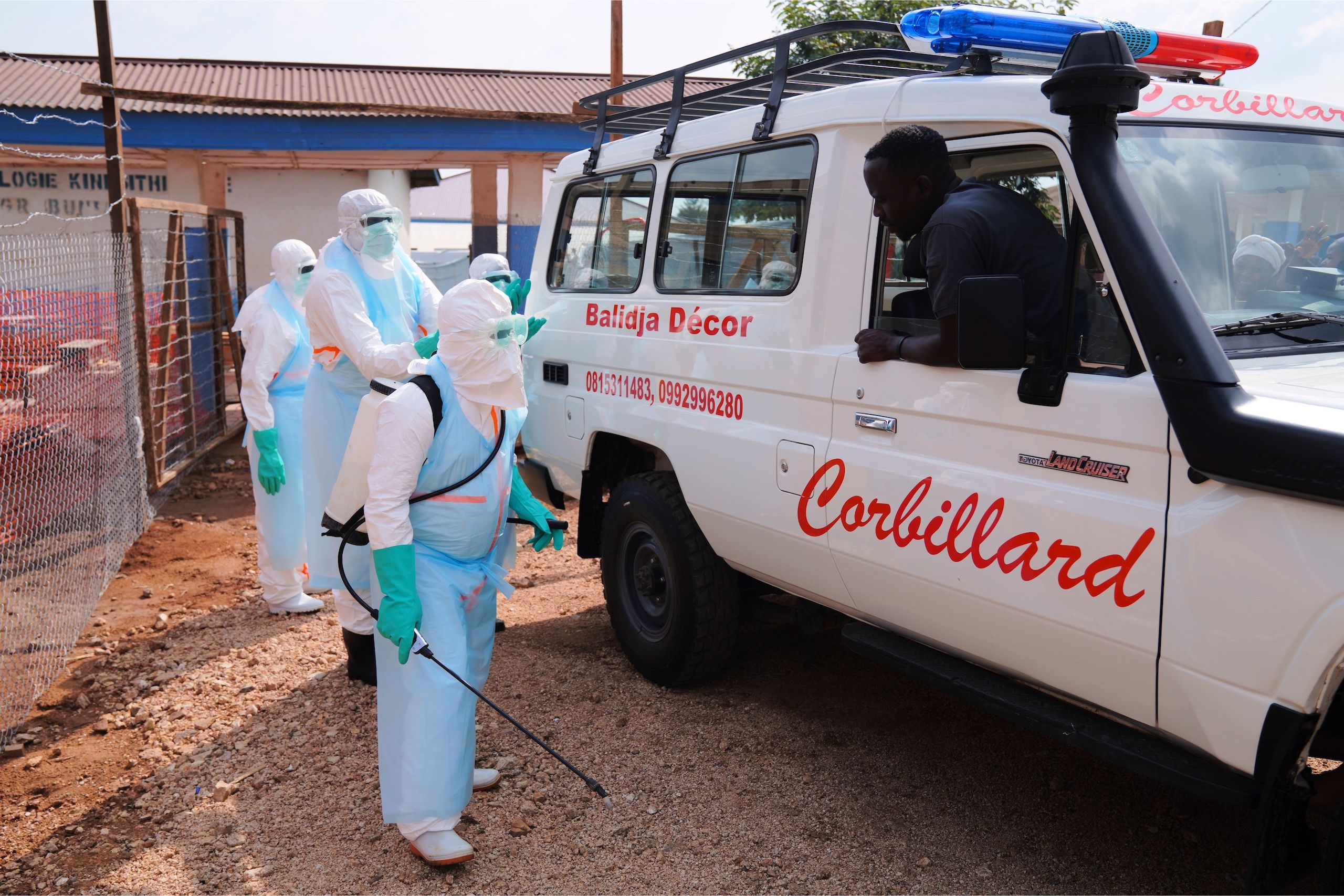
Among the many challenges facing the response is the lack of approved vaccines or treatments for the rare Bundibugyo species of Ebola behind the outbreak.(AFP) — Africa’s latest Ebola outbreak has surpassed 10,000 confirmed cases, the vast majority of them in Congo, Congolese health authorities said Tuesday, with nearly 5,000 deaths.According to the country’s figures, 10,060 people have been infected and 4,887 have died since the virus was first detected in May in the Central African country’s deadliest Ebola outbreak.Cases have also been detected in Kenya, Nigeria and Uganda, with the World Health Organization warning that Africa faces a “complex” task to contain an outbreak spanning the east, west and center of the continent.While 2,684 people have recovered from the virus in Congo, the outbreak’s fatality rate appears to be close to 50%, according to the Congolese National Institute of Public Health.Among the many challenges facing the response is the lack of approved vaccines or treatments for the rare Bundibugyo species of Ebola behind the outbreak.After spreading under the radar for weeks, the virus was first detected in the northeastern Congolese province of Ituri, marking the start of the country’s 17th Ebola outbreak.It has since spread across swaths of the country’s north and east, where violence by various armed groups is widespread and trust in a faraway and long-absent state is low.Ituri and the eastern province of North Kivu, the latter of which is partially controlled by the Rwanda-backed M23 militia, account for the majority of reported cases.Swiss woman evacuatedAfter recording 20 cases and two deaths, neighboring Uganda was declared Ebola-free by the WHO in late August.Kenya, which had not reported a single case of the virus until Oct. 6, has also recorded two deaths among nine cases. Most of those infected had recently traveled to Congo.The only patient so far confirmed to have Ebola in Nigeria, a 42-year-old Swiss woman who contracted the virus following a trip to Uganda with her husband, was evacuated to a hospital in Geneva on Monday.Nigerian health authorities have identified 53 of the patient’s contacts in a bid to stop the virus from spreading across Africa’s most populous nation.Some experts are worried that the virus — transmitted through contact with bodily fluids — could have spread after the Swiss couple returned to Nigeria on Oct. 3.The WHO said the patient, the wife of an employee of the Swiss Embassy in the capital, Abuja, developed symptoms Oct. 7.She sought care in Abuja on Oct. 11 before testing positive for Bundibugyo on Oct. 20.A Ugandan government spokesperson dismissed the idea that the Swiss woman could have contracted the disease while in the African Great Lakes nation.Nurse killedThe response to Congo’s outbreak has been hampered by distrust among parts of the population.A nurse was killed and a health worker seriously wounded in the northeastern province of Tshopo on Saturday, according to the WHO.Dr. Marcel Likolo, chief medical officer of the Bafwasende health district, told AFP that young people from the area accused the victims of trying to infect residents with tablets before attacking them.The Ebola treatment center where the incident took place has since shut down, he said.Since it first emerged half a century ago, Ebola has killed more than 15,000 people across Africa.Testing of the Ervebo vaccine, which has proved effective against the more common Zaire strain of the virus, began in recent weeks to determine whether it could also provide protection against the Bundibugyo variant.Subscribe to our free newslettersOur weekly newsletter Closing Arguments offers the latest about ongoing trials, major litigation and rulings in courthouses around the U.S. and the world, while the monthly Under the Lights dishes the legal dirt from Hollywood, sports, Big Tech and the arts.Additional Reads
Africa Ebola outbreak passes 10,000 cases, mostly in DR Congo
Full Article
Original Source
Read the full article at Courthousenews →KhanList aggregates and links to publicly available news content. We do not host full articles from third-party sources. Always verify important information with original sources.