
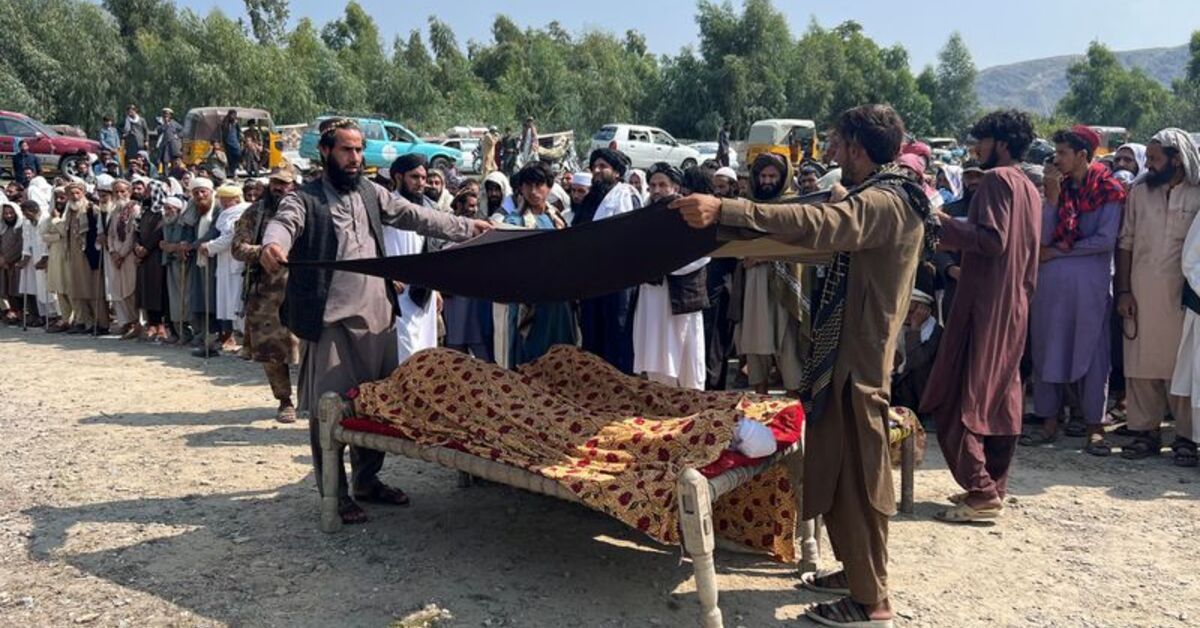
KABUL/ISLAMABAD, Sept 21 (Reuters) - Pakistani airstrikeskilled at least three people in Afghanistan on Monday, Afghan officials said, in action that could reignite tensions between the neighbours after nearly three months of relative calm.The Afghan side "will respond appropriately to this aggression," said Zabihullah Mujahid, chief spokesman of the government.Afghan officials said the strikes targeted civilians. Pakistan's military did not immediately respond to a request for comment.Relations between the former allies have been strained for years amid widening insurgencies in Pakistan, with Islamabad accusing Kabul of harbouring militants who stage cross-border attacks from Afghan territory. Tensions escalated this February and hundredsdied in airstrikes, drone attacks, and artillery fire in the first half of the year.Afghanistan's Taliban government denies the accusation that it's harbouring anti-Pakistan militants and says militancy is Pakistan's internal problem.Theairstrikes on Monday came after a police facility in the northwestern Pakistani district of Kohat was attacked by Islamist militants on Friday, killing at least 24 people, including 15 police officials.Prior militant attacks in Pakistan have often prompted retaliatory strikes from Pakistan.A separate exchange of fire on Sunday killed six Pakistani soldiers, including two officers, and eight militants in the adjacent district ofHangu near the Afghan border, according to a Pakistani army statement.At least one house in Kunar province was hit in the strikes on Monday, killing three members of the same family and injuring four others, Taliban deputy spokespersonHamdullah Fitrat said in a post on X."In Barmal District of Paktika (province), two locations...were bombarded, destroying one shop and one unoccupied house, with no casualties reported," he said.WIDENING INSURGENCIESLast week's attack in Kohat raised new concernsin Pakistanover widening insurgencies, waged by competing groups that have different support bases and ideologies but share a common enemy in the Pakistani state.The attack was claimed by an Islamist militant group calledShura Ittehad-ul-Mujahideen, according toa statement sent to Reuters.The group is headed by warlord Hafiz Gul Bahadur, who had once hosted al-Qaeda and Arab Islamist fighters in the bordering region, said Abdul Basit, an analyst at Singapore's S. Rajaratnam School of International Studies. The group initially focused on attacks against US and NATO forces in Afghanistan.At the time, that stood in stark contrast with Tehreek-e-Taliban Pakistan (TTP) and its insurgency against the Pakistani government in the country's northwest.Bahadur's group turned against Pakistan after a major Pakistani military offensive around 2015 that targeted a safe haven of the group in NorthWaziristan district, Basit said - a military campaign that pushed the group's fighters across the border into Afghanistan.The long-term repercussions of that shift are still playing out today, said Basit, as Bahadur's group has become "an umbrella of different militant groups where Al-Qaeda is the architect and Gul Bahadur is the face."While the public focus in Pakistan has been on the TTP, which was behind most of the deadly attacks that have rattled the country, retaliatory Pakistaniairstrikes have hit both the TTP and Bahadur's hideouts in Afghanistan since late last year.DEADLY STRIKESAfghanistan had launched drones against Pakistan in July, which Islamabad had said its forces had intercepted and shot down.The worst single incident occurred in March, when more than 400 people were killed in a Pakistani airstrike on Kabul, which the Afghan Taliban said targeted a drug rehabilitation centre.Islamabad denied the charge, saying it "precisely targeted military installations and terrorist support infrastructure".Pakistan has a large air force, with 422 combat aircraft and more than 260 helicopters, according to data from the London-based International Institute for Strategic Studies.Afghanistan has no fighter jets but is known to possess at least six aircraft and 23 helicopters, and drones that have previously been used in fighting with Pakistan.(Reporting by Mohammad Yunus Yawar in Kabul and Islamabad newsroom; Writing by Asif Shahzad and Sakshi Dayal; Editing by Jamie Freed, Shri Navaratnam, Rick Noack, Alexandra Hudson)
Afghanistan says Pakistani airstrikes kill at least three
Full Article
Original Source
Read the full article at Al-monitor →KhanList aggregates and links to publicly available news content. We do not host full articles from third-party sources. Always verify important information with original sources.