
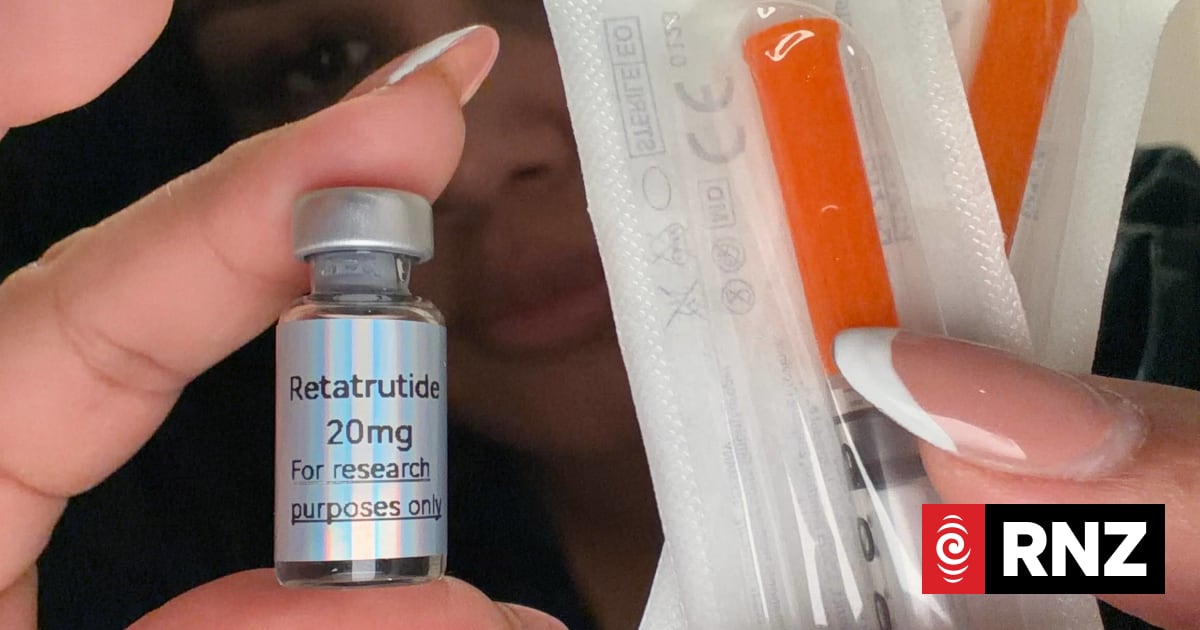
An increasing number of New Zealanders are using unapproved peptides purchased through social media to help with weight loss and chronic health conditions.It comes as Health New Zealand started providing pharmacies with peptide-injecting kits as part of its needle exchange programme.Are you or someone you know using peptides? We want to hear your story and are open to discussing anonymity. Get in touch at: iwitness@rnz.co.nzOceane Ceballos, had lost about 4kg over a 10-week period while using retatrutide, known as "Reta", a weight-loss peptide which is not approved for use in Aotearoa.She had seen "incredible transformations" for people using the drug on social media but found for her, it was not so successful.In May 2026, Medsafe warned against anyone using them if they were not prescribed or sourced from a pharmacy."There is a very real risk that these products may be of poor quality, not contain the substance claimed on the label (if they are labelled), contain other harmful substance not on the label or not be sterile (and so may contain substantial quantities of germs or mould)."These products... are illegal and potentially harmful. Using them can cause serious and potentially life-threatening reactions."Ceballos had been doubtful about injecting peptides until she saw the weight loss results a friend was having."I've got Polycystic Ovary Syndrome (PCOS), so it's hard for me to lose weight. I've been a big girl all my life.. and would like to get back to my pre-baby body."My friend was in the same boat and I saw her lose 24kgs in three months and she just looked amazing... so I was like, I'm gonna give it a go, if my friend had really good results, I'm gonna jump on."In the past, Ceballos said she'd considered getting weight loss surgery and had discussed taking a GLP-1, like Wegovy, with her GP but was put off by the price which was between $365-$470 per month.Ordering Reta was "super easy" Ceballos said and was cheaper at a price of $200, through a "friend of a friend", who had a supplier in China."It was as easy as a bank transfer through my friend and then the supplier ships it to you. I ordered on a Friday and it came by Monday."The seller sent me the wrong needles to use which was really dangerous, it would be so easy to give yourself way more than what you should be having."A vial of Retatrutide Oceane Ceballos had in her fridge.OCEANE CEBALLOS / SUPPLIEDThree weeks into the weekly injections, Ceballos said she didn't notice any difference."I thought did I get a dud Reta? I messaged the seller and she was like 'no, no, here's all the paperwork I have.... I'll add you to my group, hundreds of women can vouch for it'."At week seven, Ceballos said she was told to increase her dose, which is when the negative side effects began. These included waking up in the night with headaches, becoming extremely uncomfortable after eating, diarrhoea and experiencing sulphur burps."I hadn't heard anyone experiencing what I was so I ended up speaking with a GP about my side effects and they recommend I stop before it gets any worse."Ceballos said she didn't listen and continued for another three doses. Until the side effects became too much."In these groups I was open about what I experienced and I started thinking is this all just a marketing scheme? Are these AI bots replying to me?"There was no one I could speak with who was going through what I was going through... it just didn't work for me at all... I'm not going to go and promote Reta, people need to be more informed."She urged anyone considering injecting peptides to "do it the right way" and speak with their GP.Molly* who spoke to RNZ on condition of anonymity, is also no longer injecting peptides, but planned to go back on them to help with inflammation caused by endometriosis. She said it also helped her quit drinking and smoking.She had used Reta before moving to KLOW, a four-peptide blend and GLOW peptide stack.Molly said she'd had no bad side effects and her doctor was aware she was on them."I've been off for four weeks now and my inflammation is coming back."Molly said she knew lots of other women who were injecting peptides and she was able to source it online."My sister had someone she bought it off and I sampled that one, but I wanted to do my own research and supply. I've known plenty of people who have snorted so much up their nose... do you know where it comes from? Some people are so quick to put down someone who has found a good source."She said she found her supplier though community pages on social media.Molly was able to source peptides through social media. (File photo)Samuel Boivin / NurPhoto via AFPMolly used a needle exchange as she used to buy her own boxes from an Auckland supplier but they recently changed its rules so only registered companies could buy them.She wanted to see peptide testing come into New Zealand."You can get drugs tested at a concert, but no where to safely take your peptides."There's so many people that are on it... my mum's on it, my sister's on it, my neighbours are on it… everyone I know is on it. You'd be surprised."What is in imported peptides?Dr Paul Harris runs the Harris Peptide Laboratory and had found concerning results in his analysis of imported peptides."In one case, [I tested] a 'Wolverine Stack' which is a mixture of two peptides, there's the Body Protective Compound and TB-500, and I couldn't see any evidence of TB-500 in that sample... In fact, it was an unknown peptide and I'm still not quite sure what it is," he said."I also analysed a couple of samples of retatrutide, which claimed there were 10 milligrams in each vial, and my analysis found they were different amounts in each vial."He said people didn't know what they were injecting into their bodies."A lot of these things are arriving with so-called 'data sheets' which I think have mostly been falsified, because you don't actually know how they've analysed them."'Touted as a wonder drug'Social media touted peptides as a "wonder drug", Professor of policy and health at Massey University Chris Wilkins said.Massey University Professor Chris Wilkins. (File photo)RNZ / Rebekah Parsons-King"People are probably most familiar with the weight loss ones, which are actually clinically trialled pharmaceutical products you can get through your doctor, so there is real evidence for some of those peptides in specific areas."The problem is there's a whole range of peptides and a whole range of claims about them, and we're talking about ones that are not manufactured under medical-grade conditions, and are not purchased or obtained through the health system."The products may not be the substances users think they're getting, Wilkins said and since they were manufactured in unregulated conditions, they could come with their own contaminants.Injections were also risky, Wilkins said, as people weren't always aware of health risks involved in terms of clean needles and good injection practice.Wilkins said good information needed to get out to people using peptides about some of the risks involved, especially in purchasing online from unknown sources.University of Auckland molecular medicine and pathology Professor Peter Shepherd said there was no real way of knowing the quality of the products."There's huge risks, risks of infection, of overdosing, because we just don't know what's in them."He said it showed people were really desperate to lose weight and was a real "cry for help"."We should really be doing something about this bu supplying legitimate products through proper channels."There's a very worrying degree of people believing anything they see on social media, and taking risks as a result. It's very disturbing."*Pseudonym used to protect anonymity.
Affordable and easy to access: Why peptide users say they’re injecting unregulated drugs
Full Article
Original Source
Read the full article at Rnz →KhanList aggregates and links to publicly available news content. We do not host full articles from third-party sources. Always verify important information with original sources.