
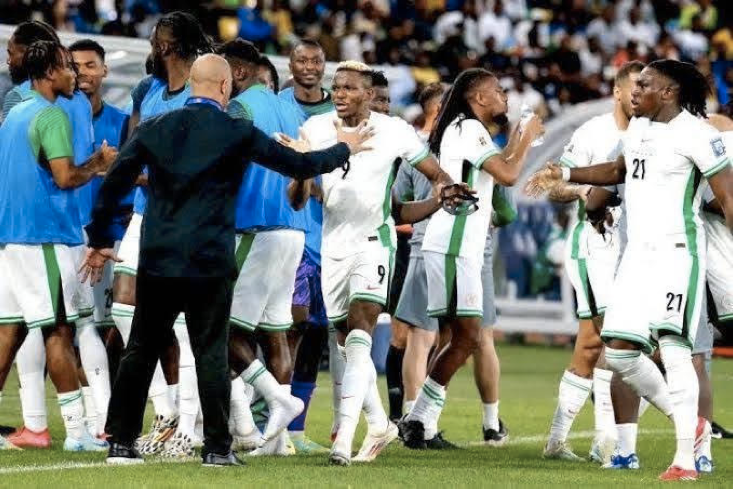
Follow THISDAYLIVE on GoogleAdd us as a preferred source to see more of our stories in Google Follow us on Google For decades, qualifying for the Africa Cup of Nations was never really a question in Nigeria—it was an administrative formality on the road to continental glory. While the FIFA World Cup occasionally demanded nerve-wracking final-day drama, the biennial African showpiece functioned as the Super Eagles’ birthright. Three continental titles, five runners-up finishes, and a staggering 16 semi-final appearances built an aura of inevitability around Nigerian football. Today, that aura has evaporated. Still nursing the deep psychological wound of missing out back-to-back on FIFA World Cups in 2022 and 2026, Nigerian football is staring down an unthinkable new low: failing to qualify for the 2027 Africa Cup of Nations in Kenya, Tanzania, and Uganda,writes Kunle Adewale T uesday’s frustrating, goalless stalemate against Tanzania in Zanzibar was more than just two dropped points on Matchday Four of the qualifiers. It was a stark, uncomfortable mirror held up to a footballing giant in freefall. Across 90 minutes at the Amaan Stadium, Eric Chelle’s side fired 22 shots—compared to Tanzania’s 14 attempts. Yet for all their territorial dominance and volume of chances, the Super Eagles lacked the composure, precision, and ruthless edge that once defined green-and-white forward lines. A Razor-Thin Margin for Error The arithmetic in Group L is brutally unforgiving. Because Tanzania are co-hosting the 2027 tournament alongside Kenya and Uganda, the Taifa Stars are already guaranteed automatic qualification. That quirk in the tournament structure means Group L offers only a single qualifying ticket for the three remaining nations: Nigeria, Guinea-Bissau, and Madagascar. Second place offers no safety net. Following Tuesday’s fixtures—in which Guinea-Bissau dispatched Madagascar 2-0 in Bissau while Nigeria laboured to a 0-0 draw in Zanzibar—the Djurtus sit atop Group L with 10 points from four matches, three points clear of second-placed Nigeria on seven. With only two matchdays remaining in March 2027, qualification is barely hanging by a thread. Should Nigeria falter in their penultimate away trip to Madagascar while Guinea-Bissau defeat Tanzania, the three-time African champions will suffer the humiliation of watching the 2027 AFCON from home. “This group is difficult because we have only one team to qualify. If we were not in this group, we would be fine. Because of one team, we are in trouble,” Franco-Malian tactician Eric Chelle admitted during a sobering post-match press conference. “When you want to succeed during the qualifiers, if you win at home and draw away, this is the way to finish in first or second position.” In normal circumstances, Chelle’s logic holds water. Under ordinary qualifying rules, beating Tanzania 3-1 in Uyo—as Nigeria did last Friday courtesy of Alhassan Yusuf’s opener and a second-half brace from substitute Tolu Arokodare—and following it up with an away draw would be considered a solid international window. But Nigeria forfeited the luxury of “normal circumstances” back in September. The Ghosts of Bissau and Road Struggles Chelle has repeatedly pointed to Matchday Two’s catastrophic 3-0 thrashing away to Guinea-Bissau as the original sin of this campaign. To be humbled by three unanswered goals in Bissau was not merely an upset; it was an indictment of Nigeria’s collapsing competitive floor. “A draw away from home is not a bad result, but in our situation, because we lost to Guinea-Bissau, that is why we are in trouble,” Chelle confessed after the Tanzania stalemate. “We are in trouble because if they win, we have to score many goals. Now we have to win in Madagascar and the last game.” That defeat in Bissau fits into a much wider, troubling pattern: the Super Eagles have forgotten how to impose themselves away from home. Since Chelle took the reins, Nigeria’s away form across competitive and friendly fixtures has exposed a team fragile under pressure and short on tactical authority. While they managed hard-fought competitive wins on the road against Rwanda and Lesotho, they were held to draws by South Africa and Tanzania, and suffered damaging defeats to both Guinea-Bissau and Morocco. Even in international friendlies outside Nigerian soil, the results reflect a side struggling for consistency—falling to Egypt and Portugal, playing out stalemates with Poland, and trading blows in draws against Russia. Blunt Force in the Final Third Against Tanzania on Tuesday, the failure was not a lack of effort, nor was it an inability to reach the opposition’s penalty area. Rather, it was an alarming breakdown in basic execution when it mattered most. “It was a good game. Tanzania’s choices were very good. In the first half, they tried to keep the score, and after that, in the second half, they tried to apply high pressure,” Chelle explained, dissecting his team’s wastefulness. “For us, we started well. We had a lot of chances to score. We shot 22 times but didn’t score. It was tough, but every time someone missed the final kick, the final pass or the pass before the final pass. This is why we didn’t score. I think the players gave everything.” For a nation that boasts some of Europe’s most celebrated attacking talent, watching the Super Eagles register 22 shots without finding the back of the net feels baffling. Yet it mirrors the exact malaise that cost Nigeria a ticket to the 2026 FIFA World Cup. The Hangover of Two Missed World Cups To understand the panic gripping Nigerian supporters today, one must look at the cumulative trauma of the last four years. Missing the 2022 World Cup in Qatar after losing a decisive playoff to bitter rivals, Ghana on away goals was supposed to be a wake-up call. Instead, the 2026 World Cup qualifying series proved that no lessons had been learned. Despite FIFA expanding the 2026 World Cup to 48 teams and handing Africa nine direct slots plus an intercontinental playoff berth, Nigeria contrived to finish behind South Africa in Group C. Forced into the African playoffs in Rabat in November 2025, the Super Eagles briefly flickered to life with a dramatic 4-1 extra-time victory over Gabon, before crashing out three days later against DR Congo—losing 4-3 on penalties after a sluggish 1-1 draw. Back-to-back World Cup absences have stripped Nigerian football of its prestige, its commercial appeal, and its generational momentum. An entire crop of prime-age Nigerian stars risks never stepping onto football’s grandest stage. And now, the rot has spread to the one tournament Nigeria always treated as a sanctuary. Even a commendable run to third place at the 2025 AFCON in Morocco—where Nigeria edged Egypt on penalties after falling to the hosts in the semi-finals—now feels like a fleeting distraction rather than a foundation. Beneath the surface, structural dysfunction, revolving-door coaching appointments, tactical rigidity, and an over-reliance on individual brilliance have hollowed out the national team setup. March 2027: Judgement Day When the qualifiers resume in March 2027, Eric Chelle and his players will walk onto the pitch in Madagascar carrying the weight of a disillusioned nation. They must win in Antananarivo, pray for a favour, or set up a winner-takes-all showdown against Guinea-Bissau in Uyo on the final matchday—where they would likely need to overturn the heavy 3-0 head-to-head deficit from Bissau. For a country that once terrorized defenses from Cairo to Johannesburg, relying on calculators and hoping for slip-ups from Guinea-Bissau is a bitter pill to swallow. Whether the Super Eagles pull off a miraculous escape in March or suffer the ultimate indignity of missing AFCON 2027, the verdict on the current state of Nigerian football is already clear: the giant has fallen asleep, and the rest of Africa is no longer afraid to step over it.
AFCON Qualifier : From Birthright to Brink
Full Article
Original Source
Read the full article at Thisdaylive →KhanList aggregates and links to publicly available news content. We do not host full articles from third-party sources. Always verify important information with original sources.