
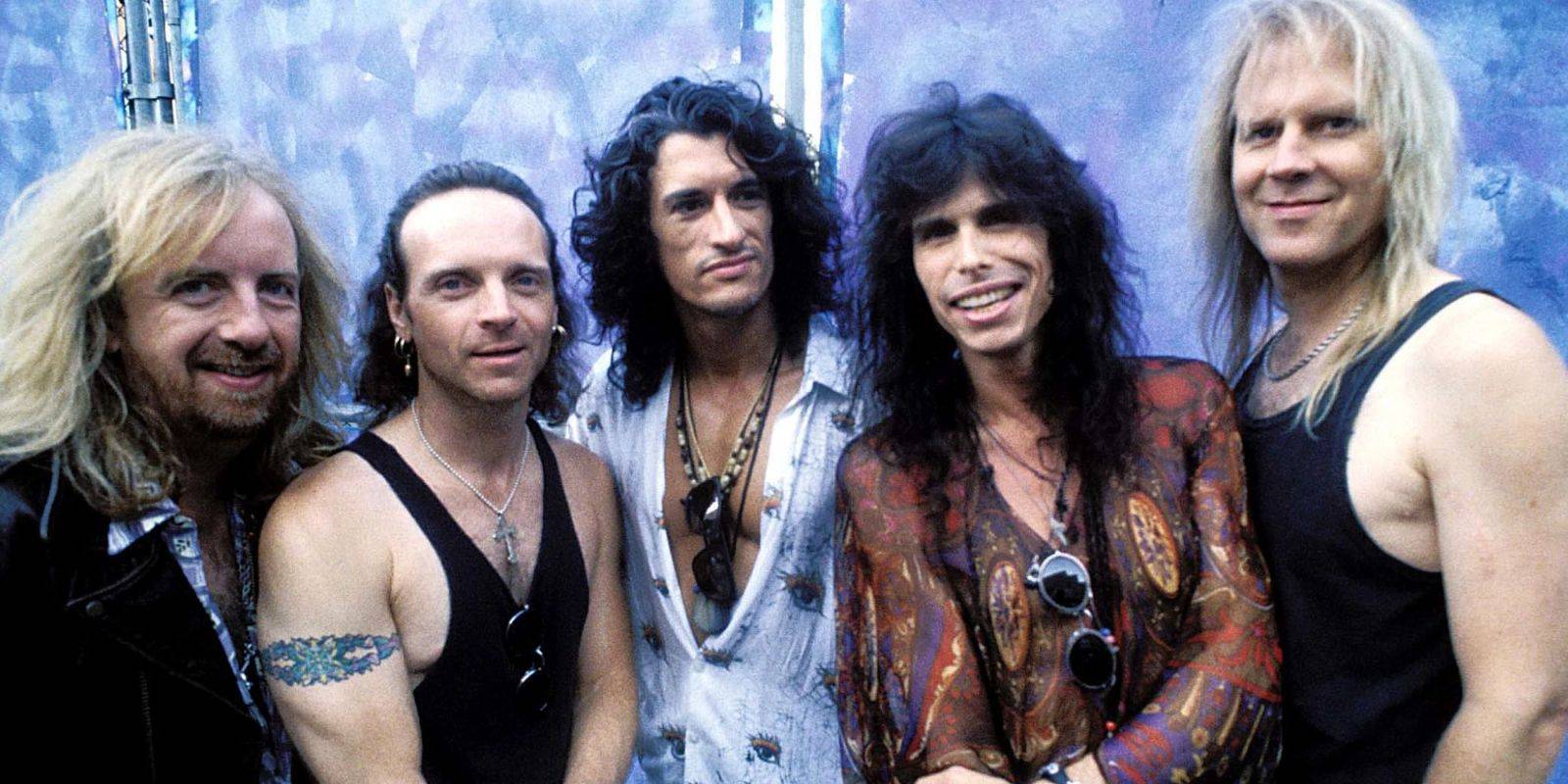
Published Aug 4, 2026, 6:41 PM EDT Michael Christopher is a music journalist, author, and historian who has spent years interviewing artists, covering concerts, and writing about the stories behind the music. His work focuses on rock, metal, alternative, post-punk, indie, and pop music, with an emphasis on artist interviews, music history, and cultural trends. Whether he's talking with a new artist or digging into the legacy of a legendary band, his goal is to provide readers with context, perspective, and a deeper understanding of the music they love. By the mid-'80s, Aerosmith had become a cautionary tale; a washed-up group of almost legends reduced to stumbling drunks and drug abusers who couldn't keep it together. Then the original lineup was reunited, Steven Tyler and Joe Perry were writing together again, and the surprise success of Run-D.M.C.'s remake of "Walk This Way" had put the band onto MTV for, truly, the first time. But one hit collaboration wasn't enough to erase years of declining album sales, disastrous or canceled concerts, and the feeling that one of America's biggest rock bands already had its moment. That all changed with Permanent Vacation. The record didn't just produce colossal hits like "Dude (Looks Like a Lady)," "Angel" and "Rag Doll," it gave the Bad Boys from Boston a second act bigger than its first, resetting the band's career, introducing them to an entirely new audience, and laying the foundation for the blockbuster success of Pump and Get a Grip, the latter their first number one album. Without Permanent Vacation, there's a good chance Aerosmith would be remembered very differently today. Things Fell Apart by the Dawn of the ‘80s Image via Shutterstock It's hard to remember now, but there was a point where Aerosmith were nearly forgotten. Formed in Boston at the onset of the ‘70s, the quintet were late-bloomers, not striking gold – or Platinum, rather – until the LP Toys in the Attic spawned the hits “Sweet Emotion” and “Walk This Way” in 1975, leading to the reissue of their debut single “Dream On,” and establishing them as one of the decade’s great rock and roll bands. Success brought with it all the predictable temptations of drugs, women, and overspending, and the members of Aerosmith fell for all of them, resulting in band infighting. Guitarist Joe Perry was the first casualty, exiting the group in the summer of 1979 as his drug-fueled songwriting partnership with frontman Steven Tyler had become untenable. Fellow guitarist Brad Whitford followed him out the door two years later, and the album without the pair, Rock in a Hard Place, was largely viewed as a misfire. Perry wasn’t faring much better, with a third effort from his namesake The Joe Perry Project tanking on the charts in 1983. Similarly, Whitford’s team-up with singer Derek St. Holmes, uninventively dubbed Whitford/St. Holmes, failed to make waves beyond guitar-nerd circles and Aerosmith completists. Realizing they were better together than apart, the group reconvened in 1984 and launched the Back in the Saddle comeback tour that summer. “Now we were in our thirties and facing some daunting questions - could we rekindle the fire?” Perry wrote in his 2014 memoir Rocks: My Life in and out of Aerosmith. “Could we put the old hurts and complaints behind us? Could we get the energy back? Did our fans give a shit about us, or had they switched loyalties to a younger generation of bands?” The tour did respectable numbers, and showed how forgiving Aerosmith fans could be, but the band was without a record deal, and the future left murky at best. A Boost Comes from an Unlikely Collaboration Image via MTV Vault Due to the marked interest in the reunion tour, Geffen Records took a chance on offering Aerosmith a record deal. However, even with renowned producer Ted Templeman at the helm, the fall 1985 release Done with Mirrors was a dud, putting the brakes on the comeback and necessitating a fresh strategy for reigniting interest in the group. Salvation came in the form of a wildly popular genre of music which had exploded into the mainstream: rap. Producer Rick Rubin, co-founder of Def Jam Records, reached out to Perry to see if he and Tyler might be interested in collaborating with one of the hottest acts of the day, Run-D.M.C., who were remaking the Aerosmith smash “Walk This Way.” The union with the Queens trio on record was a boon for everyone involved. It brought rap to rock and vice versa. More importantly, there was a whole new crop of fans who were digesting music via a still nascent medium in MTV. The 24-hour video channel had mostly ignored Aerosmith, playing their clips sporadically at best, but when Tyler and Perry appeared in the Run-D.M.C. video for “Walk This Way,” it was a no-brainer to put it into heavy rotation based on the uniqueness alone and seeing a quite literal demonstration of the wall between the two genres crumble. The Run-D.M.C. version of "Walk This Way" was a home run as the rap group’s highest-charting hit at No. 4, and it made Aerosmith relevant again. But the novelty aspect for audiences wasn't enough to guarantee the band a future. If the band’s next LP flopped, they probably would've settled into the oldies circuit at state fairs and early evening shows at casinos. Instead, they became one of the biggest rock outfits in the world. Aerosmith Had to Make One Huge Change in Their Lifestyle to Succeed Image via Jeffrey Mayer/WireImage While pairing with Run-D.M.C. – both in the studio and on the video shoot – Tyler and Perry were still hampered by their addictions. Heroin, cocaine, prescription drugs, alcohol; all of it coursed through the lives of the Aerosmith lineup in various forms. It had become their trademark over the years. Like the Mick Jagger and Keith Richards partnership before them had been nicknamed "The Glimmer Twins" in The Rolling Stones, Tyler and Perry became known as "The Toxic Twins" due to their mythical intake of illicit substances. Aerosmith manager Tim Collins, who so far had an excellent track record since taking the reins that included the reunion tour and getting signed to Geffen, insisted they all get sober. It was the only way to be able to have a fighting chance against the explosion of rock and roll led by the likes of Bon Jovi, Def Leppard, and the endless parade of glam metal acts on MTV. One by one, the members of the band embraced teetotalism, either on their own or with the help of rehab. “It’s hard not to hammer away at the fact that Permanent Vacation was the first record that Aerosmith ever basically did clean,” bassist Tom Hamilton said in the oral history Walk This Way: The Autobiography of Aerosmith. “Or that we all knew this album was do-or-die.” The shakiness of newfound sobriety, along with the pressure to deliver a hit album, made for snail’s pace progress in writing the follow-up to the disappointing Done with Mirrors. At the behest of Geffen A&R savant John Kalodner, the band enlisted songwriter Desmond Child, who helped pen the recent Bon Jovi megahits “You Give Love a Bad Name” and “Livin’ on a Prayer.” He would be one of many outside writers who were brought in to assist with composing the music for the group for the first time in their history, becoming the norm going forward. Once a handful of promising tracks were cobbled together with Child, including “Dude (Looks Like a Lady)” and “Angel,” it was time to find a guiding hand in the studio with the unenviable task of taming Aerosmith. In another Kalodner directive, Canadian producer Bruce Fairbairn was hired, luring the group to Little Mountain Sound Studios in Vancouver. His involvement guaranteed a slicker sound that would fit more easily into the current pop landscape. “I saw him as a coach,” Perry said. “We had the energy, but he had the skill to harness it. He also had no fear of standing up to anyone – including Steven.” MTV Took Notice of the Band's New Approach Released in August 1987, Permanent Vacation saw “Dude (Looks Like a Lady)” as the lead single. Longtime Aerosmith fans were shocked at the shiny, pop sensibilities, pronounced horn section, and accompanying video with its tongue-in-cheek nature that included a cross-dressing Tyler. Yet the majority – and MTV – ate it up. They couldn’t get enough of this new, bordering on campy version of the group. Aerosmith always had a wry sense of humor, but with the new album, they really leaned into it. Each of their videos had some sort of comedic storyline, whether it was the New Orleans-infused “Rag Doll” with the clichéd Daddy’s little girl all grown up out of his sight, or “Love in an Elevator” and the buxom brunette offering the famous opening line, “Oh, good morning Mr. Tyler. Going…down?” Then there was “Angel.” In an era where every rock outfit needed a power ballad calling card, Aerosmith – with help from Desmond Child – came up with a song that became their highest-charting single to date, peaking at No. 3 on the Billboard Hot 100. Ironically, despite it being such a big hit, “Angel” would end up as the least performed of all their popular songs from the album in a live setting. Having a sentimental love song backed by a wall of guitars also helped open the gates wide to a foreign demographic: the female audience. Historically, the band had dubbed their largely male devotees “The Blue Army,” named for the sea of denim that could be seen from the stage, with the dudes always up front. Now, with a prominence on MTV eclipsing the growing contingent of hair metal as well as providing the coveted opening slot on the ensuing tour bestowed upon up-and-comers like White Lion, Dokken, and, most notably, Guns N’ Roses, Aerosmith were suddenly seeing just as many women at their shows as men. Permanent Vacation, which would top out at No. 11 on the Billboard 200 and go on to sell five million copies in the U.S. alone, isn’t without its flaws. “Simoriah” was too esoteric for a song about landing an unattainable woman, a subject that had always been Tyler’s bread and butter. The Beatles cover, “I’m Down,” while solid, is unnecessary. And album closer “The Movie” is interesting as an experimental instrumental, but woefully out of place. Even those stumbles are overshadowed, though, by the bombast of the singles and the revitalization effect the LP had as a whole. It supercharged Aerosmith as they geared up for the next decade, providing the confidence to create 1990’s Pump, which was even more successful than Permanent Vacation, and ultimately laid the groundwork for the band’s first No. 1 album, 1993’s Get a Grip. “So what happened was we burned out and hit the ground, then we came back,” Perry said in Walk This Way. “But it was a really hard thing, a scary time.”
Aerosmith Needed This Album to Restart Their Careers
Full Article
Original Source
Read the full article at Collider →KhanList aggregates and links to publicly available news content. We do not host full articles from third-party sources. Always verify important information with original sources.