
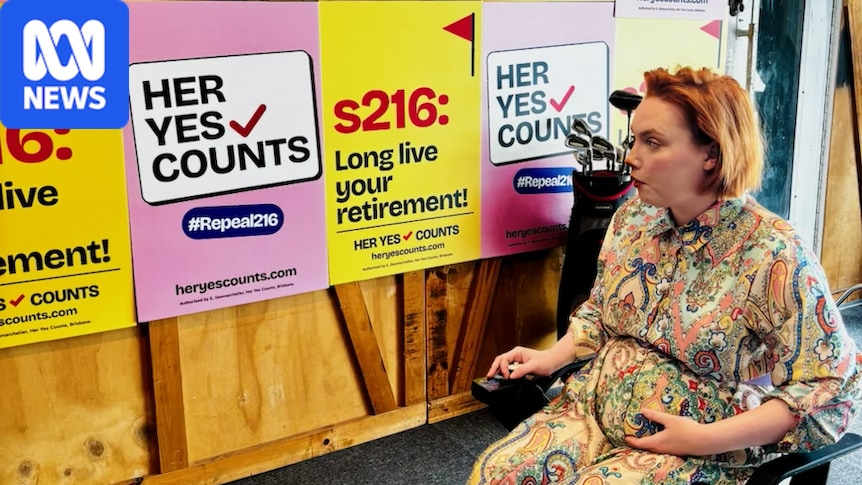
Advocates are calling on the Queensland government to retire "outdated" and "demeaning" legislation that criminalises sexual relationships with people who have intellectual disabilities.Section 216 of Queensland's criminal code makes it illegal to have or attempt to have sex with a person who has an "impairment of the mind".Under the law, an "impairment" is defined as an intellectual, cognitive or neurological disability that significantly reduces a person's capability for communication, social interaction or learning.However, advocates say this definition encompasses people with disabilities who still have the capacity for consensual relationships.Elly Desmarchelier lives with cerebral palsy, and despite leading several national campaigns and even speaking at the UN General Assembly in New York, she said section 216 made her ability to consent "irrelevant".Elly Desmarchelier says Queensland's laws made her ability to consent "irrelevant". (Supplied: Cassidy Cloupet)"It's cruel. It's demeaning," Ms Desmarchelier said."We are not just talking about intellectual disability, although that's how the law has been targeted."The definition is so broad it could include an autistic woman, a woman with mental illness, a woman who has acquired a brain injury."Director of WWILD Sexual Violence Prevention Association Gillian O'Brien said the legislation perpetuated harmful stereotypes and was "overdue for retirement".Gillian O'Brien says new laws should balance rights with the need to protect people from exploitation. (Supplied: Gillian O'Brien)"People with intellectual disability have a right to have sexual relationships, and there's been a long history of infantilising people," Ms O'Brien said."This law does not reflect our modern community attitudes."We want to see this law replaced with better legislation that still acts to protect people with disability from exploitation and abuse but doesn't take away their rights under our Queensland laws."Proposed law changesIn 2022, Queensland Public Advocate John Chesterman published a report into section 216 and determined a review by the Queensland Law Reform Commission was "necessary and potentially overdue".Queensland was not aligned with other Australian states and territories, which provided additional acknowledgement of the agency of people with disability, Dr Chesterman found.He also determined the legislation could have dangerous flow-on effects, such as causing service providers to become cautious about helping their clients access sex education resources for fear of aiding an offence.John Chesterman found that a review of section 216 was "necessary and potentially overdue". (ABC: Molly Slattery)In September, a new publication from the Public Advocate was tabled in state parliament, focusing on people with cognitive disabilities in the criminal justice system.Dr Chesterman recommended section 216 of the Criminal Code be replaced by a provision that makes it illegal for someone who provides treatment or support services to a person with cognitive disabilities to engage in sexual conduct with that person."Where someone's providing services to a person, there's that power imbalance," Dr Chesterman said."That ought to be what we focus on."'Moral panic' approachUniversity of Canberra professor of disability Patsie Frawley agreed Queensland's legislation was "out of step with current practice"."To consider that all people under some very broad definition of impaired mental capacity would not be able to make decisions around sexuality and relationships is really dehumanising a very large group," Professor Frawley said.Patsie Frawley is a Professor of Disability at the University of Canberra. (Supplied)She said that restricting the rights of people with disabilities would not protect them."The question about consent, coercive control and abuse is real for every Australian, and particularly every Australian woman and girl," she said."It doesn't mean that we can create laws that restrict people's rights, knowing that those restrictions will not support safety."[Section 216] is taking a sort of moral panic approach rather than particularly a rights-framed approach, and also an approach that is of today."In a statement, Attorney-General Deb Frecklington said the Queensland government understood section 216 was a "deeply sensitive issue" and was "carefully considering" the Public Advocate's recent report.
Advocates push to replace 'demeaning' sex laws for people with disabilities
Full Article
Original Source
Read the full article at Abc →KhanList aggregates and links to publicly available news content. We do not host full articles from third-party sources. Always verify important information with original sources.