
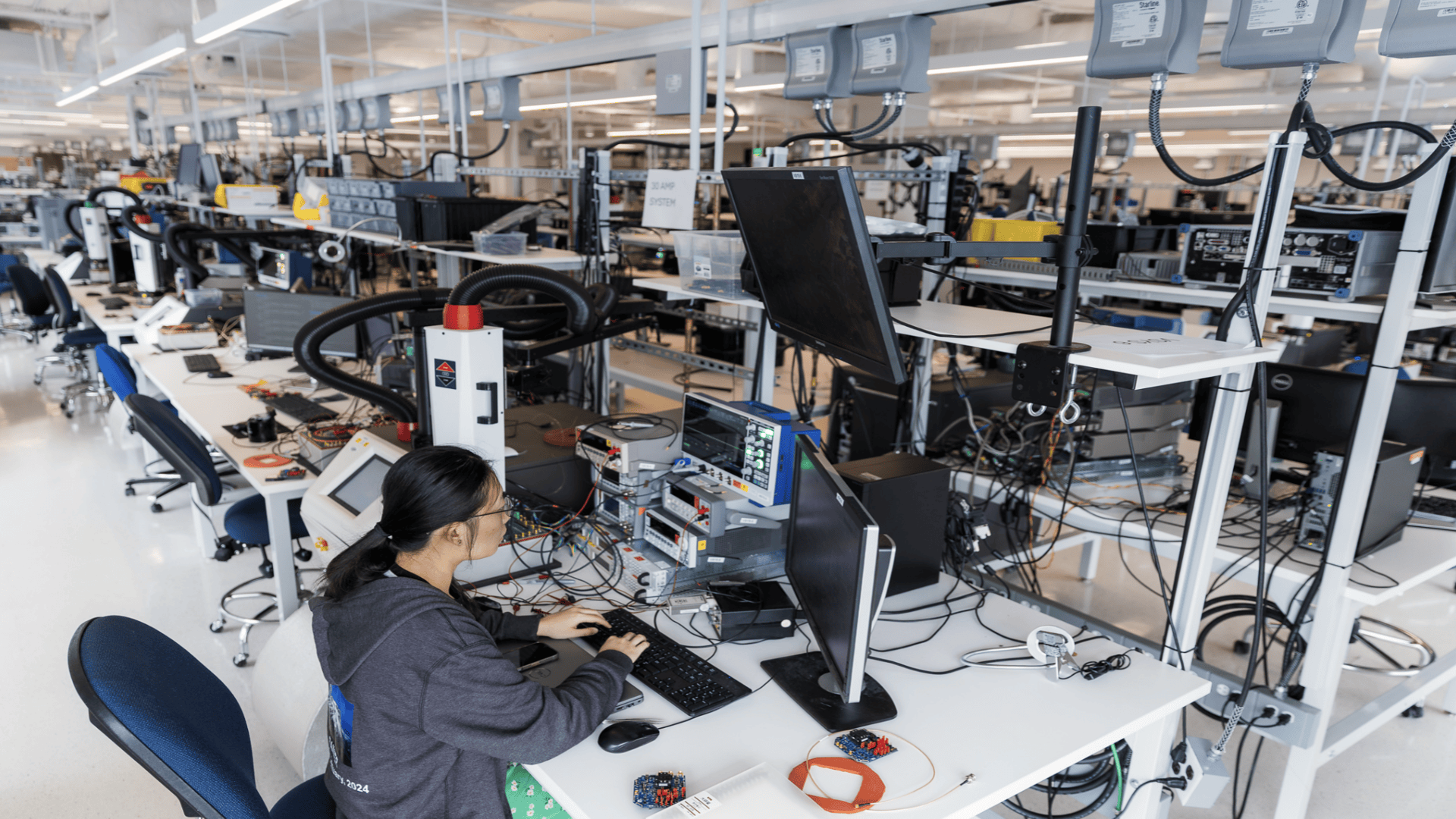
Silicon Labs has opened a new research and development laboratory for advanced chip design and testing at its Austin headquarters, supported in part by a $23 million grant from the Texas Semiconductor Innovation Fund. The facility expands the company’s capability to develop, test, and validate next-generation wireless semiconductor technologies for Internet of Things applications, according to a press release from Silicon Labs. The new R&D laboratory includes advanced research, testing, and validation equipment, as well as an engineering workspace dedicated to advanced chip design and testing. “Our new Austin Innovation Center represents an important milestone in the partnership between the State of Texas and Silicon Labs to advance semiconductor innovation and reinforce Texas as the most attractive destination for semiconductor research, design, and development,” said Matt Johnson, president and CEO of Silicon Labs. “This new space expands our ability to develop the next generation of wireless technologies that will further extend our leadership and the great impact this technology brings to the way we live and work.” A big grant to accelerate wireless tech The $23 million grant comes from the Texas Semiconductor Innovation Fund, established by the Texas CHIPS Act. According to the company, the funding enables Silicon Labs to upgrade its equipment to support more advanced wafer process technology nodes. The expanded laboratory will allow engineers to accelerate product development, validate new technologies more efficiently, and collaborate across disciplines, according to the release. The facility will support development across Silicon Labs’ wireless portfolio, including its Series 3 platform. The platform provides security, artificial intelligence capabilities, and wireless connectivity for applications spanning smart homes, industrial systems, healthcare, commercial environments, and smart cities. Silicon Labs said the new laboratory expands its ability to develop secure and intelligent wireless technologies as demand for connected devices grows. The company said its technologies are designed to help make everyday products smarter, more secure, and more energy-efficient. The Texas Semiconductor Innovation Fund was created to support semiconductor research and development investments, reduce barriers to innovation, and address growing global competition in the semiconductor industry. One of the world’s largest companies in wireless Silicon Labs, one of the world’s largest companies focused exclusively on wireless IoT connectivity, develops wireless chips and embedded connectivity technologies. The Austin-headquartered company operates in more than 16 countries and serves markets including smart homes, industrial IoT, and smart cities. The company officially opened the new Austin Innovation Center with a ribbon-cutting ceremony attended by Silicon Labs senior leaders and employees, as well as representatives from the State of Texas. The new facility also expands the company’s engineering workspace and provides equipment for research, testing, and validation. Silicon Labs said the investment will support continued development across its wireless technology portfolio, enable engineers to bring new technologies to market faster, and create high-value jobs and long-term economic growth to Texas, the release concluded. According to Silicon Labs, the facility and its partnership with the state are intended to advance semiconductor innovation, strengthen domestic technology leadership, and sustain long-term economic expansion while keeping advanced semiconductor research and development in Texas. Get the latest in engineering, tech, space & science - delivered daily to your inbox.Originally from LA, Maria Mocerino has been published in Business Insider, The Irish Examiner, The Rogue Mag, Chacruna Institute for Psychedelic Plant Medicines, and now Interesting Engineering.
Advanced wireless chips for smart devices gets multimillion-dollar US testing hub
Full Article
Original Source
Read the full article at Interestingengineering →KhanList aggregates and links to publicly available news content. We do not host full articles from third-party sources. Always verify important information with original sources.