
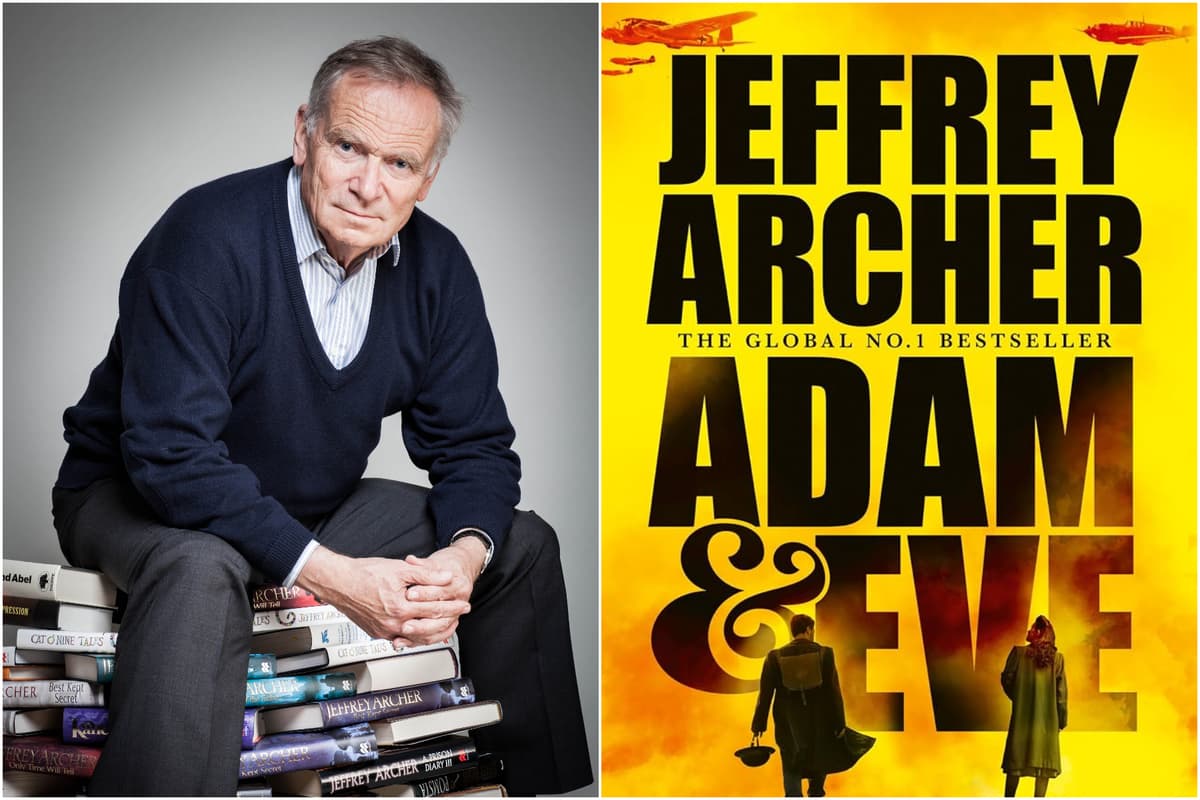
Back in the 1980s, you couldn’t open a paper without seeing Jeffrey Archer. He was accused of this, lambasted for that, and hosted phenomenally popular parties in his swanky Thames-side apartment. And he wrote books, dozens of them, the kind of books which attached themselves to the top of the best seller lists as if with superglue (he has, his obituaries said this week, sold over 300 million books, which is a lot more than I have, and I’ve written nearly as many).That was the extent of our relationship until I read A Prison Diary, a rather brilliant book about the time he spent in Belmarsh, the Category A high-security prison in south-east London where he was incarcerated for perjury. A terrific read, it highlighted the fact there were more heroin addicts coming out of prison than going in.And that was that. Until a few weeks ago, when I was asked to review his latest novel, which proudly said it would be his last. In a plot development worthy of Archer himself, he passed away this week, to largely generous notices, and with good reason.The silliness of Archer snobsReading a Jeffrey Archer book was always a bit like listening to Capital Gold — they weren’t offensive, there would be parts of the experience you’d enjoy, but the overall experience was a bit “meh”. However, I’ve always rather despised the snobs who dismiss so-called popular novelists, as to me they always come across as the grammar school kids who patronised us secondary modern kids when I was young. But then Archer attracted a different kind of snobbishness, because critics didn’t like the idea of him being successful. They could put up with the success of Lee Child or Robert Harris, JK Rowling or Jilly Cooper, Tony Parsons or James Patterson, but Archer was considered to be beyond the pale. Which was really a bit silly, and also rather sad. I wondered how distracting Adam & Eve would be on a railway journey from Paddington to Abergavenny. On this trip, so fearful was I of taking my book out and the public scrutiny that would follow, I fully expected the train announcer to say, “We advise you to avoid carriage number three as we’ve spotted someone reading the latest book by Jeffrey Archer.”The book follows two children born on Armistice Day in 1918, hours apart but into vastly different worlds. Eve is the daughter of an earl, while Adam is the son of a shepherd. Despite class divisions, they forge a deep bond that endures through the turbulent decades between the world wars. As Britain faces the threat of Nazi invasion in 1940, their courage, sacrifices and choices unexpectedly influence the nation’s destiny. Spanning the Norfolk Broads, Dunkirk and wartime Britain, the novel predictably but not unenjoyably rattles along, one of those potboilers that ignores adjectives and yet manages to conjure up a completely inhabitable world.Gripping almost till the endThere are some great lines in it, which you feel Archer could have littered the book with if he had wanted it to be read by fewer people. “Every Brancaster had hobbies,” he writes. “For some of their ancestors it had been fine paintings, pedigree horses, even first-edition books. For the ninth Earl of Brancaster, it was vintage wines that gathered dust in his cellar, while his brother specialised in second-edition women, but only after leaving a roulette wheel that rarely settled on his chosen number.”Adam & Eve by Jeffrey ArcherThe plot is pretty good, I took to the characters, and it’s all quite engrossing. I suppose my problem is that I didn’t really care enough about what happened in the end, even though I enjoyed it when I got there. But then I think that’s probably my fault, and not Jeffrey Archer’s.
Adam & Eve review: Jeffrey Archer’s last words rattle across class divides
Full Article
Original Source
Read the full article at Standard →KhanList aggregates and links to publicly available news content. We do not host full articles from third-party sources. Always verify important information with original sources.