The scene took place nearly half a century ago. It was June 9, 1977, and ABC News was about to broadcast journalist Barbara Walters’s highly anticipated interview with Cuban president Fidel Castro. A family of four, a husband and wife and their two daughters, sat in front of the television in the living room of an apartment in West New York, New Jersey. Before the interview began, and before Castro declared that he had become a communist through studying the political economy of capitalism, or that he would remain in power for as long as the people wanted him there, the newscast opened with images of El Morro, the Malecón, the Capitolio, the sublime city that is Havana.One of the daughters, Ada Ferrer, a 15-year-old teenager, felt her eyes well up with tears. “What’s wrong with you? Why are you crying?” her parents asked. Ferrer was crying for everything she did not know about herself. She replied: “Because I was born there and I have no memory of that place. What does it mean to be born somewhere and not be able to remember it?”Nearly all her life since then — through her training as a historian, her books, her Pulitzer Prize, her work — has been a personal and collective search for the Cuban nation.Ferrer was just 10 months old when her mother carried her in her arms and, without saying goodbye to her nine-year-old son, Poly, whom his father from a previous marriage would not allow to leave the country, embarked on a one-way journey through Mexico that ended in the United States. It was April 1963. Castro’s Revolution was not yet a dying enterprise but a project barely four years old, although Ferrer’s father had already left to settle in New York. He waited for them there.“My mother left Cuba leaving my brother behind, but always thinking they would be reunited soon, that Poly’s father would change his mind and let him leave. There was also the belief that Fidel might fall and we could return,” says Ferrer. But the mother and son would not see each other again for several years, and not even the letters they exchanged month after month could fill the deep crater that separation carved into the family.Following a superb essay published in The New Yorker, My Brother’s Keeper, Ferrer this year published Keeper of My Kin: Memoir of an Immigrant Daughter, a book in which the historian delves into and explores the search for her past.“History shapes the heart of many families; it is present in daily life in ways people sometimes do not realize,” she says. “I have always tried to write histories from below, because we all live under the shadow of history. My family cannot be explained unless I place it in the context of the Cuban Revolution, the beginning of exile, and emigration to the United States. My family is made up of all that.”Question. Why should people read your personal story today? What does it say about Cuba as a nation?Answer. People tend to talk about Cuba in slogans: you are either for it or against it, who left and who stayed. Everything is reduced to that. But that is not Cuba’s true story; it is in families like ours, who experience the Revolution, exile and migration policies in flesh and blood. Family separation, ordinary people trying to survive, is part of the story but is often left untold. The main issue is not ideology; it is family ties and the human condition. This is not only the story of my family; it could be the story of many people over the past several decades. And in the United States, it is not just the story of Cubans: this is a country that receives people from all over the world. People leave their families behind because they see no other option. It is a very painful, very difficult process. At a time when U.S. politics, and especially the president, speaks of migrants as if they were not human, it is important to tell immigrants’ stories in a deeply human way.Q. The symbolic arc of the Cuban immigrant experience in the United States can be seen in your own family: your family was welcomed into this country, yet until a few weeks ago one of your nephews was being held at Alligator Alcatraz. How much does that say about the current moment?A. It is a very different moment. When we arrived in 1963, there was aid, people welcomed you, and now my nephew arrives and is detained. The so‑called Cuban “privilege” has, for the moment, disappeared. They did not repeal the Cuban Adjustment Act, but they are obstructing it; it is frozen. Not only that, the country has changed. The opportunities that existed when I arrived are no longer there. I studied at a very prestigious university and paid almost nothing. There was assistance, more jobs, lower housing costs. Everything has become more difficult.Q. In your latest book we see Ferrer the person, but also the professional. Is it challenging to tell your own personal story using the techniques and tools of historiography?A. It was the only way I could do it. One of the main sources was a set of documents I found after my parents died: the letters my brother Poly wrote to my mother after we left. We left on April 29, 1963, and the first letter is dated May 4 — not even a week had passed; it was a letter from a nine‑year‑old with spelling mistakes to his mother who had just left. Those letters kept arriving at our home until 1979. Reading them was one of the hardest things I have ever done. They were my brother’s letters of suffering, and I imagined my mother reading them and feeling that guilt. I would read one or two and then have to stop. They were hard to read, but I also read them as a historian, as if they were archival sources. That took a great deal out of me. When my brother left during the Mariel crisis [in 1980], my mother and he crossed paths at sea. She went to pick him up in Cuba, but he had already come, and they sent him to one of the camps set up in northern Florida because many people were arriving in Key West and Miami. The documents from that camp are in the National Archives in College Park. So I went and worked in that archive. That is what I know how to do; I have spent more than 30 years going to archives and searching catalogs. I do not think I would have liked to do it any other way.Q. When did Cuba become a subject of professional interest?A. It took quite a while. At university I studied English literature; in the 1980s very little Latin American material was taught. In my first year, I wrote an article about women and the Cuban Revolution. After that, I did not write again about Cuba during my university career. I graduated thinking I would become a lawyer, but I worked at a law firm and did not like it. I only knew I was a good student. Later I thought of studying Latin American history with the aim of becoming a journalist. I did a master’s at the University of Texas, then returned to New York and worked as a teacher. I kept studying, completed a PhD in Latin American history and wrote my dissertation on Cuba — on the war of independence and the racial question within those struggles. That became my first book.Q. Since then, professionally and personally, your life has been a project of reconstructing your memory and your country.A. Yes, but it is not a very efficient method, because immersing yourself in an archive and reviewing 19th‑century documents does not reconstruct my memory or my parents’ memory. But that is how I began; I plunged into the national archive of Old Havana to work. My first trip to Cuba was in 1990. Since then, I have made more than 30 trips; I went almost every year. Sometimes, when I was in Cuba, I felt that what I really wanted to do was look at everything and record it all with my eyes so that afterwards I could show the film to my parents. I began to feel that need to understand Cuba, and it all has to do with family separation. Most of my family remained in Cuba. I wanted to understand why some people had left and others had stayed, how different those who stayed were from those who left, how people change within a revolution and how they change in emigration.Q. How do you think they change?A. My mother in the United States and my aunt in Cuba remained the same, despite such a long separation. Yes, in my aunt’s house there was a photograph of Fidel Castro with his rifle, while in mine there was a picture of Our Lady of Charity. That was very different, but at the same time the culture was shared: the way they spoke, the coffee in the morning. I wondered how people who were so close to one another had chosen such different things.I remember that on my first trip to Cuba I took a lot of photographs, and the whole family in Miami came to see them. One of them showed my uncle Gregorio, my father’s oldest brother, a very sharp-tongued man. I remember his sister seeing the photo and saying: “Look at my brother Gregorio, communism has destroyed him.”That struck me. Twenty-five years had passed, yet there was still this idea that people had not gone on living, that everything was simply a matter of living under communism. But people do go on living, and that was one of the things I saw when I went there: Cuba is not a normal country, but there is life.Q. You have said your father used to say: “Cuba is shit, but it’s my shit!” Is it yours too?A. Yes, especially now. I used to have more hope, particularly during the Obama era, with the opening-up. Not anymore. Now Cuba is a total disaster, and I carry that with me; it keeps me awake at night.Q. Has there ever been a crisis in Cuba’s history comparable to this one?A. I think of Weyler’s reconcentration [policy]. He was the Spanish governor-general who, during the wars of independence, wanted to prevent Cuban rebels from receiving support from people in the countryside. Those people were driven off their land and concentrated in towns where there was not enough food, housing, or sanitation, and a great many died. I think about that from time to time. But this is the worst moment of the past several decades; it surpasses the Special Period. We have now been living through it for 36 years, and this crisis comes after more than three decades in which people have known that, to survive, they need hard currency. It is a crisis on top of a system that is already deeply deteriorated, which is why it is worse. It has been 30 years of collapse. The country is destroyed.Q. There now seems to be a certain nostalgia for the Republic in some quarters...A. Many people feel that nostalgia because it was the period before Fidel and before Batista’s coup, a time of promise. But the understanding of that period is not very deep, because there was a great deal of corruption, and people do not talk about that. People talk about the Constitution of 1940; there were elections with people from all parties, communists, conservatives, and I do not think that those who are talking about the Republic today are necessarily committed to that same spirit of diversity. Since I have always studied race, I do not know whether the people who glorify the Republic understand how much inequality there was. There is inequality now as well; the Revolution did not erase it, and it has worsened over the last 30 years.Q. Your Pulitzer Prize-winning book Cuba: An American History seems especially relevant amid the tensions that exist today between Havana and Washington. How closely have Cuba’s past and present been tied to the presence of such a nearby empire?A. You cannot understand the history of Cuba without understanding the history of that relationship. One thing I am seeing more and more on social media is people writing as though the empire did not matter; some even defend the Platt Amendment, which was imposed by the Americans in 1901 as an appendix to Cuba’s first constitution. It gave the United States the right to intervene and prevented Cuba from entering into agreements with third countries. We have reached a point where we know what the word sovereignty means, yet people associate the word sovereignty as though it belonged to Fidel Castro, and so they reject sovereignty.Q. Recently, The New York Times published your open letter to Cuban President Miguel Díaz-Canel, in which you write: “The hour has come. It is time at the very least for a true national dialogue.” What would such a dialogue require, and what would it entail?A. A dialogue that includes people from here and from there, dissidents, members of the government, people on the left and on the right; one that reflects a plurality of experiences and viewpoints. That is what I want, but I do not think it is possible. People are so attached to their positions that, if the government were to call for such a dialogue, some would refuse to take part, and if the dissidents were to call for it, the government would resist. A national dialogue is something that should have happened in Cuba a very long time ago, but it has not.Sign up for our weekly newsletter to get more English-language news coverage from EL PAÍS USA Edition
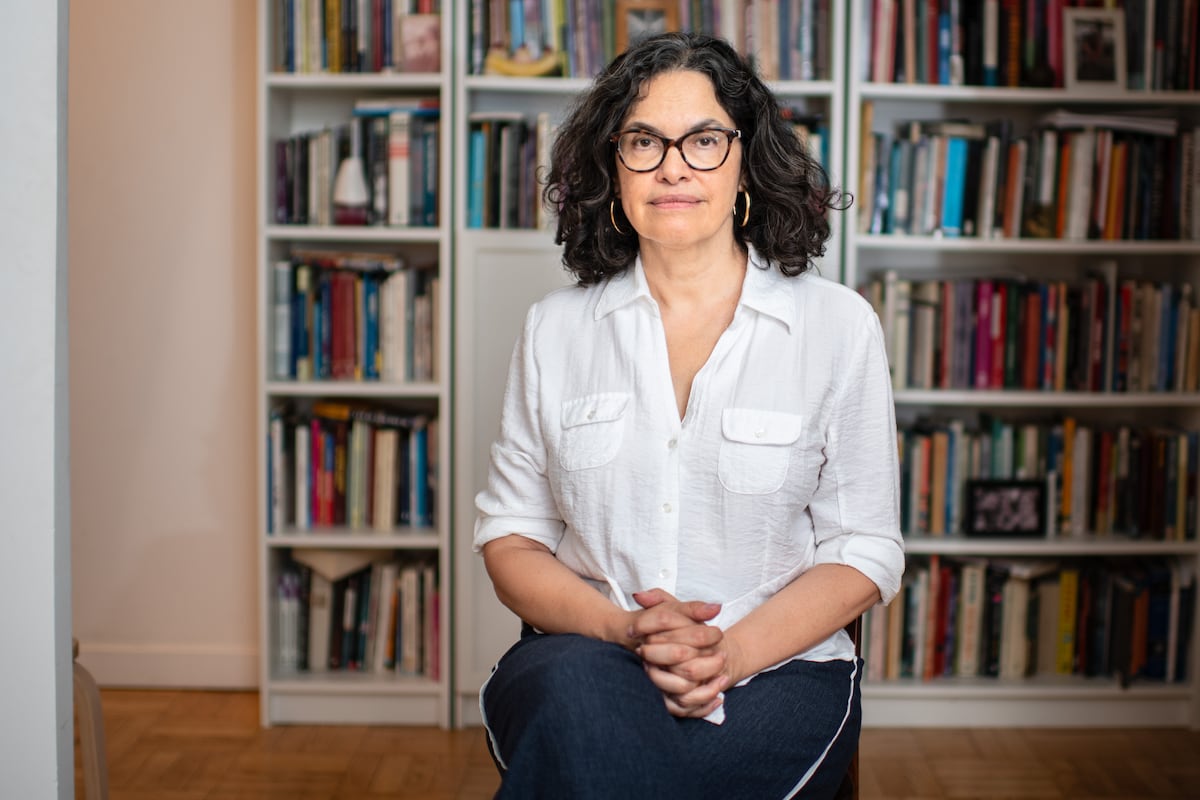
Ada Ferrer, historian: ‘A national dialogue is something that should have happened in Cuba a very long time ago’
Full Article
📰 Original Source
Read full article at English →KhanList aggregates and links to publicly available news content. We do not host full articles from third-party sources. Always verify important information with original sources.