
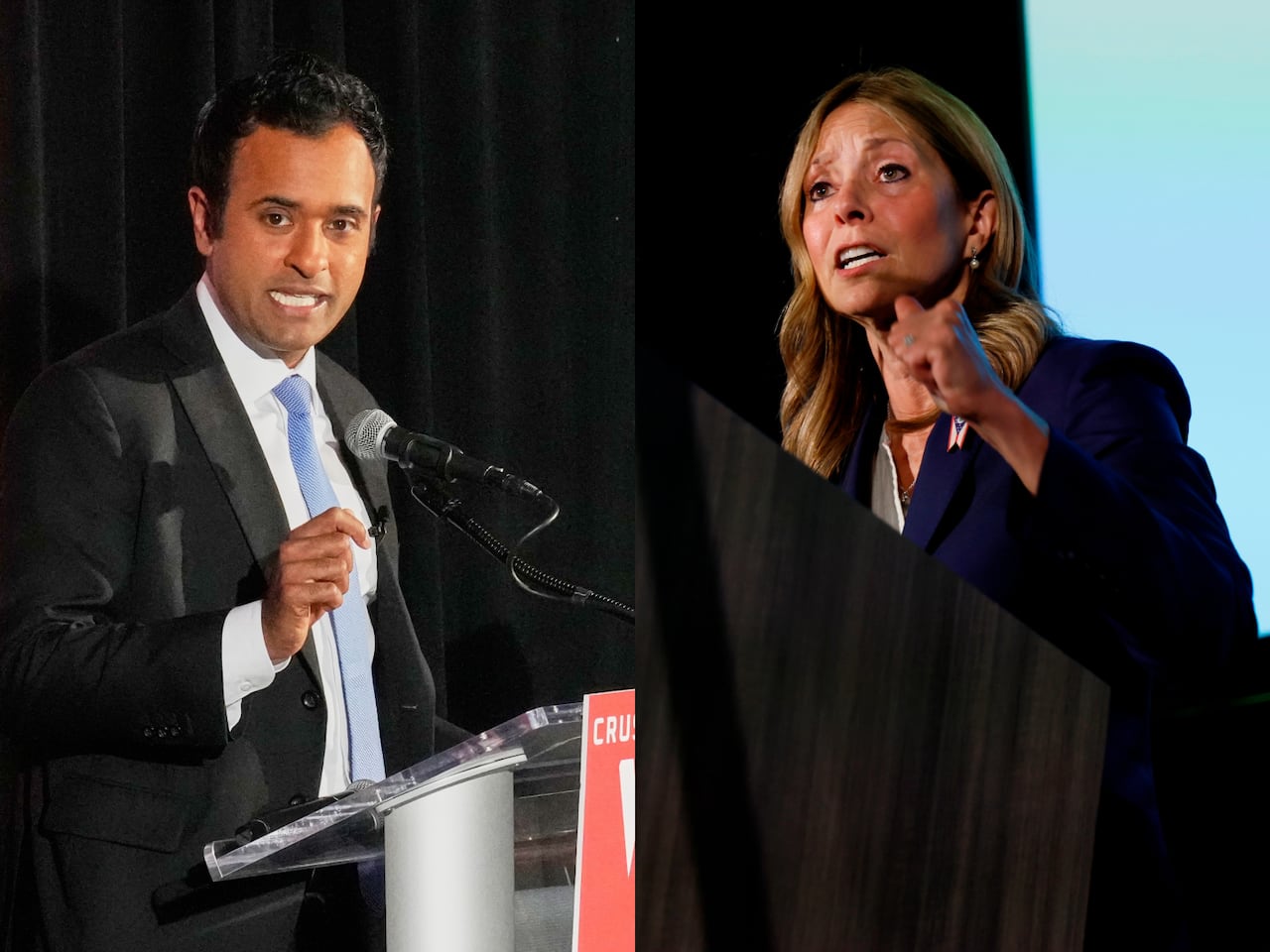
MetroGov. Mike DeWine has assigned state security details for Republican Vivek Ramaswamy and Democrat Amy Acton since they each won their respective parties' nominations for governor on May 5. (Associated Press)(Sue Ogrocki, Jay LaPrete, Associated Press file photos)By Michael Johnson, cleveland.comcleveland.com Express DeskCLEVELAND, Ohio — Transactions of $100 or less supplied 38.7% of Democrat Amy Acton’s reported September individual-contribution dollars in Ohio’s governor’s race, compared with 29.5% for Republican Vivek Ramaswamy, according to a cleveland.com analysis of state campaign-finance records.Acton also received a larger share of those dollars from contributors with Ohio addresses: 63%, compared with Ramaswamy’s 57.3%. Most individual-contribution dollars for both campaigns came from Ohio addresses.The comparison looks at the size of September transactions and the addresses attached to them, building on cleveland.com’s reporting on the candidates’ fundraising totals. Organizational contributions, loans and other income are outside the individual-contribution comparison.Acton reported $5,572,827.48 in individual contributions for September. Positive transactions of $100 or less accounted for $2,158,814.11 of that amount.Ramaswamy reported $2,862,585.20 in individual contributions, including $845,806.64 from transactions of $100 or less.For each campaign, those transactions supplied less than half of the individual-contribution dollars. Positive transactions above $100 totaled about $3.42 million for Acton and $2.02 million for Ramaswamy.Contributors with Ohio addresses accounted for about $3.51 million of Acton’s September individual-contribution dollars and about $1.64 million of Ramaswamy’s.Those are reported addresses, not proof that the contributors are Ohio voters or necessarily Ohio residents. Contributions with blank or unclear state information stayed in the totals used to calculate the percentages but were not counted as Ohio contributions. They totaled $904 for Acton and $587 for Ramaswamy.Separately, Acton reported about $500,000 in organizational contributions, compared with Ramaswamy’s $201,000. Adding those amounts to individual contributions brings their September monetary contribution totals to about $6.07 million and $3.06 million, respectively.The comparison excludes loans, other income and contributions of goods or services. It covers September alone, not cumulative fundraising or either campaign’s total financial resources.The analysis used the Ohio secretary of state’s downloadable candidate campaign-finance records, supplied from an Oct. 16 export. The cover-page records list Oct. 5 filing dates for both September reports. Each campaign’s monetary contribution transactions added up exactly to the contribution total on its report cover page.The analysis followed how contributors were listed in the export. Entries in the individual-name fields counted as individual contributions; entries in the nonindividual-contributor field counted as organizational contributions. Every September contribution entry for the two campaigns used one set of fields or the other. None used both or left both empty.That approach kept entries labeled anonymous or carrying trust, LLC or trustee wording in the individual category when they appeared in individual-name fields. Removing all those entries would not change the displayed transaction-size percentages or reverse either comparison.Acton’s reported individual contributions also include a negative $1,000 entry with a California address. It reduced the total used to calculate her percentages but was not counted in either positive transaction-size category. The export does not explain why the entry is negative. Removing it would leave her displayed percentages unchanged.The calculations do not subtract refunds reported separately as campaign expenditures.These transaction-level figures do not establish which campaign had more unique donors, broader support or less donor concentration. Each transaction counts separately: Someone who gave $50 three times would have three transactions in the $100-or-less category, even though the person’s combined giving was $150.Michael Johnson brings nearly four decades of newspaper experience in reporting, editing, newsroom leadership, page design and digital publishing. He has led daily and weekly newsrooms in Pennsylvania,...
Acton topped Ramaswamy in September’s share of individual contributions from transactions of $100 or less
Full Article
Original Source
Read the full article at Cleveland →KhanList aggregates and links to publicly available news content. We do not host full articles from third-party sources. Always verify important information with original sources.