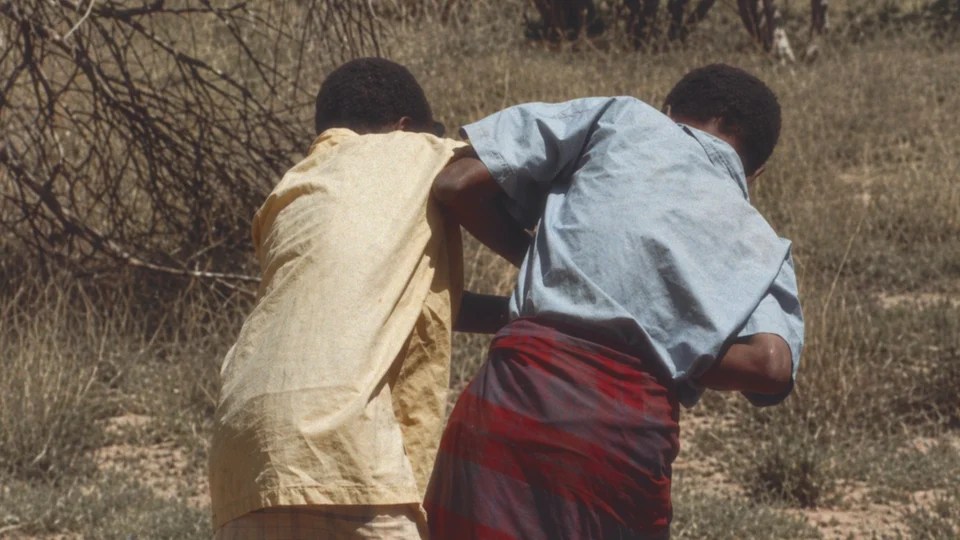
Accept My Plea for Burial is a social drama/thriller set in Somalia. And it was among the works-in-progress presented at the 2026 edition of Open Doors, the Locarno Film Festival‘s co-production platform and talent development program for filmmakers from equity-seeking communities and regions where artistic expression is at risk. The story from director Mohammed Sheikh (Barni, 2025) is produced by Kadir Harbi of Somalia’sAleel Films. The project, presented during the second edition of Open Doors with a focus on films from Africa, is a co-production between Djibouti, Somalia and Qatar. At the Locarno Open Doors program, Accept My Plea for Burial was one of the two main winners of the Open Doors Grant . THR has compiled highlights about the movie and insight from Sheikh about the project and the themes it explores. SynopsisIn a remote Somali pastoral village, 12-year-old boys, Waasuge and Warmooge, spend their days herding goats and playing games. Their playful rivalry turns tragic when Warmooge dies after falling into a steep dry riverbed during a game. No one sees exactly what happened, and the only witness, a mentally unstable man, gives conflicting accounts that deepen the uncertainty As the village gathers, grief hardens into accusation. Warmooge’s mother, Saluugla, refuses to bury her son without justice, believing burial without accountability would erase his death. The elder, Alamagan, attempts to resolve the conflict through customary law and religious counsel, but the absence of truth fractures the community. Rituals are performed, oaths proposed and broken, and tensions escalate as the unburied body decays. Despite Waasuge’s age and the lack of evidence, the village demands resolution. Understanding what the adults cannot admit, Waasuge makes a choice that ends the conflict. Director’s noteI am drawn to stories that stay with the audience long after the credits roll, films like Yiyi, 12 Angry Men, and A Separation, where ordinary people are placed inside moral conflicts with no easy answers. These films don’t rely on spectacle; they rely on tension, silence, and human contradiction. With Accept My Plea for Burial, I want to explore that same territory through a Somali lens that is rarely seen with this level of intimacy and restraint. This film is not about proving guilt or innocence. It is about what happens when truth cannot be fully known, yet a community still demands resolution. In many societies, especially close-knit rural ones, peace often matters more than facts. I am interested in how grief distorts reason, how tradition both protects and fails people, and how children inherit the consequences of adult decisions. The story reflects that political reality. What was the inspiration for you to want to make this film?The inspiration for this film is very personal. I grew up in a community similar to the village in the film, and I experienced an incident very close to the one that happens to Warmooge. I was fortunate that I survived, but the experience stayed with me. How universal are the themes of the film, and why should people outside Somalia see it?Although the film is about a specific Somali pastoral community, the emotions and questions at its center are universal. The film explores loss, grief, love, family, justice. What does justice mean when the truth is uncertain? How far can grief take us? And can a community choose peace when revenge feels easier? What is the next step for you and your collaborators after Open Doors?I already have an advanced draft, and the next step is to find the right co-production partner and co-production country to help bring the film into production.
‘Accept My Plea for Burial’ Will Explore Moral Conflicts of Ordinary People Through a Somali Lens
Full Article
Original Source
Read the full article at Hollywoodreporter →KhanList aggregates and links to publicly available news content. We do not host full articles from third-party sources. Always verify important information with original sources.