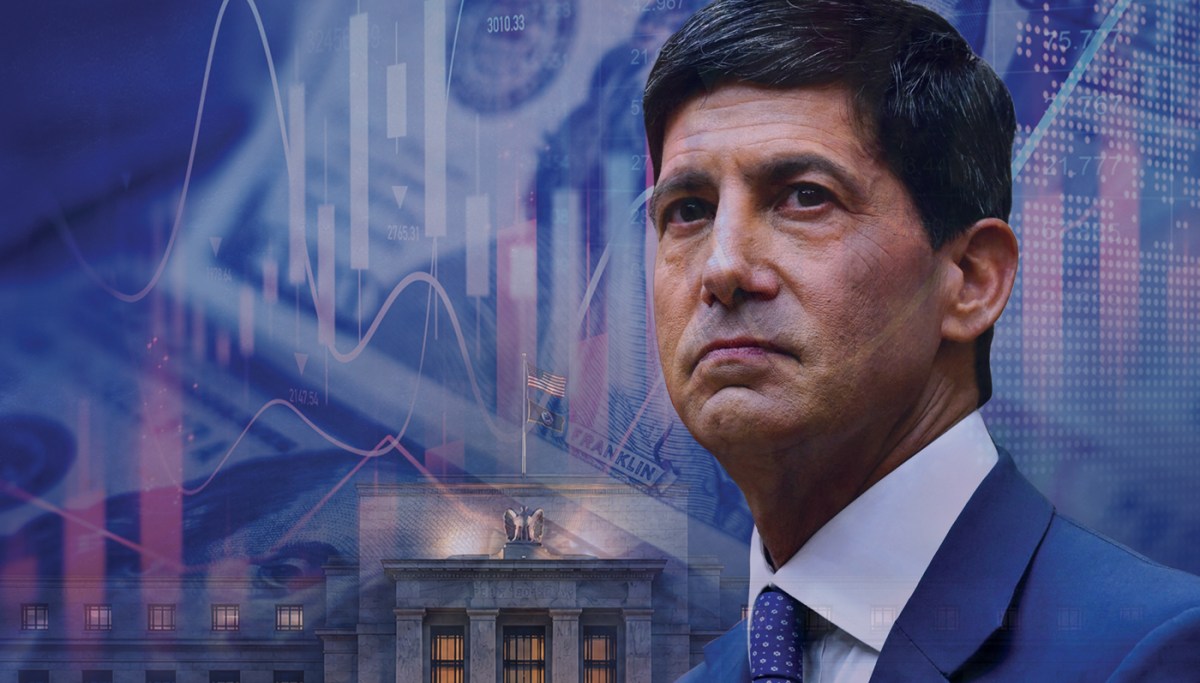
Federal Reserve Chairman Kevin Warsh entered his role leading the central bank vowing to reform it. After being confirmed by the Senate and taking office on May 22, he’s created five task forces. Here is a look at the outside experts who will advise him.During Warsh’s confirmation hearing and since then, he has vowed to refocus the Fed on its remit of price stability and maximum employment. Warsh said the Fed has strayed from its mandate in recent years and hopes task forces will help him bring about change. The first task force will focus on Fed communications, the second on the Fed’s balance sheet, the third on the use and reliance on existing data sources, a fourth on productivity and jobs, and the final task force will examine the Fed’s inflation frameworks.Outside members of the task forces range from academics to CEOs, and Warsh said that they will be supported by subject-matter specialists on the Fed’s staff.US Federal Reserve Chair Kevin Warsh (Washington Examiner/Getty Images) “They’ll have a straightforward charge — start with first principles, ask hard questions, examine current practice, consider alternatives, and ultimately propose next steps for policymaker consideration,” Warsh said in announcing the task forces.Task force on inflation frameworks Warsh said this task force “will examine the drivers of inflation, first principles, and weigh the full range of ideas for delivering price stability in a changing economy.”The Fed’s goal is 2% long-run inflation, and inflation has been above that target for years now. It appears as though Warsh is taking this side of the mandate seriously — during recent testimony before lawmakers last week, the Fed chairman vowed to bring price growth back under control.Warsh said that at his first Fed meeting as chairman, there was “no willingness to tolerate higher prices.”“There was a commitment that was unambiguous and unanimous that we’re going to deliver,” Warsh said. “And we’re not finding acceptable the higher inflation that has endured in this country for more than five years.”The members of this task force are Greg Mankiw, professor of economics at Harvard University and the former chairman of the Council of Economic Advisers; Thomas Sargent, a professor of economics at New York University and a Nobel laureate; and William White, senior fellow at C.D. Howe Institute and a former economic adviser for the Bank for International Settlements.Ryan Young, senior economist at the Competitive Enterprise Institute, told the Washington Examiner that Sargent is perhaps the biggest name on the list, given his Nobel Prize in economics, awarded in 2011.Young said that Sargent is a major proponent of the idea that inflation expectations can end up becoming a self-fulfilling prophecy.“So what Thomas Sargent would say is then that Warsh has to back up his words with actions, and people have to believe what he says; otherwise, they’re not going to have any effect,” Young said.Harvard professor Mankiw, Young added, has one of the most well-known principles of economics textbooks for undergraduates. He also described Mankiw as slightly right-of-center and a centrist, and predicted he would be a voice of “calm and reason” on the task force.Mankiw was a member of the George W. Bush administration, leading the Council of Economic Advisers from 2003 to 2005. In October 2019, Mankiw announced that he was no longer a Republican because of his discontent with President Donald Trump. With Trump at that point in his first, nonconsecutive term, Mankiw said he registered as an independent in Massachusetts.Task force on communications This task force is designed to address how the Fed communicates with the public and might feature some of the most noticeable changes.During his confirmation hearing, Warsh said he thinks there is too much “forward guidance” from the Fed, referring to the practice of stating in advance how monetary policy will be conducted in the months ahead. Forward guidance became routine starting after the 2008 financial crisis, when the Fed set its interest rate target at zero and could lower it no further. With a goal of economic stimulus, officials pledged to keep monetary policy looser for longer.Members of the panel include Peter Fisher, professor of practice at the Foster School of Business at the University of Washington; Arminio Fraga, the founder and chairman of Gavea Investimentos and former president at the Central Bank of Brazil; and Mervyn King, a former governor at the Bank of England.Jai Kedia, an economist at the Cato Institute, told the Washington Examiner that most of the people on the communications task force are “already critical of the way the Fed does communications,” but said Fisher is probably the most “status quo” person on the panel.“And that’s because he also has a lot of experience working at the New York Fed’s trading desk,” Kedia said.Kedia noted that there are already indications of change in this area, given that the Fed’s first statement after Warsh’s first meeting was noticeably shorter than such statements under former Fed Chairman Jerome Powell.Task force on the Fed’s balance sheet Another major task force is one focused on the Fed’s balance sheet. Warsh has repeatedly indicated that he wants to see the balance sheet shrink.The Fed’s balance sheet stood near $4.1 trillion just before the COVID-19 pandemic. After buying bonds at a massive scale to counter the pandemic recession, its assets soared to nearly $9 trillion. They have fallen to $6.7 trillion in the following years as the Fed has normalized monetary policy.As part of the post-financial-crisis monetary policy regime, the Fed has paid banks interest for keeping reserves at the central bank. Today, banks keep $3 trillion in Fed reserves, an amount that officials have described as ample.Members of the panel are Karen Dynan, professor of economics at Harvard; Raghuram Rajan, a professor of finance at the University of Chicago Booth School of Business and former governor at the Reserve Bank of India; and Jeremy Stein, a professor of economics at Harvard and former governor at the Fed.Young noted that Rajan has experience both at the World Bank and India’s central bank.“As far as the balance sheet goes, Warsh has been saying he wants to shrink the balance sheet, and Rajan is of a similar mind,” Young said.Task force on productivity and jobs This one is aimed largely at the artificial intelligence boom sweeping the world.This panel has members who represent knowledge of AI both academically and in practice.The task force includes billionaire businessman and venture capitalist Marc Andreessen; Charles Jones, an economics professor at Stanford University who is currently on leave at AI company Anthropic; and Asha Sharma, who is executive vice president and CEO of Xbox, the entertainment and video game division of Microsoft.“They represent anywhere from academic sources of understanding how productivity affects the economy to Marc Andreessen, who’s heavily invested in AI and understands the market very well, to Asha Sharma, who’s actually seeing day-to-day implementation of these tools,” Kedia said.Some believe that the new wave of AI will bring about a productivity boom — but experts are divided on just how much AI will affect the labor market.“I don’t think it’s going to move productivity up to [5%] and 6%, I just don’t think that, it would take years,” Thomas Hoenig, a senior fellow at the Mercatus Center and former president of the Federal Reserve Bank of Kansas City, told the Washington Examiner.Task force on the reliance on existing data sources Warsh has also raised the prospect of looking at other, perhaps private, sources of data when evaluating the economy.During his first press conference, Warsh said this specific task force “will evaluate new information sources and consider methodological changes to improve data gathering.”On the task force are Raj Chetty, an economics professor at Harvard; former Walmart President and CEO Doug McMillon; and Kevin Murphy, an economics professor at the University of Chicago.Kedia said of Chetty and Murphy that the panel has “two pretty empirical economists who are very good at understanding different data sources because they use it a lot in their research.”He added that McMillon understands the importance of industry data, given his time at the helm of such a massive corporation.CONSERVATIVES EYE USING TREASURY TO INDEX CAPITAL GAINS TO INFLATIONAn analysis by Goldman Sachs concluded that while efforts to use alternative data to track the economy enjoy “broad support” and are already underway at the Fed, they often fail to meet three requirements for high-quality statistics: representativeness, accurate seasonal adjustment, and continuous availability.“As a result, alternative data are more likely to be used as complements to the official data rather than as replacements and will require fine-tuning by the Fed staff or the statistical agencies,” the analysis reads.Zach Halaschak (@zhalaschak) is the economics reporter for the Washington Examiner.
Academics and CEOs dominate Fed advisory boards
Full Article
Original Source
Read the full article at Washingtonexaminer →KhanList aggregates and links to publicly available news content. We do not host full articles from third-party sources. Always verify important information with original sources.