
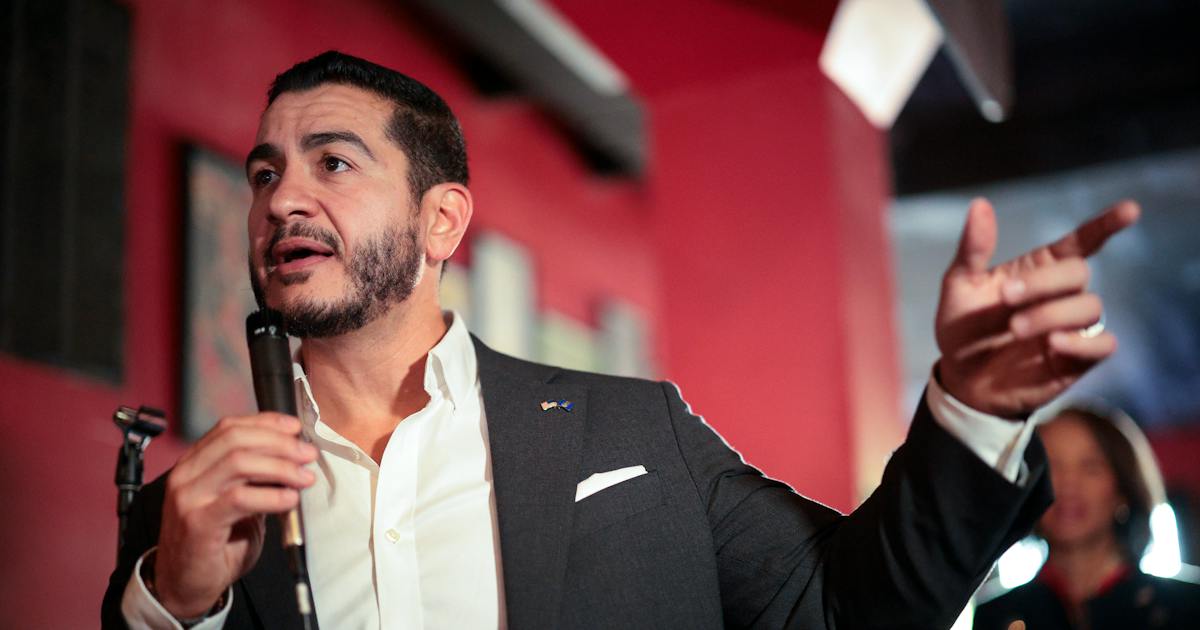
Abdul El-Sayed’s election is a watershed moment in American politics. The victory of a devout Muslim, particularly in a fairly white, moderate state like Michigan, is another step towards America becoming a truly multicultural democracy. And the triumph of a progressive candidate in a swing state, despite intense opposition from Republicans and centrist Democrats—particularly his primary opponent Representative Haley Stevens—suggests that conventional notions of what kinds of candidates are “electable” should be further discarded. El-Sayed is the first Muslim-American ever elected to the Senate. There will probably never be a large number of Muslim senators, since followers of Islam are only around 1 percent of the U.S. population. But being Muslim is arguably a bigger barrier to success in America, particularly in electoral politics, than being Black, Latino, female, gay, or a member of another group whose members often face discrimination. Anti-Muslim sentiment in America is actively stoked by the political right and in many ways tolerated by the rest of our society. In a recent Pew Research Center poll, 42 percent of American adults said that Muslims have a negative impact on the United States, 43 percent said Muslims are less patriotic than other Americans. Fifty-one percent said that Islam encourages violence more than other religions, including 76 percent of Republicans and yes, 29 percent of Democrats. In Michigan, 39 percent of voters said that a candidate being Muslim makes them less likely to vote for that person, according to an October survey conducted by the Institute for Public Policy and Social Research at Michigan State University. In contrast, only 10 percent said they were less likely to vote for female candidates. These numbers likely vastly underestimate Islamophobia, since some who hold these views might be leery of acknowledging them to a stranger calling from a polling company. Islamophobia has been a powerful force affecting the most important political figures of this era. In his 2008 campaign, Barack Obama, who spent some of his childhood in heavily-Muslim Indonesia and whose middle name is Hussein, repeatedly emphasized that he is not Muslim, no doubt aware that Islamophobia is even more widespread than anti-Black racism in America. Obama’s successor, Donald Trump, rose to power in part by promising during his first campaign to limit the number of Muslims entering America, casting their mere presence as a danger to the country. He won in 2016 even as the media openly called his proposal a “Muslim ban.” And in both of his terms, Trump’s administration has intentionally restricted immigration from majority-Muslim countries, with little pushback from Dems, the national media, or voters. El-Sayed was facing both that backdrop of anti-Muslim sentiment and specific tensions around his religion throughout his campaign. Trump and Republicans constantly implied he was supportive of terrorism and potentially even a terrorist himself. The news media repeatedly asked El-Sayed about the Muslim Brotherhood and other issues related to his faith that were not relevant to the Michigan primary. A significant bloc of Democrats slammed his relationship with political commentator Hasan Piker, and his positions on Israeli-Palestinian policy, namely El-Sayed describing Israel’s war in Gaza a genocide, calling for a suspension of U.S. military aid to Israel, and questioning the idea of a state where Jewish people always have political control over Palestinians. Some claimed he was insufficiently concerned about antisemitism. Perhaps these Democrats would have celebrated a pro-Israel Muslim candidate, or at least a candidate who sidestepped the issue. But it’s hard to disentangle these critiques from El-Sayed’s faith. American Muslims are deeply concerned about Israel’s actions in Gaza over the last three years, so expecting Muslims politicians to soft-pedal that issue is asking them to essentially deny their Muslim identity. The party establishment also regularly undermines and lodges antisemitism accusations at Zohran Mamdani, Ilhan Omar, and Rashida Tlaib, three of the other most prominent Muslim politicians in America. A week before the election, former Speaker Nancy Pelosi, both a party elder and supposedly deeply committed to fighting Republicans, blasted El-Sayed over his Israel views and hinted that he would lose because of them. The party got fully behind El-Sayed only two days before the election, after Stevens’ shocking decision to actually endorse Republican Mike Rogers. El-Sayed overcame all of that. The main reason he won is Democrats everywhere did, as the election was a backlash against Trump. But that doesn’t take away from the importance of his victory. Obama won in 2008 in large part because of hatred George W. Bush and the Iraq War, but America electing a Black person president was still a major step forward in our democracy. A Muslim candidate winning a swing state shows that many Americans, particularly Democrats, truly want us to be a nation based on our shared ideals and values, not a country dominated by white people, men, and/or Christians. The resistance to El-Sayed, from both Republicans and some Democrats, of course wasn’t just about religion or Israel policy. El-Sayed has long been aligned with Bernie Sanders, Alexandria Ocasio-Cortez, and others in the party’s progressive wing. The party’s left backed his 2018 gubernatorial primary against center-left favorite and eventual governor Gretchen Whitmer. In the Senate primary earlier this year, the party’s center-left largely backed Stevens and hinted that El-Sayed could not win a general election. Progressives went all in for El-Sayed. They wanted an ally in the Senate. But they also wanted to prove that a fairly progressive candidate could win in a swing state like Michigan. Centrist Democrats constantly say progressive views and politicians should be ignored because the left doesn’t understand how to win elections and therefore keep Republicans out of power. Game changed. A candidate calling for Medicare-for-all and fighting billionaires while welcoming Ocasio-Cortez and Sanders to campaign for him in the general election has won Michigan, the quintessential swing state. And other several progressive candidates won in swing districts and states too. This is a big blow to centrist arguments about electability. And they know it—prominent center-left Democrats spent the weeks ahead of the election demanding that El-Sayed win by as much as more centrist candidates in Michigan and around the country or they would diminish his win. That discrediting will be less effective after Stevens spent the days right before the election actively trying to defeat El-Sayed. She proved progressives’ arguments that centrists’ electability claims are often a pretext to mask their deep ideological opposition to progressive politicians and causes. One direct result of the Michigan results is that I expect Ocasio-Cortez to run for president. El-Sayed and others who won in swing districts and states ran on the anti-billionaire, working class-centered approach that the New York congresswoman has helped pioneer. Those victories will help Ocasio-Cortez rebut arguments that she could not win a general election. And the party’s progressive wing will likely want to push its own candidates at a time when it appears as if the electorate is deeply skeptical of billionaires and Republicans and might consider more non-traditional candidates. “Democrats everywhere, including moderates in swing seats, are running ads centered around a pro-working class message, opposing billionaires, foreign wars, corruption, and corporations,” said Evan Brown, executive director of the Congressional Progressive Caucus’s pac, in a memo released on the eve of the election. Even if Ocasio-Cortez doesn’t launch a presidential campaign in the next few months, El-Sayed’s victory opens up new possibilities. Or more accurately, he reminds us that these possibilities exist. No one expected Obama and Trump to be elected president a few years before they were. Despite the confident claims of pundits and center-left Democrats, politics are not an exact science. A left-wing man named Abdul becoming the senator from Michigan doesn’t just prove that progressives or Muslims can be elected but that timing and circumstance really matter. Perhaps the next president will be Ocasio-Cortez. Or perhaps it’s someone none of us are thinking about right now. This is not 2008. Abdul El-Sayed will not be running the country. But even more Obama, El-Sayed overcame deep skepticism about his faith, policy positions, identity, and patriotism—including from many Democrats. The biggest tory of November 2026 is Democrats winning across the country, including red states like Nebraska. But another huge story is Abdulrahman Mohamed El-Sayed’s triumph in a country that twice elected Donald Trump.
Abdul El-Sayed’s Victory Is Historic for These Two Reasons
Full Article
Original Source
Read the full article at Newrepublic →KhanList aggregates and links to publicly available news content. We do not host full articles from third-party sources. Always verify important information with original sources.