
Intraparty friction among Michigan Democrats spilled into public view on Sunday as Haley Stevens endorsed Republican candidate Mike Rogers just days ahead of the election that could decide control of Capitol Hill.Stevens’ endorsement comes after she stunned party officials by appeared at a church service in Detroit alongside Rogers, who is endorsed by President Donald Trump, on Sunday. She’d been uninvited from a scheduled joint event the same day with Abdul El-Sayed, who narrowly defeated the congresswoman in the August primary.The dispute stems in part from disagreement over Israel. Stevens has voiced criticism of El-Sayed’s position on the matter, and her fiancé revealed last week that he intends to vote for Rogers, claiming El-Sayed has failed to adequately address concerns of the Jewish community."Abdul promises to get money out of politics," Stevens wrote in a statement Friday. "He can begin by getting Israel out of his explanation for everything Michigan cannot afford."Haley Stevens’ show of support for the Republican candidate in the race came after she was uninvited from a scheduled joint event the same day with Abdul El-Sayed (Getty)While Stevens joined Rogers, El-Sayed gathered with prominent state and national Democrats at a separate church service nearby. The group attempted to project party unity, though days of public feuding have overshadowed the effort.The former primary rivals were originally set to attend a church gathering together with U.S. Rep. Jim Clyburn of South Carolina. However, those plans unraveled following an escalating dispute regarding Israel and an independent campaign advertisement.Michigan congresswoman Debbie Dingell, who helped organize the joint appearance to bring Democrats together before Tuesday's vote, explained that she asked Stevens not to attend and that Stevens agreed to step aside."I'm the one who pulled it because it had become way too distracting," Dingell said a telephone interview. "This is not how I was going to spend my weekend before the election, to be perfectly frank.""The bishop was getting upset, because this is a real church service," Dingell added.This late-stage conflict comes as Democrats work to drive turnout among Black and Jewish voters in key strongholds. El-Sayed, a former Michigan public health official, is in a tight race against Rogers, an ex-congressman, for the seat held by retiring Democrat Gary Peters. Keeping Michigan in Democratic hands is vital to party efforts to secure a Senate majority for the final two years of Trump's second term.Stevens and her team did not respond to repeated requests for comment regarding her attendance at the service. On Saturday night, Stevens issued a statement expressing satisfaction that El-Sayed disagreed with the outside ad."Whenever anyone tries to set us against each other, we have an obligation to stand up and fight back," Stevens wrote in a statement that ended with: "Go vote!"Dingell and key party figures maintain that Democrats remain united behind El-Sayed, who would become the nation’s first Muslim senator if elected. Although early voting began on Oct. 24 before this recent conflict surfaced, the internal dispute has threatened to obscure the party’s closing message in critical strongholds such as Detroit.Michigan Republican Senate candidate Mike Rogers, right, and Rep. Haley Stevens, D-Mich., attend a service at Perfecting Church, Sunday, Nov. 1, 2026, in Detroit (AP Photo/Jose Juarez)"All you guys want to talk about was Abdul and Haley and it really needs to be about what the issues are that people should be voting about on Tuesday," Dingell said. She added about El-Sayed's Republican opponent: "Mike Rogers loved every minute of it."The disagreement carries particular weight in Wayne County, which includes Detroit, and neighboring Oakland County. Stevens carried both counties in the August primary, drawing support from Black and Jewish voters who represent crucial parts of the Democratic coalition.How did we get here?The rift follows one of the state's most contentious Democratic primaries, marked by personal accusations and tens of millions of dollars in outside spending, including from a super PAC affiliated with the American Israel Public Affairs Committee that backed Stevens. El-Sayed took particular issue with an outside advertisement accusing him of disrespecting women.Although Stevens pledged following the primary to assist El-Sayed, the two had not appeared together publicly since a unity event two days after his summer victory.That separation remained noticeable as some Jewish leaders and voters continued to criticize El-Sayed over his past rhetoric regarding Israel and campaign appearances with Hasan Piker, a controversial streamer.The strain re-emerged publicly Wednesday when Stevens’ fiancé informed The Detroit News that he planned to vote for Rogers. Hours later, Stevens appeared on CNN to reaffirm her support for El-Sayed while urging his campaign to "shut out the hate and call it out."Dingell sought to smooth over the division by arranging the joint church appearance alongside Clyburn, one of the country's most prominent Black Democrats.However, after reports of the event published Friday, Stevens released a statement calling on El-Sayed to disavow an advertisement from an independent left-wing group linking U.S. support for Israel to high grocery prices.El-Sayed responded: "So while Congresswoman Stevens seems intent on relitigating a primary that ended three months ago, let’s all focus on the task at hand."He reiterated Saturday evening that the advertisement was not produced by his campaign and added: "I do not agree with the contents of that ad."Despite the ongoing dispute, El-Sayed proceeded with scheduled visits to several churches Sunday alongside Clyburn and other key party figures.According to campaign advisories obtained by AP, those participating included U.S. Sen. Angela Alsobrooks of Maryland, Detroit Mayor Mary Sheffield, Garlin Gilchrist II, the nominee for secretary of state, and several Michigan bishops.Democrats are heavily focused on driving turnout in Detroit, where approximately three-quarters of residents are Black and strong support is essential for statewide success."United we stand, divided we fall," Dingell said.
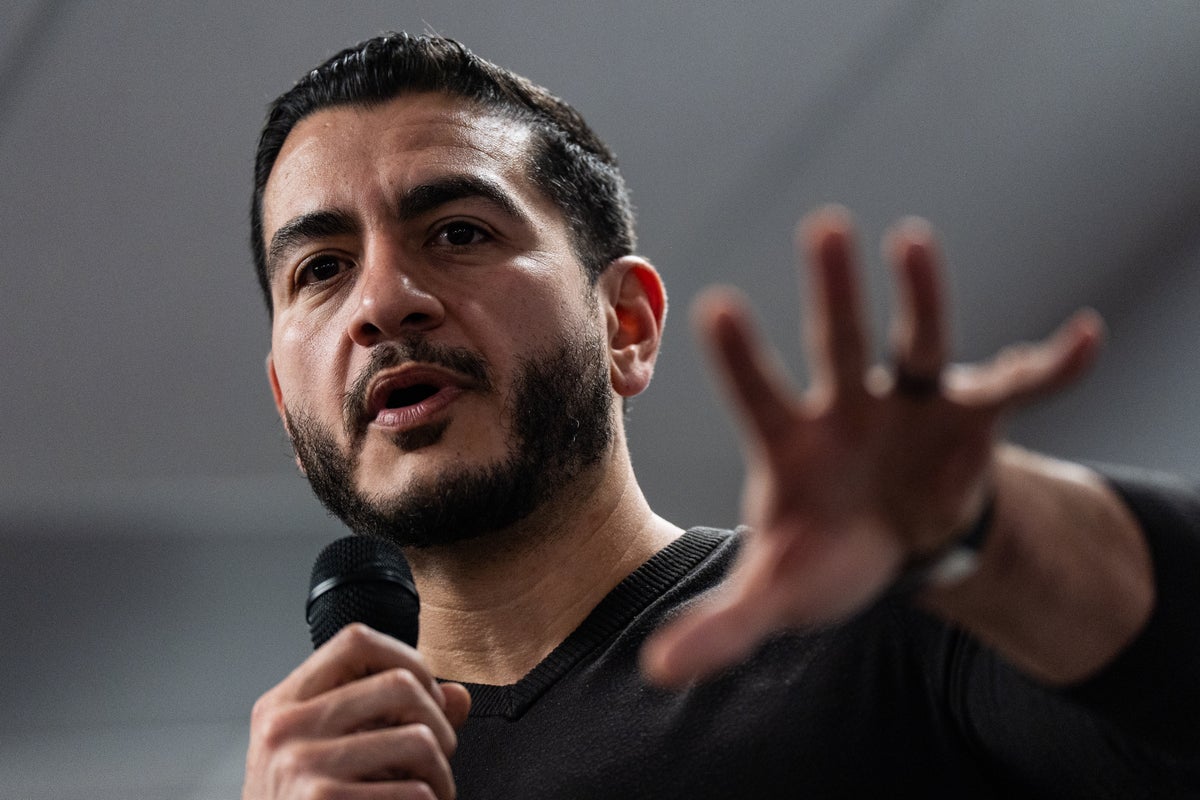
Abdul El-Sayed’s primary opponent Haley Stevens endorses GOP candidate Mike Rogers in Michigan Senate race
Full Article
Original Source
Read the full article at Independent →KhanList aggregates and links to publicly available news content. We do not host full articles from third-party sources. Always verify important information with original sources.