As Pauline Hanson was travelling around Europe railing against Muslims, Labor chose Saturday, the quietest day of the news cycle, to announce its response to the Islamophobia envoy's report. Prime Minister Anthony Albanese appointed Jillian Segal as antisemitism envoy in July 2024 and Aftab Malik as Islamophobia envoy three months later. Segal handed her report to the government in July last year and Malik his in September — both before the Bondi terror attack. That may explain why it took the government 10 months to respond to the Islamophobia report, rejecting key recommendations it deemed too contentious.The special envoy to combat Islamophobia, Aftab Malik, has vowed to keep advocating for the recommendations that the government had not responded to. (ABC News: Gavin Coote)A political problemIt did not respond to calls for an independent review into counter-terrorism laws, or a commission of inquiry into Islamophobia and anti-Arab racism. It also dodged the issue of Palestinian discrimination.The government has agreed to commission a review of the national curriculum to act against racial and religious prejudice and provide money through the Multicultural Grants Program to support the promotion of Muslim history through a new Islamic-Australian research institute.Labor is in a vexed political pickle on these issues. Labor MPs represent many electorates with high numbers of Australian Muslims. They are driven by the need to keep faith with voters for political reasons as well as a moral belief that Muslims are facing high levels of discrimination in Australia.It is clear that scores of innocent law-abiding Muslims have faced discrimination. But then there's the broader mood in the country, and Labor insiders say that while Australians are worried about Hanson's attacks on multiculturalism, her criticism of Islam does resonate in broader parts of the community.One Labor MP said he believed that Australians probably agreed with some of Hanson's views on Islam and conceded this was a political tightrope for Labor, as some voters see Muslims as the exception to the nation's multicultural story.Pauline Hanson's momentum has been based on squeezing voter grievances on everyday issues and piling them on migration. (ABC News: Ian Cutmore)Hanson weaponises issueHanson's momentum has been based on squeezing voter grievances on everyday issues and piling them on migration, blaming Muslims in particular for Australia's housing and economic issues. Last week she claimed that it was Muslims rorting the NDIS. Her effectiveness in weaponising this has made Labor more sensitive in how it not just speaks about the issue but manages it. Albanese has not been seen visiting a mosque since March this year, when he was heckled in some ugly and uncomfortable scenes.While this is a challenge for Labor, it is proving a splitting headache for the Coalition, not just because of Hanson, but also its own federal president, Tony Abbott.Earlier in the week, the former PM appeared in a video declaring multiculturalism has failed and "diversity is indeed not our strength":"Numerous Muslim leaders seem less interested in condemning that atrocity — the worst ever terrorist attack on our soil — and in chiding the public about the dangers of Islamophobia, even though there are some parts of Islamic thought that are hardly compatible with life in a liberal democracy."Appearing on Insiders yesterday morning, Liberal frontbencher Andrew Bragg said he strongly disagreed with Abbott's views.The problem for the Liberal Party is Abbott is no longer freelancing as a former PM; his role as party president may be distinct from the Liberal shadow cabinet, but like Hanson, his voice carries weight.His interventions on Islam and multiculturalism are at best a distraction for Bragg and his leader, Angus Taylor.At worst, they make it harder for Taylor to have the clear air he needs to differentiate from Hanson and rebuild the Liberal supporter base.Jane Hume, Angus Taylor and Tony Abbott have different takes on migration and multiculturalism. (AAP Image: Jay Kogler)'They were divisive'The deputy Liberal leader, Jane Hume, also criticised Pauline Hanson for statements about migration and multiculturalism at the CPAC conference in London, telling Sky News Australia she condemns the One Nation leader's comments."I think that they were unnecessary. They were divisive. They were inflammatory, and they were totally un-Australian," Hume said."That's not the way we operate in Australia. We have had a proud history of multiculturalism. We're a great migrant nation."Hume said Hanson was wrong to lament the removal of the White Australia policy in the 1960s and 1970s. On this front, Hanson has tried to walk back the comments in a social media video, blaming the media for misconstruing what she said.But it begs the obvious question: why did she mention its dismantling, and how is any of her rhetoric helpful in growing her vote rather than dampening her surge?While some Liberal frontbenchers want to distance themselves from the extreme rhetoric against Muslims and multiculturalism, their party president has made that product differentiation much more difficult.Patricia Karvelas is host of ABC News Afternoon Briefing at 4pm weekdays on ABC News Channel, co-host of the weekly Party Room podcast with Fran Kelly and host of politics and news podcast Politics Now.
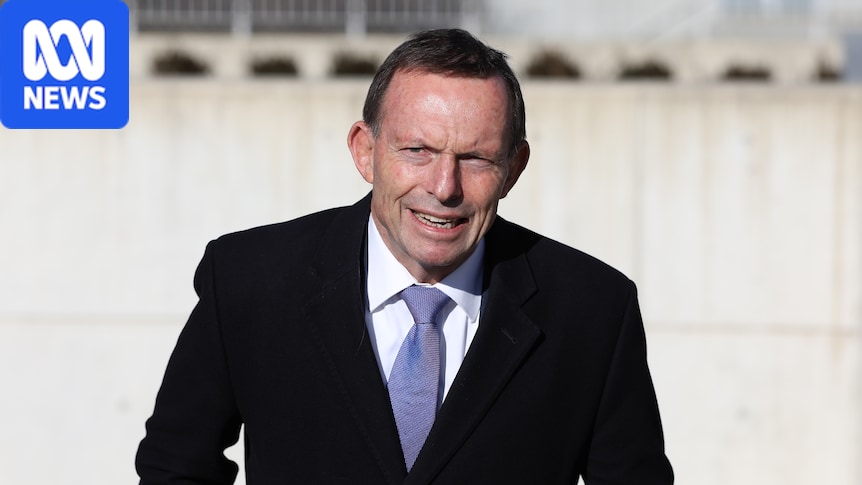
Abbott amplifies Hanson problem for Liberals
Full Article
📰 Original Source
Read full article at Abc →KhanList aggregates and links to publicly available news content. We do not host full articles from third-party sources. Always verify important information with original sources.