
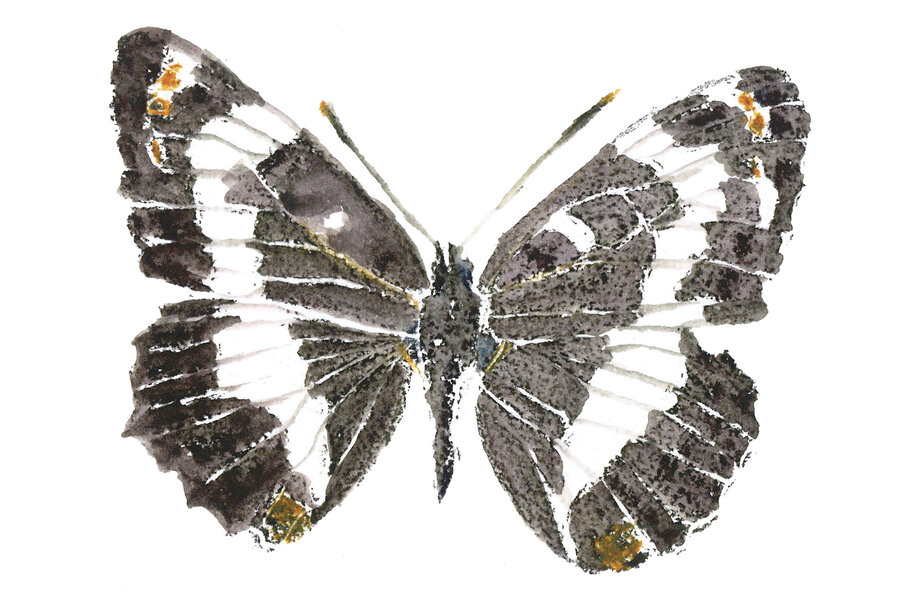
Lea Korsgaard, a Danish journalist and mother of three young sons, leads a busy life – yet she craved a new adventure in her 40s. She alighted on what sounded like a fun idea: to see all of Denmark’s remaining 64 butterfly species in a single year before more of them become extinct. How hard could it be, she thought, to spot just 64 of the 180,000 butterfly species worldwide? “The Butterfly Season” is Korsgaard’s inspirational account of her dogged quest, which turns out to be more challenging – and more rewarding – than she had anticipated. “I felt a churning need not just to find them but to be the kind of person that was capable of finding them – a kind of hunger for experience,” she writes. The search becomes a race against the clock because each species goes on the wing just briefly between spring and autumn – sometimes for as little as three days – in very specific locales. The pressure is ratcheted up because Korsgaard’s time is limited, and she knows that if she misses any of these increasingly rare butterflies, she may never get another chance to see them. Yet there is nothing rushed about this lovely book, which embraces profound questions such as “What do we truly value today?” and “What fills us with awe?” “The Butterfly Season” encompasses a meditation on beauty, spirituality, transformation, the meaning of life, and the devastating toll of climate change. "THE BUTTERFLY SEASON: What 64 Butterflies Taught Me About Nature’s Great Mysteries and the Meaning of Life" by Lea Korsgaard. Translated by Sherilyn Nicolette Hellberg. Knopf, 320 pp. In trying to figure out what butterflies mean to her, Korsgaard considers what they have meant to other people. These include her grandfather, a Danish Resistance fighter during World War II, a concentration camp survivor, priest, and author who sought the divine on solitary nature walks. She looks at butterflies in the work of Salvador Dalí, Damien Hirst, Vladimir Nabokov, and Vincent Van Gogh, for whom white butterflies symbolized “soul and spirit and rebirth.” She writes, “Once I started paying attention, butterflies were everywhere.” Korsgaard, co-founder and editor-in-chief of Zetland, a digital news platform, is no stranger to research. Before she heads off from her home base in North Zealand (outside Copenhagen) into meadows, marshes, bogs, and forests, along with terrain as far as North Jutland, she reaches out to accomplished lepidopterists for guidance. She also consults the online database of Denmark’s national species portal, where butterfly enthusiasts post the specific coordinates of their latest finds. With the help of this data, Korsgaard creates a color-coded tracking system to map regions and flight times, enabling her to fine-tune her expedition plans. Large hedge blue / Celastrina huegelii She is particularly enchanted by metamorphosis – the multistep process by which butterflies and moths come into being: from egg to larva (caterpillar) to pupa (chrysalis) to adult in about a month – and its metaphorical connotations. She learns that the Greek philosopher Aristotle was the first to study metamorphosis, but it was probably Thomas Moffet, a 16th-century British doctor and naturalist, who borrowed the name from Ovid’s “Metamorphoses.” The Danish and Norwegian word for butterfly is sommerfugl (summer bird), which first appeared in 1594. This class of insects was dubbed lepidoptera, meaning scale wings, by Swedish botanist Carl Linnaeus in 1746. Korsgaard spots her first species, the small, brick-red, tortoiseshell, in early March on a meadow path near her home. Weeks pass with no further sightings on her morning dog walks, until she sees a big yellow brimstone sail past her kitchen window in early April. A garnet-colored peacock butterfly and a common comma appear during the Easter holidays. She snaps pictures of each species, first on her cellphone, and later, on the advice of pros, with a digital camera. Deepen your worldviewwith Monitor Highlights.Politics with respectGet political stories with respectful analysis.There‘s a world of new ideas in everyBooks newsletter.There‘s more to life, enrich yours withCulture & Learning weekly.Follow humanity‘s discoveries withScience & Nature stories in your inbox.Gain a spiritual perspectivefrom the stories in your inbox.Want to understand the deeper impact of critical events? Learn the Monitor‘s insight.Already a subscriber? Log in to hide ads. Korsgaard’s lovely watercolor paintings adorn the book’s endpapers and recap the monthly finds described in each chapter. A map of Denmark marking the locations where she spotted each butterfly would have been helpful for readers, as would a handy numbered list of her sightings. Painted lady / Vanessa cardui But “The Butterfly Season” is not a field guide. If you want to know the difference between a skipper and a fritillary, for example, you’ll have to look elsewhere. Korsgaard invites readers to open their eyes and hearts to the delicate, “everyday, perfectly tangible miracles” of the natural world. Some of the most beautiful passages in this gorgeous book arise from a long day’s pursuit of a high brown fritillary, large chequered skipper, and large blue in eastern Denmark with her mother. Initially irritated by her mother’s small talk, Korsgaard later finds herself overwhelmed by a gamut of emotions: moved by her mother’s love and support, and by the “endless depth and beauty ... spinning out in all directions,” but also saddened by the possible loss of so many species. “It was confusing,” she writes, “but I would rather feel it than feel nothing at all.” ALREADY A SUBSCRIBER? LoginReal news can be honest, hopeful, credible, constructive.The Christian Science Monitor was founded in 1908 to lift the standard of journalism and uplift humanity. We aim to “speak the truth in love.” Our goal is not to tell you what to think, but to give you the essential knowledge and understanding to come to your own intelligent conclusions. Join us in this mission by subscribing.
A writer chases butterflies, collects life lessons
Full Article
Original Source
Read the full article at Csmonitor →KhanList aggregates and links to publicly available news content. We do not host full articles from third-party sources. Always verify important information with original sources.