
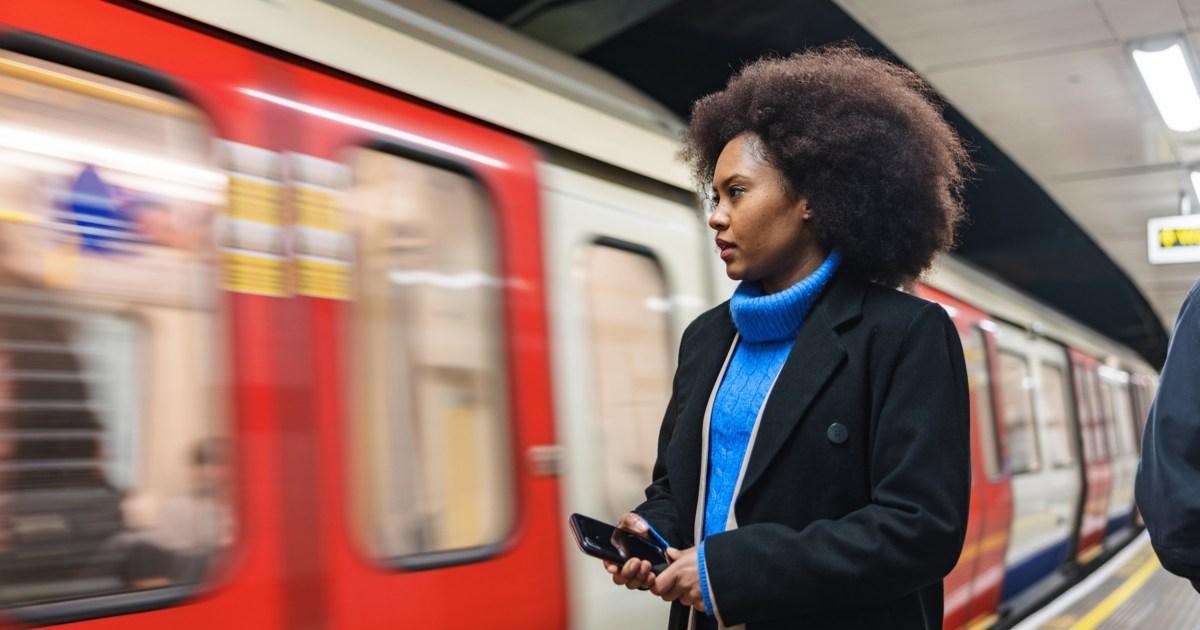
Women should all be equipped with this important tool (Picture: Getty Images) From choosing the busiest carriage to keeping your keys lodged between your fingers, women take steps to keep safe when using the Tube at night. Reports of female travellers being attacked, harassed, and assaulted on public transport are, sadly, nothing new. In March this year, a woman was sexually assaulted by a man standing behind her on a Victoria line Tube carriage. Four months later, another woman was sexually assaulted at Baker Street station. When she confronted her attacker, he slapped her across the face. And in 2023, Londoners were left reeling when it emerged that a woman had been raped on the Tube. In another upsetting incident reported by TFL recently, an 18-year-old travelling on the Tube was subjected to ‘unwanted attention and inappropriate physical contact’ from a man she didn’t know. However, in this instance, the teenager repeatedly used the ‘Signal for Help’ gesture, which was spotted by TFL staff. Charities are constantly pushing for greater awareness so that women can use this non-verbal gesture to help protect themselves (Picture: Getty) If you’re not familiar with the signal, it’s fairly straight forward: you open your palm, close your fingers and trap your thumb. It’s a way to silently communicate to those nearby that you’re in danger. Upon seeing the signal, and immediately recognising it, the staff member stepped in, separating the young woman from the man. Ask Metro Use AI to go deeper into the stories you care about – powered by Metro and trusted publications. According to TFL, enquiries are now underway to identify the man, with CCTV being reviewed. The worker who intervened, Callum, was later nominated for a Safeguarding Commendation. Latest London news What is the ‘Signal for Help’ and where does it come from? First launched in the US and Canada by the Canadian Women’s Foundation and the Women’s Funding Network, the signal was created during the early days of the Covid-19 pandemic to address a worldwide rise in domestic violence and help those suffering while stuck at home. The Women’s Funding Network has emphasised how recognising the signal has the capability to ‘save lives’. ‘The #SignalforHelp campaign offers a new tool for survivors, but it also teaches people who want to help, how to do so in a way that protects the safety and agency of the survivor.’ Pretty quickly, it became a symbol of solidarity and gained traction on social media. Have you heard of the 'Signal for Help' gesture before? Yes, but I've never seen it used in publicCheck Hundreds of women posted videos of them demonstrating the signal online, encouraging users to educate their friends and family. And in 2021, just a year after it was launched, its existence made a direct impact on the life of one young girl. A 16-year-old girl, who had been reported missing by her parents in North Carolina, was rescued after a member of the public spotted her using the gesture in a car in Kentucky. Hundreds of women have shared that they currently do not feel safe living in London (Picture: Getty Images) According to a statement from the Laurel County Sheriff’s Office, a driver called police after noticing ‘a female passenger in the vehicle making hand gestures that are known on the social media platform TikTok to represent violence at home – I need help’. Police later arrested and charged a 61-year-old man. But while the ‘Signal for Help’ has clearly made its mark in North America, with approximately two in five people (40%) in Canada reportedly recognising the signal, it’s less known across Europe and the rest of the world. Rebecca Goshawk, director of business development at women’s aid charity, Solace, tells Metro that while ‘hand signals of this kind can be useful’ they ‘cannot be relied upon’. Rebecca continued: ‘However, ensuring staff in rail stations and other spaces are trained to recognise and handle harassment is key to helping ensure everyone stays safe on public transport.’ Solace also shares that ‘signs and announcements stating that harassment will not be tolerated and will be addressed if reported in stations can also help, showing women that they will be believed and taken seriously.’ Whilelearning the ‘Signal for Help’ isn’t a solution, arming women with as many tools as possible to try and ensure their safety, is important. Over half of young women feel unsafe on public transport In a 2025 survey of 1,528 women, 57% shared that they feel unsafe on the streets of London, rising to 68% amongst 18 to 24 year olds. On top of this, 50% of women believe that London has become less safe over the past five years. When it comes to using public transport, the numbers paint a similarly upsetting picture. Young women regularly share upsetting stories of harassment and assault on the London Underground (Picture: Getty Images) Over half (56%) of girls and young women aged between 11 and 21 feel unsafe taking public transport by themselves, a recent Girls’ Attitudes Survey finds. And while the capital has made strides to try and change this – launching TFL campaigns to encourage people to be ‘active bystanders’ and investing £15.6 million to make public spaces safer – there’s still an overwhelming feeling among women that more must be done. Do you have a story you’d like to share? Get in touch by emailing MetroLifestyleTeam@metro.co.uk Arrow MORE: Major disruption on London Paddington route set to last most of the morning Arrow MORE: Lily Phillips’ sex worker friend got married — the best man’s speech was awkward Arrow MORE: Map shows where pro-Palestine student march in London will take place
A woman used this silent distress signal on The Tube — every passenger must know it
Full Article
Original Source
Read the full article at Metro →KhanList aggregates and links to publicly available news content. We do not host full articles from third-party sources. Always verify important information with original sources.