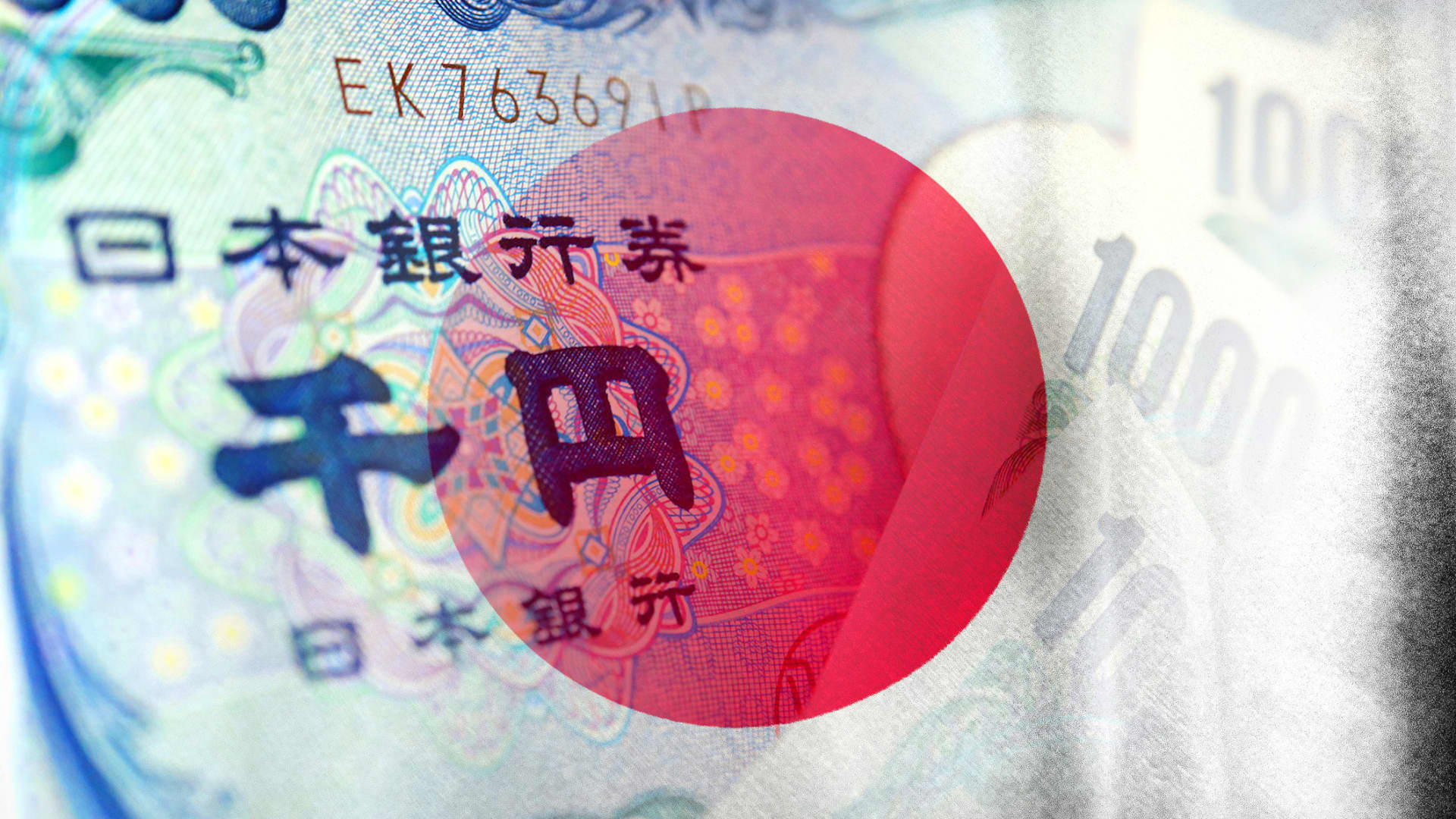
The Japan flag juxtaposed against a Japanese yen bank note.Javier Ghersi | Moment | Getty ImagesThe unprecedented U.S.-Japan intervention to support the yen may end up shaping market behavior. Japan has intervened in currency markets before, but this episode was bigger than usual. It was backed by Washington, reportedly executed using the euro-yen cross rather than directly in dollar-yen, and accompanied by explicit political support.Some investors consider this a major step."Japan's Ministry of Finance and the U.S. Treasury have successfully weaponized the yen," said Jesper Koll, expert director for Monex Group, referring to market deterrence. The intervention went beyond conventional foreign exchange management because the countries deployed public balance sheets in concert to influence market psychology, he said."When increasingly scarce national assets are spent in unison on the same target by two major sovereigns, markets will have to listen," he added.The coordinated intervention was the first U.S.-Japan joint operation to buy yen since 1998, and the first coordinated intervention involving the two countries since the G7 acted to weaken the yen after the 2011 earthquake. Political toolKoll also pointed to what he sees as unprecedented political signaling. By combining political backing and financial firepower, Washington and Tokyo sought to raise the cost of betting against the yen by putting two sovereign balance sheets on the other side of the trade.Stock Chart IconStock chart iconYen performance year-to-dateCornell University professor Eswar Prasad sees it as more of a defensive move, saying the operation nevertheless signals that foreign exchange policy has become increasingly intertwined with geopolitics. "Currency market intervention has clearly taken on a geopolitical tinge," Prasad said, with Donald Trump's administration appearing more willing to support central banks of countries it views as aligned with U.S. priorities. Some analysts drew parallels with Washington's support for Argentina's peso under President Javier Milei, when the country was battling currency instability ahead of key midterm elections. In September and October 2025, the Trump administration stepped in with a support package, using the Treasury's Exchange Stabilization Fund to provide a $20 billion currency swap with Argentina's central bank while also purchasing pesos in the open market."Bessent is the common thread. Same Treasury, same ESF, same playbook of using foreign-currency operations as an instrument of statecraft," said Michael Gayed, chief investment strategist at Tactical Rotation Management. "Argentina was about propping up a friend."Similarly, Quantum Strategy's strategist David Roche said Washington's motives likely extended beyond financial stability or Treasury markets, and that political considerations could also have played a role. "He might just want to do nice things for his buddy Takaichi." The U.S. Treasury Department did not respond to CNBC's request for comment. The intervention has altered the way investors will think about the currency, strategists said."It changes the calculus for funding trades specifically," said Billy Leung, investment strategist at Global X ETFs. "If investors now see intervention risk as a live and coordinated threat, they will likely become more cautious running large short-yen positions and rotate toward alternative funding currencies."The yen has long been the world's preferred funding currency for carry trades, where investors borrow cheaply in yen to invest in higher-yielding assets elsewhere. Leung added that the broader consequence is that "currency policy itself" has returned as a source of market risk after fading into the background over the past decade. If investors increasingly migrate to other funding currencies such as the euro, that could reshape positioning across major FX markets.Masahiko Loo, senior fixed income strategist at State Street Investment, agreed the episode means traders must increasingly price in geopolitical developments."The biggest shift is that traders now have a new variable to price: policy reaction functions, not just macro fundamentals," he said.
A 'weaponized' yen: How the U.S.-Japan intervention may reshape global currency markets
Full Article
Original Source
Read the full article at Cnbc →KhanList aggregates and links to publicly available news content. We do not host full articles from third-party sources. Always verify important information with original sources.