
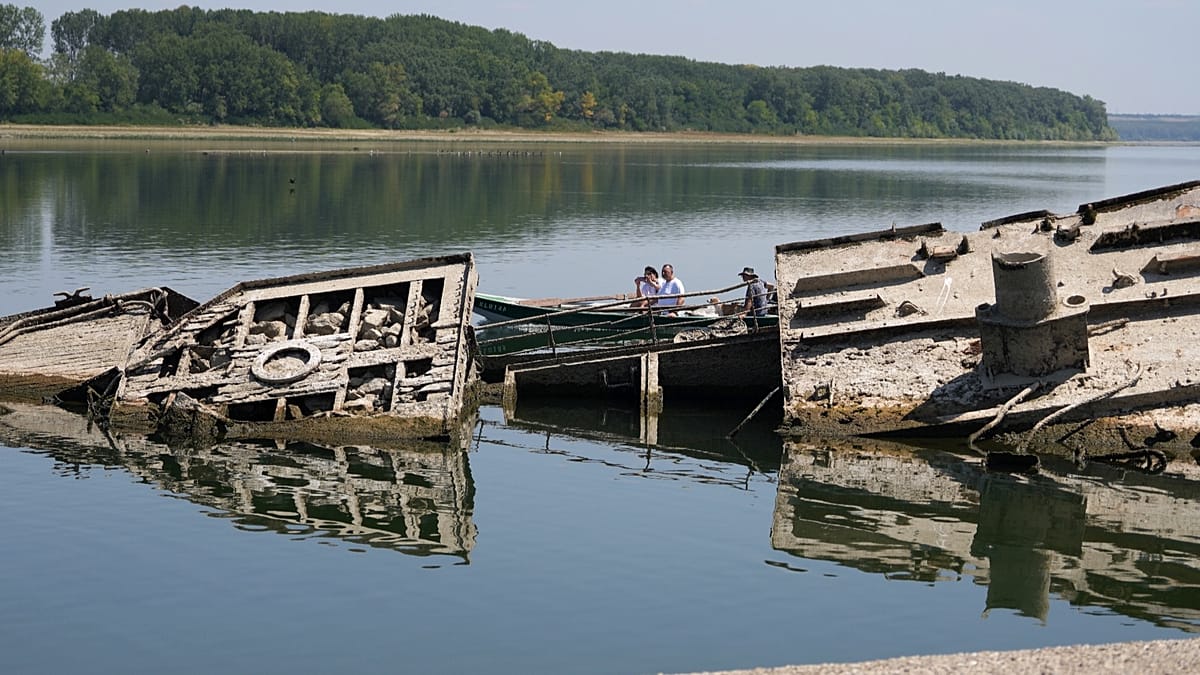
Shrinking sea ice in the Arctic’s rapidly warming waters could provide an early warning sign of summer drought thousands of kilometres away in Eastern Europe. ADVERTISEMENT ADVERTISEMENT Back-to-back heatwaves and scant rainfall left a record 52 per cent of Europe exposed to heat stress this year, paving the way for severe drought and a slew of deadly wildfires that ripped through the continent. Europe’s four major rivers, Loire, Po, Rhine and the Danube, were pushed to record low levels by August, following months of extreme heat that scientists say would have been “virtually impossible” if it weren’t for climate change. While the continuing burning of fossil fuels increases the risk of summer drought every year, researchers say predicting such droughts in advance could help countries take “timely mitigating action”. Can scientists predict future drought? A new study, published in the science journal Frontiers in Water, found that reduced winter sea ice in the Barents and Kara seas could be linked to more summer drought across a wide area of Eurasia. These effects stretch from eastern Romania, Moldova and Ukraine, across the northern Black Sea and Caspian regions all the way into western Kazakhstan. Researchers focused specifically on the Barents and Kara seas – located off the northern coasts of Norway and Russia – as these waters have witnessed some of the Arctic’s steepest declines in winter sea ice since the 1980s. Unless measures are taken to reduce CO₂ emissions, the UN’s Intergovernmental Panel on Climate Change (IPCC) predicts that by the end of this century, sea surface temperatures here could increase by 4°C to 5°C. The research team says this rapid warming is due to several interacting factors, including warmer Atlantic water entering the region, local feedbacks involving shrinking sea ice, changes in clouds, and other atmospheric processes. To test the theory, scientists retrieved historical records of sea ice in these waters from October through March. They used ERA5, a database from the European Centre for Medium-Range Weather Forecasts (ECMWF), which combines observations with a weather model to estimate monthly averages for atmospheric conditions across Eurasia from 1940 onward. They calculated drought conditions separately, then looked for areas with unusually dry conditions from May through September, reflecting less-than-average rainfall or greater atmospheric demand for moisture. These findings were adjusted to consider the long-term rise in atmospheric CO₂ concentrations. This is important, as both sea ice cover and summer drought are known to change in response to the resulting warming of the climate, which could drive a “spurious correlation” between them. How Rossby waves could bring warmer air to Europe “In our data, winters with less sea ice in the Barents and Kara seas were followed by a bendier [atmospheric circulation] pattern over the North Atlantic and Eurasia, consistent with a possible change in Rossby waves,” says lead author Dr. Petru C. Vaideanu, a scientist at the Centre of Excellence for Climate and Societal Changes at the University of Bucharest, Romania. Rossby waves, also known as planetary waves, are huge, undulating movements of the ocean or atmosphere that stretch horizontally across the planet for thousands of kilometres, bending the jet stream. “Such a bendy atmospheric circulation pattern can bring relatively warm, dry air into our newly identified drought corridor in Eurasia and lead to stagnant weather,” Vaideanu explains. “We also observed fewer clouds there, so more sunlight heats the land, potentially worsening the drought.”
A warning from the Arctic? New study links melting sea ice to future summer droughts in Europe
Full Article
Original Source
Read the full article at Euronews →KhanList aggregates and links to publicly available news content. We do not host full articles from third-party sources. Always verify important information with original sources.