
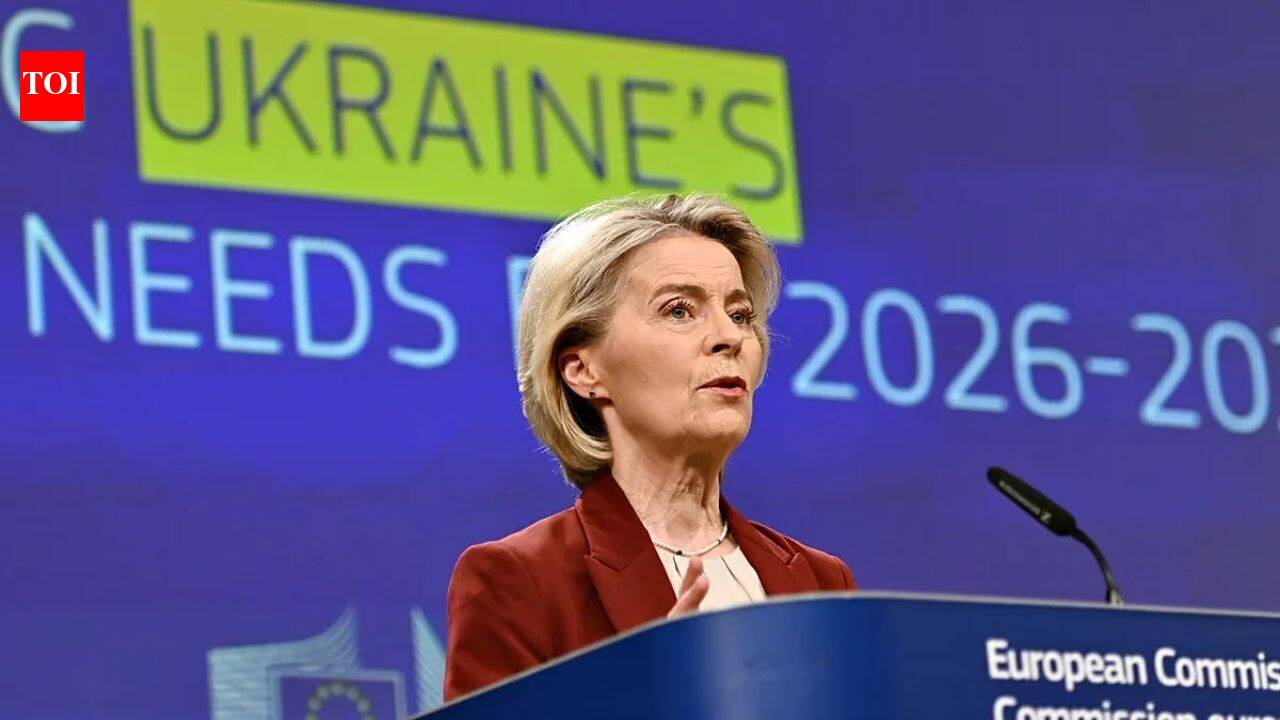
In 1921, Germany was ordered to pay 132 billion gold marks (around $33 billion at the time) in reparations for the destruction caused by World War I. More than a century later, Europe is looking to make Russia pay for the devastation of another war on the continent.The European Union has proposed a €45 billion loan to Ukraine, with an unusual condition: Kyiv would repay the money only after Moscow compensates it for the destruction caused by its invasion.The proposal was announced by European Commission president Ursula von der Leyen on Wednesday as the bloc seeks to ensure that Ukraine can sustain its defence against Russia while keeping its economy running.She said Europe remained committed to supporting Kyiv despite the prolonged conflict, stressing that the bloc's backing would continue both during the war and after a peace settlement."Five years since the start of this war of aggression, Europe stands united. We are as committed as ever to support Ukraine in war and in peace," von der Leyen said.She also reiterated Europe's resolve to maintain pressure on Moscow while ensuring that Ukraine receives the financial assistance it needs.Under the proposed arrangement, the €45 billion loan would be divided into two parts, with up to €25 billion earmarked for military assistance and €20 billion for general budget support.The military funding would help Ukraine sustain its defence against Russian forces, while the remaining amount would support the country's government finances and essential expenditure.To finance the package, the European Commission plans to borrow on behalf of the 27-member bloc from international markets. The proposed loan would come on top of the €90 billion in assistance agreed by EU leaders for 2026 and 2027.The proposed arrangement draws an unusual link between Ukraine's financial recovery and Russia's responsibility for wartime destruction.Under the plan, Kyiv would not be required to repay the principal until it receives reparations, indemnities or another financial settlement from Moscow. The EU has also retained the option of using immobilised Russian cash balances in accordance with EU and international law to recover the money.The proposal would additionally allow revenues generated by frozen Russian sovereign assets to support repayment of eligible loans. However, the plan is yet to receive approval from EU member states and the European Parliament.The proposal brings back memories of the reparations imposed on Germany after World War I under the Treaty of Versailles in 1919.Under Article 231, Germany accepted responsibility for war-related damage suffered by the Allied powers, providing the basis for reparations claims. In 1921, the Allied Reparations Commission fixed Germany's bill at 132 billion gold marks (around $33 billion at the time).The burden became a major source of economic and political turmoil in the country. Germany's failure to meet payments led France and Belgium to occupy the Ruhr industrial region in 1923, while the reparations crisis contributed to the country's economic instability and hyperinflation.The reparations dispute continued to shape Germany's economic and political landscape for years. The Dawes Plan of 1924 restructured payments and brought in international financial assistance to stabilise the country's economy.The historical parallel is striking, but the circumstances are very different. Unlike Germany in 1921, Russia has not been defeated or agreed to a reparations settlement. Yet, through its proposed loan mechanism, Europe is attempting to ensure that the financial burden of rebuilding Ukraine does not fall on Kyiv alone.
A war bill for Russia? Europe's €45 billion Ukraine plan echoes Germany's WWI reparations
Full Article
Original Source
Read the full article at Timesofindia →KhanList aggregates and links to publicly available news content. We do not host full articles from third-party sources. Always verify important information with original sources.