
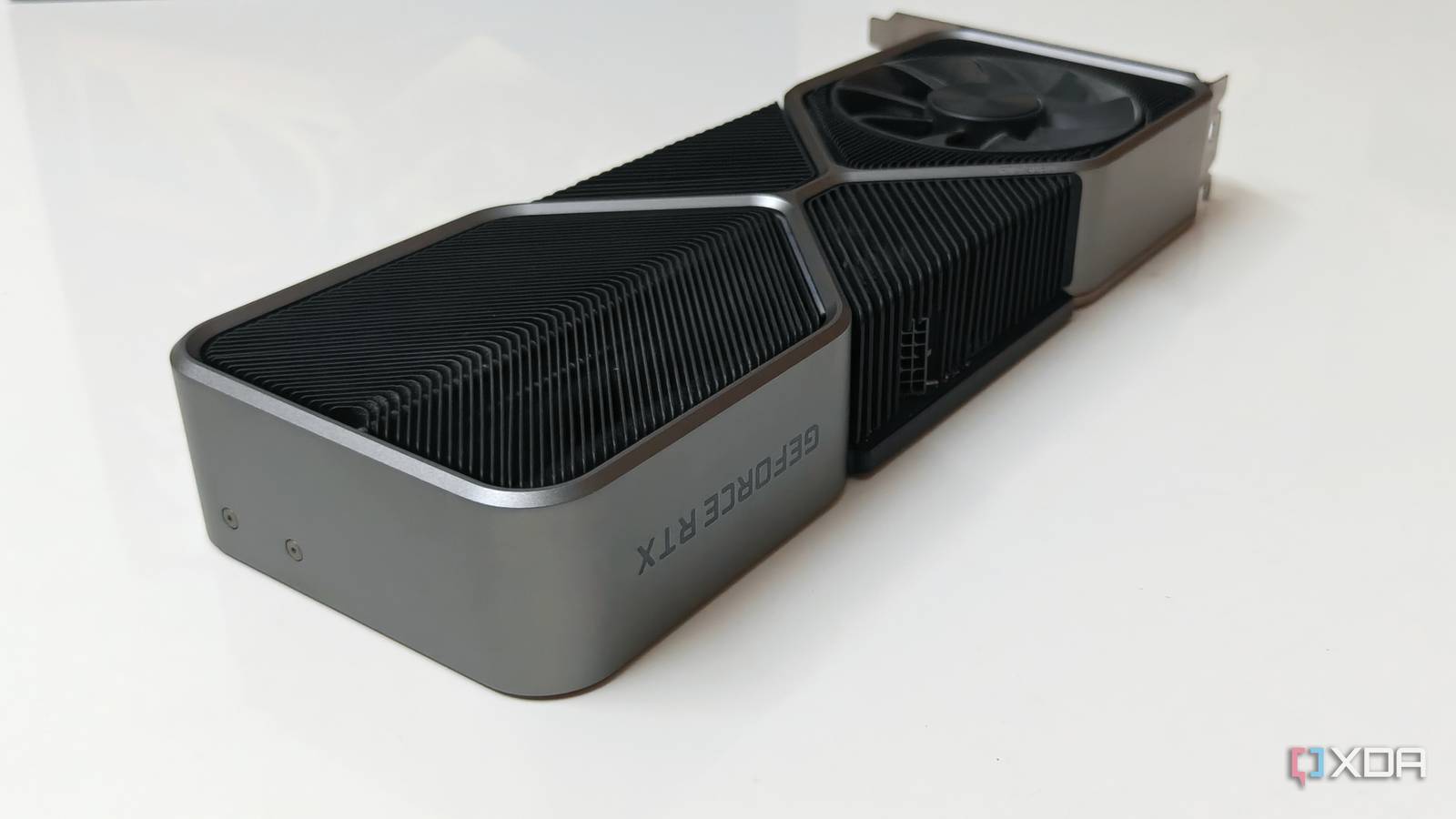
Published Nov 15, 2026, 7:00 AM EST Gaming has been Samarveer’s greatest passion, and the Literature graduate in him takes immense joy in dissecting games for their themes, messages, and impact. Samarveer holds a deep appreciation of gaming, and considers the platform to be the most immersive and impactful across all media. He can be found engaging with gaming communities online, always ready to debate the finer points of ray tracing or itching to write an 8-page collegiate thesis on any game that impacts him emotionally. The RTX 3090 was never the sensible choice, but then again, when has a 90-class card ever been? When Nvidia launched the RTX 3090, its $1,499 price tag made it a spectacular showcase of Ampere's capabilities, but a difficult sell for anyone who actually cared about value. Six years later, though, the math has changed in ways nobody expected. The RTX 3090 is old, power-hungry, and it does lack plenty of party tricks that newer GPUs boast, but I keep finding reasons to consider one. Its biggest weaknesses aren't quite as important as they used to be, and the environment around it has changed radically. In 2026, a used RTX 3090 may just be the best card to buy for your PC. The RTX 3090 finally has the workload it was built for 24GB of VRAM suddenly doesn't look excessive The RTX 3090's 24GB of VRAM looked ridiculous in 2020. Games barely needed it, and spending flagship money for memory you would rarely use was difficult to justify. In 2026, that same 24GB is arguably the card's biggest reason to exist on the used market. Modern local AI workloads can chew through VRAM with an enthusiasm that makes even 16GB cards feel surprisingly cramped. Even if newer cards are faster, sheer VRAM capacity isn't something they can compensate for. An RTX 4080 or 5080 might generate images or process tokens faster, but if the model doesn't fit into memory, faster silicon isn't particularly helpful. The 3090's enormous framebuffer gives you considerably more room to experiment with larger quantized LLMs, image-generation models, and other local AI workloads without having to figure out which layers to offload or reach for other compromises. Local AI workloads practically make the RTX 3090's age irrelevant, for all intents and purposes. Its VRAM may be GDDR6X, but it's still 24GB, regardless of it being "two generations old" now. The best part, of course, is that you wouldn't have to pay flagship money for it anymore. The RTX 3090 isn't done with gaming, either Software is giving Ampere more time to breathe Credit: Wikimedia Commons | PantheraLeo1359531 Against an RTX 4090 or RTX 5090, a 3090 isn't going to win today. It will hold its own, sure, but more importantly, it doesn't need to beat those cards, either. It just needs to render a good enough base frame rate for today's games, and with 24GB VRAM, it does that pretty easily. Thankfully, modern upscaling tech like DLSS is doing all it can to change that equation and help the 2020 flagship gain a second wind. After all, the 3090 is still ray-tracing capable, and with modern upscalers like DLSS 4.5 having trickled all the way down to the RTX 20-series, the RTX 3090 has easily stood to benefit the most. Native 4K with heavy ray tracing was never this card's sensible use case, but 1440p or 4K with upscaling can turn that same workload into something considerably more manageable. Then there are open-source hacks like universal frame generation, which add another layer to the equation. They don't manufacture genuine rendering performance, but they do unlock the full power of the RTX 3090's AI Tensor cores to improve upscaling and even execute frame generation duties. As someone whose 12Gb VRAM RTX 4070 Ti frequently runs out of VRAM while trying to use 3x or 4x frame generation, the RTX 3090's 24GB framebuffer could prove to be a massive benefit while running OptiScaler. Having 24GB available means the 3090 can spend its remaining gaming life focusing on performance rather than constantly worrying about running out of VRAM. The RTX 3090 is becoming the tinkerer's GPU Six years later, Ampere has plenty of gas in the tank Recent community research into Ampere's AI capabilities has exposed previously restricted tensor performance, giving cards like the 3090 substantially more room to flex their compute hardware. The gains aren't universal, sure, but the benefits are undeniable in specific matrix-math workloads, where removing the limitation can translate into meaningful improvements. The 3090 also happens to be the Ampere card I'd want for this experiment. Its GA102 GPU has considerable compute resources, 24GB of GDDR6X, and a generous power envelope that gives enthusiasts more headroom than most consumer GPUs. You can throw considerably more power at a 3090 than you'd ever want to put through a sensible gaming build. It's astonishing how a six-year-old flagship GPU is still being poked, prodded, and unlocked further by the community. Despite being a full two generations old, the RTX 3090 seems determined to make retirement everyone else's problem. A used RTX 3090 is only a bargain if you buy the right one Six years later, the price is what makes the 3090 interesting The RTX 3090's biggest problem in 2026, of course, is that it is old. However, its age is also its biggest advantage when comparing it against newer RTX 90-class flagships. Right now, used 3090s can be found around $1,600–$2,000, while used RTX 4090s are routinely asking in the $3,500–$4,500 range. The RTX 5090, though, is in an entirely different universe, with used eBay listings often sitting around $5,000–$8,000. These prices right now make the 3090's ridiculous launch price not look so ridiculous anymore. That doesn't make every $1,500 RTX 3090 a good deal. GDDR6X runs hot, fans wear out, thermal pads deteriorate, and some cards have spent years mining rather than playing Cyberpunk for a few hours on Sunday. You'd also be buying a 350W GPU in an era when efficiency has improved considerably. As such, it's crucial to have a competent PSU, decent airflow, and a card with a clean history. A 4090 gives you considerably more performance, while an RTX 5090 gives you another generational leap and newer hardware features. Neither gives you 24GB of VRAM for 3090 money, though, and that's the point. At the right used price, that's an unusually compelling proposition. You're getting 24GB of VRAM, serious compute, capable ray tracing, and a GPU that enthusiasts are still finding new uses for. Six years ago, the RTX 3090 was an extravagance. In 2026, a healthy one at the right price can look almost sensible. The 3090 aged into the GPU I didn't expect It's incredibly satisfying to watch a GPU completely outlive the argument it was built around. The RTX 3090 was supposed to be the absurd flagship you bought because money was no object. Six years later, its appeal comes from almost the opposite reason — you can buy yesterday's ridiculous hardware without paying tomorrow’s ridiculous prices. In all honesty, I still wouldn't call the RTX 3090 an obvious recommendation. It runs hot, drinks power, lacks newer features, and buying used hardware always involves some amount of gamble. But that's also what makes it fascinating. Very few GPUs have aged quite like an RTX 3090 has, and at this point, it wouldn't be too far-fetched to call it timeless. NVIDIA RTX 3090 Nvidia's current king, the RT 3090 is insanely powerful and overkill for most needs. But it's a remarkable thing to behold.
A used RTX 3090 makes more sense in 2026 than it did when it was new
Full Article
Original Source
Read the full article at Xda-developers →KhanList aggregates and links to publicly available news content. We do not host full articles from third-party sources. Always verify important information with original sources.