
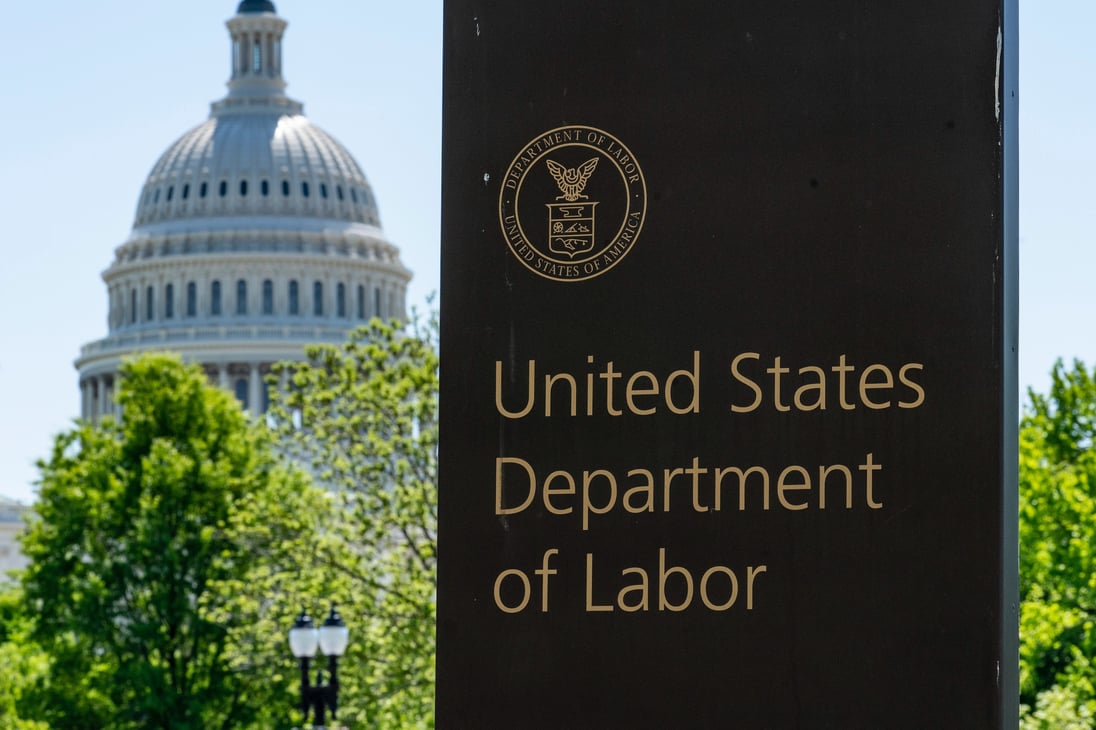
WASHINGTON (CN) — Some of the most divisive policies of the Trump presidency have been on immigration, but next week at the Supreme Court progressive groups have found themselves backing the federal government.On Tuesday, the justices will hear oral arguments in Department of Labor v. Sun Valley Orchards, asking how the federal government can hold employers accountable when they commit labor violations against immigrant workers.The Trump administration wants the high court to let the Department of Labor adjudicate companies’ labor violations in administrative proceedings instead of courts in the judicial branch. And their case garnered support from unlikely bedfellows.Public Citizen, which has filed over 50 lawsuits against the Trump administration, came to the government’s defense at the Supreme Court. The nonprofit consumer advocacy group said that a win for the government would be a win for immigrant workers.They’re not alone, the Constitutional Accountability Center, which is also involved in high-profile litigation against the Trump administration, said it was in the public’s interest for the government’s arguments to prevail.“[The Department of Labor’s] ability to impose these penalties would ensure that employers who voluntarily chose to participate in the H-2A program complied with its requirements, thereby preventing the admission of ‘temporary alien workers … [from producing] a lowering of the wages, terms and conditions of domestic workers,’” the group wrote.The H-2A program allows U.S. employers to bring foreign nationals into the country to fill temporary or seasonal agricultural jobs when domestic workers are unavailable. In return for bringing foreign laborers into the country, employers must agree to terms and conditions, such as satisfying certain minimum standards for working and living conditions.Sun Valley Orchards in New Jersey obtained permission for 96 H-2A visas for foreign workers to pick asparagus and peppers from April to October in 2015. Along with 51 domestic workers, the immigrant laborers were expected to work 12 hours a day with only a single one-hour break.Sun Valley’s laborers lacked access to drinking water and clean bathrooms while on the job, and their living conditions weren’t much better. The workers were housed in six bedrooms with 20 bunk beds per room, and the bathrooms were dirty and lacked sufficient hot water.Several workers met with Sun Valley’s owner to discuss the substandard provisions. Instead of addressing their concerns, the company gave them pre-filled departure forms to sign, stating they were voluntarily leaving because of personal issues. The H-2A workers were subsequently laid off midseason.The Department of Labor launched an investigation and determined Sun Valley had violated the H-2A program requirements. An administrative law judge and the Department’s Administrative Review Board affirmed the findings, ordering the company to pay over half a million dollars in civil penalties and back wages.Sun Valley challenged the claims in federal court, arguing the department lacked authority to impose monetary penalties through administrative proceedings. The employer said claims involving private rights have to be adjudicated in Article III courts under the Supreme Court’s recent ruling in SEC v. Jarkesy.The 2024 ruling was a part of the Roberts court’s recent spate of rulings disarming the administrative state, a term describing the governing power of the federal government and its agencies.Unlike Article III courts, administrative law judges fall under the executive branch. There are about 2,000 of these judges working across 30 agencies; by comparison, there are about 900 judges working throughout the judiciary.Appointment of administrative law judges originally differed from their peers in the judiciary, requiring applicants to qualify through a merit-based selection process overseen by agency heads. In contrast, federal district and circuit court judges are nominated by the president.In Jarkesy, the conservative supermajority held that a hedge fund manager’s Seventh Amendment rights were violated by having an agency judge decide the fraud case against him instead of an independent jury.But the Trump administration says Sun Valley’s case is different because it deals with public rights instead of private rights. The government argued such categorization applies to rights that can only be given by Congress and administered by the executive branch.Here, the employers’ right to use H-2A laborers is subject to the Department of Labor’s discretion. Without the government’s approval, no party has a right to bring in H-2A workers. And the administration says Congress allows the government to grant those privileges to employers or other parties based on certain conditions.“Whether respondent’s violation of H–2A program requirements is framed as a violation of the United States’ sovereign right to control the terms under which aliens can enter the country or as a violation of the terms and conditions of a public-benefits program — when, in fact, it is both — the ensuing adjudications are plainly constitutional,” the government wrote.Public Citizen urged the Supreme Court not to curtail the government’s enforcement tools under the program. The group warned that doing so would exacerbate underenforcement of the conditions for receiving H-2A benefits and require the government to put scarce resources into litigation.“Requiring the department to file a lawsuit every time it wishes to enforce an employer’s voluntary H-2A commitments would frustrate vindication of Congress’s goal, embodied in the 1986 Act, of ensuring that agricultural employers do not use the guest worker program to impose wages and working conditions that lower the standards for American workers,” the group wrote.Violations in the program are already widespread. According to a government accountability report, 84% of the department’s H-2A investigations uncovered violations between 2018 and 2023.While Public Citizen supported the government’s position, the group noted that the Trump administration’s actions have made it more difficult to hold employers accountable. Under the second Trump administration, Public Citizen said, the department reported one of the lowest investigator levels in the past half-century despite the continued growth of the H-2A program.The Supreme Court will hear oral arguments Tuesday.Subscribe to our free newslettersOur weekly newsletter Closing Arguments offers the latest about ongoing trials, major litigation and rulings in courthouses around the U.S. and the world, while the monthly Under the Lights dishes the legal dirt from Hollywood, sports, Big Tech and the arts.Additional Reads
A Trump immigration fight progressive groups can get behind
Full Article
Original Source
Read the full article at Courthousenews →KhanList aggregates and links to publicly available news content. We do not host full articles from third-party sources. Always verify important information with original sources.