
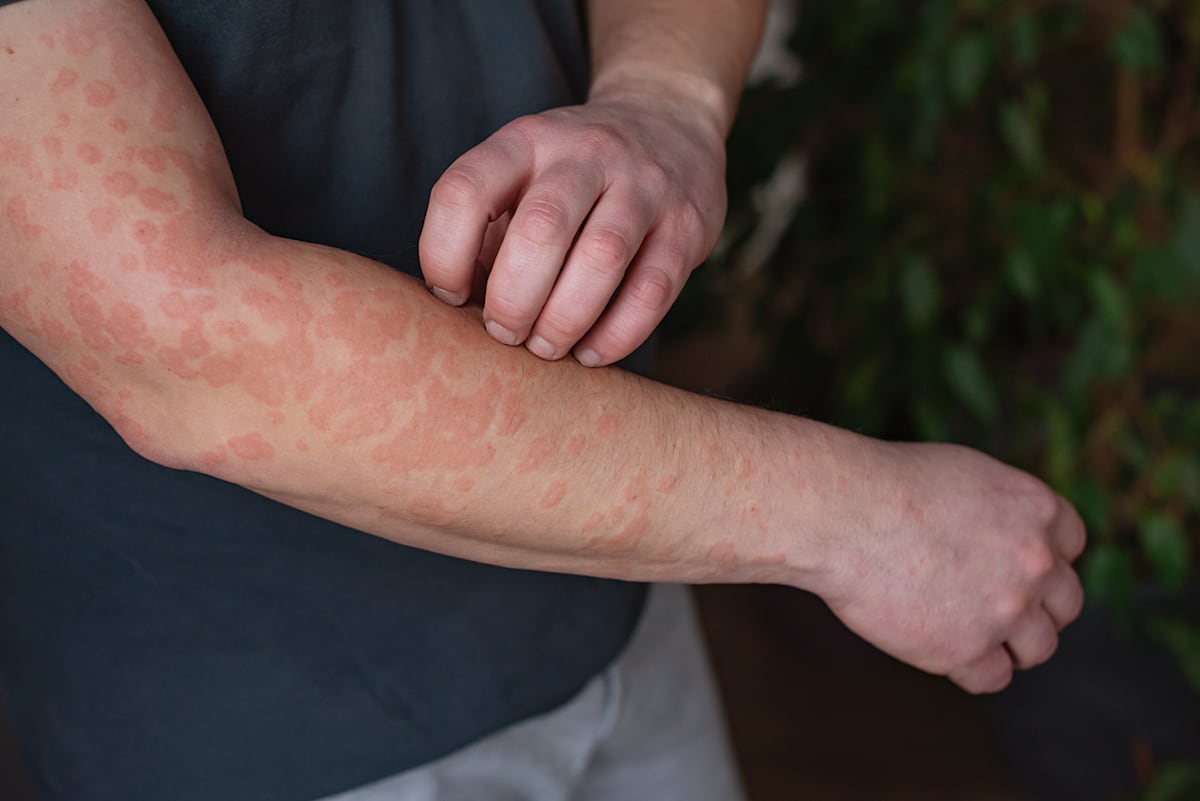
The 15-year-old took one sip of an energy drink and began developing hives all over his body and had difficulty breathing. The attack was so severe that in the emergency room he had to be given two doses of epinephrine, a life-saving emergency drug used to stop severe allergic reactions. The investigation into the energy drink revealed a hidden ingredient: cod collagen. The boy was allergic to that specific fish compound and encountered it in the most unexpected place. It rarely happens, but it does. His case, along with other unusually severe allergy episodes, were presented Thursday at the annual meeting of the American College of Allergy, Asthma and Immunology to illustrate the complexity of anaphylaxis — severe, potentially fatal allergic reactions that occur when the body comes into contact with something harmless but which the immune system interprets as a threat, triggering an exaggerated response.“Anaphylaxis is uncommon and these cases are even rarer, exceptional. It must be made clear that not all children with allergies will have anaphylaxis,” says Paula Donado-Mazarrón, a pediatric allergist at Hospital Sant Pau in Barcelona. In fact, the specialist adds, collagen is not usually the most common allergen, although another protein is: parvalbumin. “It is also most common for fish allergies to disappear over time,” she emphasizes.Although popular imagination and the scientific evidence often attribute these severe episodes to common allergens such as peanuts, the case reports presented at the congress — which will be published in the journal Annals of Allergy Asthma & Immunology — show that the threat is sometimes far more complicated. Another example: a 10-year-old girl developed breathing problems and hives on her face and neck minutes after applying castor oil to her hair. In the emergency room she was given epinephrine, albuterol and steroids to stop the allergic reaction and investigators began to look into it: the child had used castor oil before without problems, but the product had always been produced by hot-pressing; this time the oil was cold-pressed. “This is the first reported case of anaphylaxis from topical castor oil and the first clinical demonstration of a reactivity that depends on the manufacturing process,” the authors of the case report say.Anaphylaxis is not a very common phenomenon. And although figures vary between studies, it is estimated that there are between 50 and 112 episodes per 100,000 people per year and mortality ranges from 0.2% to 3%. “The significance of these figures lies in the fact that many cases could be prevented with proper diagnosis and treatment, and bearing in mind that in many instances those affected are young people, even children, without a serious prior illness,” warn allergists Victòria Cardona and Alberto Álvarez-Perea in the White Book of Allergic Diseases, published by the BBVA Foundation.According to these allergists, the trigger in more than half of anaphylaxis cases is a drug (56% of episodes), such as penicillin and its derivatives, aspirin and anti-inflammatories. Then there are foods: in one in four anaphylaxis cases there is a food product behind it, especially nuts, shellfish or fruits like peach (in children they are usually due to allergy to egg, milk, tree nuts, peanuts, fish or shellfish). Much less frequent are severe allergic reactions caused by bee and wasp stings (5% of the total) or latex.Around this material, a peculiar case was also reported at the American congress. It involved an 11-year-old girl who suffered anaphylaxis after exposure to a squishy toy. After handling these sensory toys at home and touching her face, the child began to suffer hives and a tightness in her throat and had to be given an epinephrine injection on the ambulance. A week later, while handling a similar toy at school, she experienced the same throat tightness, administered epinephrine herself and was later given corticosteroids at the hospital. Subsequent testing confirmed the girl’s sensitization to latex and revealed that these toys, which had already been linked to choking hazards, chemical burns or skin irritation but never anaphylaxis, could also be a potential source of severe allergic reactions in children.“The lack of information about the composition of children’s toys makes it difficult to identify allergens, which underscores the need for a thorough allergy workup and evaluation of toy materials in cases of anaphylaxis of unknown cause,” the authors of this case study said.On the cases described, Donado-Mazarrón reiterates their exceptional nature. “Contact allergy in the pediatric population, like that of the girl who used castor oil, is extremely rare. The same goes for latex allergy in children: it is exceptional. Balloons and school supplies often contain this material and children are frequently exposed.” The specialist does note, however, that it is not unusual to find labeling errors on food products, whether through omission of allergens or incomplete labeling.These particular cases show how complex it can be to detect the origin of anaphylaxis. Not all people with allergies have the same risk of triggering a reaction of this magnitude. There is a profile particularly prone to these events and their medical history reveals it: having had a previous anaphylaxis or having poorly controlled asthma are risk factors. “Tree nuts and peanuts are associated with more persistent allergies. And in the pediatric population, so is milk. But it must be remembered that anaphylaxis is a multifactorial combination of causes; it depends on a series of cofactors in addition to the amount of the allergen,” notes the Sant Pau allergist.The specialist also points to one especially vulnerable age group: adolescents with known allergies. “That is because they eat out more, socialize more outside the home and may have more accidental exposures. They may also not carry rescue medication and, if they do, they may administer it later because they minimize the symptoms,” she explains. Not all children with food allergies will have anaphylaxis and therefore not all are prescribed rescue adrenaline to carry with them, she clarifies. It is prescribed individually according to clinical profile, history and the type of food to which the child is allergic.In most cases, Donado-Mazarrón says, they manage to identify the trigger of the anaphylaxis: “Pediatric allergists are like detectives: a patient arrives with a systemic allergic reaction and we have to see what foods they’ve eaten, what contacts they’ve had with certain substances and what potential viral or other interfering factors might have altered the immune response. After the allergy study, we can discover the culprit of that allergic reaction and that brings reassurance to the parents.”Sign up for our weekly newsletter to get more English-language news coverage from EL PAÍS USA Edition
A toy, an energy drink or a hair oil: the unusual places where you can encounter a severe allergic reaction
Full Article
Original Source
Read the full article at English →KhanList aggregates and links to publicly available news content. We do not host full articles from third-party sources. Always verify important information with original sources.