
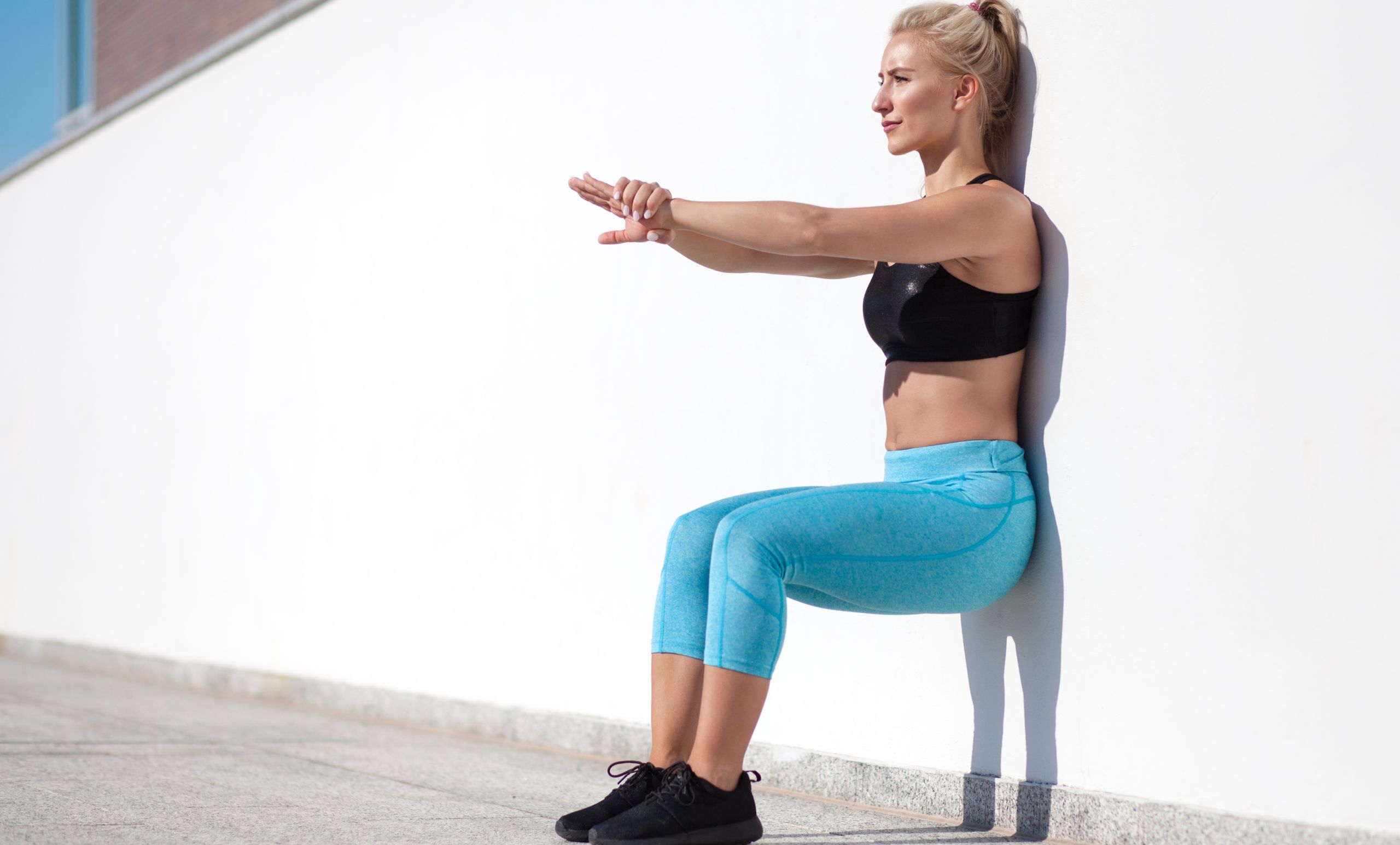
(Image credit: Shutterstock) Three minutes. That’s apparently all you need to build muscle. No dumbbells, no gym, and, technically, you don’t even need to move.Sounds good, doesn’t it? I mean, life is busy, and if you can swap an hour-long workout for three minutes, then tell me where to sign, like, yesterday.The claim comes from an Instagram post citing Swedish neuroscientist Anders Hansen, which suggests that isometric muscle contractions performed under maximum tension for three minutes can trigger protein synthesis four times more effectively than traditional strength training.It’s a big claim, and one I wanted to explore by taking a closer look at isometric training. Read on for my verdict.What is isometric training? If you’ve heard of isometric exercises, then you’ll know they’re nothing new. Think planks, wall sits, or holding a squat, which are all exercises where you hold a position while keeping your muscles under tension without moving your joints. And anyone who has ever held a wall sit for 60 seconds will know that not moving certainly doesn’t mean you’re not working.Rather than repeatedly shortening and lengthening your muscles through reps, as you would during a squat or bicep curl, isometric training involves creating muscular force without movement. Your muscle fibers are active, but because you're working against an equal opposing force, you remain in a relatively fixed position.And that's the important bit here. You're not supposed to casually hang out in a plank for a minute. The idea is to create as much muscular tension as possible by bracing, squeezing and pushing hard throughout the hold. And when we say hard, we mean hard. The technical term here is “maximal voluntary contraction,” which essentially means contracting your muscles as hard as possible.Get instant access to breaking news, the hottest reviews, great deals and helpful tips.So, could three minutes really make a difference? There was only one way to find out.I tried the 3-minute workout, and here's what really happenedI put three minutes on the clock and followed the three simple exercises recommended in the post:Wall sit: 60 secondsPlank: 60 secondsDoorway press: 60 secondsFor the wall sit, I placed my back against a wall and slid down until my knees were roughly at a 90-degree angle. But rather than simply sitting there waiting for the minute to pass, I pushed my feet firmly into the floor, squeezed my glutes and deliberately created as much tension through my legs as I could.This exercise primarily targets the quads, adductors and glutes, and believe me, it didn't take long to feel them working.Next came the plank. Again, I wasn't simply holding the position. I braced my abs, squeezed my glutes and actively pressed my forearms into the floor, which fired up my core and shoulders while the rest of my body worked to keep me stable.Finally, for the doorway press, I stood inside a doorway, placed my hands against either side and pushed outward as hard as I could, creating tension through my chest, shoulders and arms.With isometrics, you get out what you put in.Lucy MillerThe first 20 seconds were fine. By 30 seconds, my quads were starting to burn. By 45, my legs had started to shake, and I was staring at the timer, wondering how 15 seconds could possibly take that long.What surprised me most was how different the exercise felt when I stopped thinking about simply holding the position and started deliberately creating as much muscular tension as possible. The same happened during the plank.I'm used to planking, but actively squeezing my glutes, bracing my core and pressing my forearms into the floor created a considerably more intense exercise. My abs stayed engaged, my shoulders began burning and there was nothing to distract me. It was just me, my plank and a very slow-moving clock.By the time I reached the doorway press? It clicked. Pushing against something that won't budge feels slightly strange at first, but the harder you push, the harder your chest, shoulders, back and arms have to work. And that's probably the biggest thing I took from the workout: with isometrics, you get out what you put in.You could technically hold the same position for 60 seconds without doing very much at all. But deliberately squeezing, bracing and engaging absolutely every muscle I possibly could turned those same positions into something completely different.Can three minutes of isometrics really build muscle?This is where things get interesting. Isometric exercises are often associated with rehabilitation, but they can be a useful strength training tool, too.Research suggests isometric contraction can increase strength and muscle size, so the idea that you can build muscle without performing traditional reps isn't complete nonsense. Isometric contractions still create mechanical tension within the muscle, which is an important stimulus for muscle growth, despite the joint remaining relatively still.And thinking about it, I’ve found isometric training particularly handy in the past when working on exercises like pull-ups. Holding yourself at the top of a pull-up for as long as possible forces the muscles in your back, shoulders and arms to work hard to keep you there, helping build strength in that top position.The same goes for push-ups. Holding yourself a few inches above the floor for 20, perhaps even 30 seconds, is considerably harder than it sounds and keeps your chest, shoulders, triceps and core under constant tension. It's also a useful way to work on body position, form and control at the bottom of the movement. (Image credit: Shutterstock)But that doesn't mean three minutes of a static hold is a magical muscle-building shortcut, or that you should give up your regular weight training routine. One limitation of isometric training is that strength gains can be specific to the joint angle being trained. And if building muscle is your goal, you still need to progressively overload your muscles over time.Rather than thinking of one as better than the other, it makes more sense to think of isometrics as another useful strength training tool. Think time under tension, body awareness and stability, and a training method that's particularly handy when you're short on time or undergoing rehab, which, let's face it, happens to the best of us.Follow Tom's Guide fitness on Instagram for more workouts, routines, tips, and tricks. Follow Tom's Guide on Google News and add us as a preferred source to get our up-to-date news, analysis, and reviews in your feeds. More from Tom's GuideForget back pain, this low-impact ab workout builds strong abs in just 3 movesI’m a weightlifting coach — 5 ‘old-school’ exercises that still build functional strength and muscle all overNo squats! I just tried this 8-minute chair workout, and it’s perfect for seniors, beginners, and anyone looking to build strength without impact Lucy Miller is a Journalist, Level 3 Personal Trainer, Nutritional Advisor and Children’s Fitness Specialist. She holds fitness qualifications from NASM Training and Premier Training International and has been a fitness journalist and model for over 20 years.
A Swedish trainer says 3 minutes of this exercise can build muscle, so I tried it (and I'm surprised)
Full Article
Original Source
Read the full article at Tomsguide →KhanList aggregates and links to publicly available news content. We do not host full articles from third-party sources. Always verify important information with original sources.