
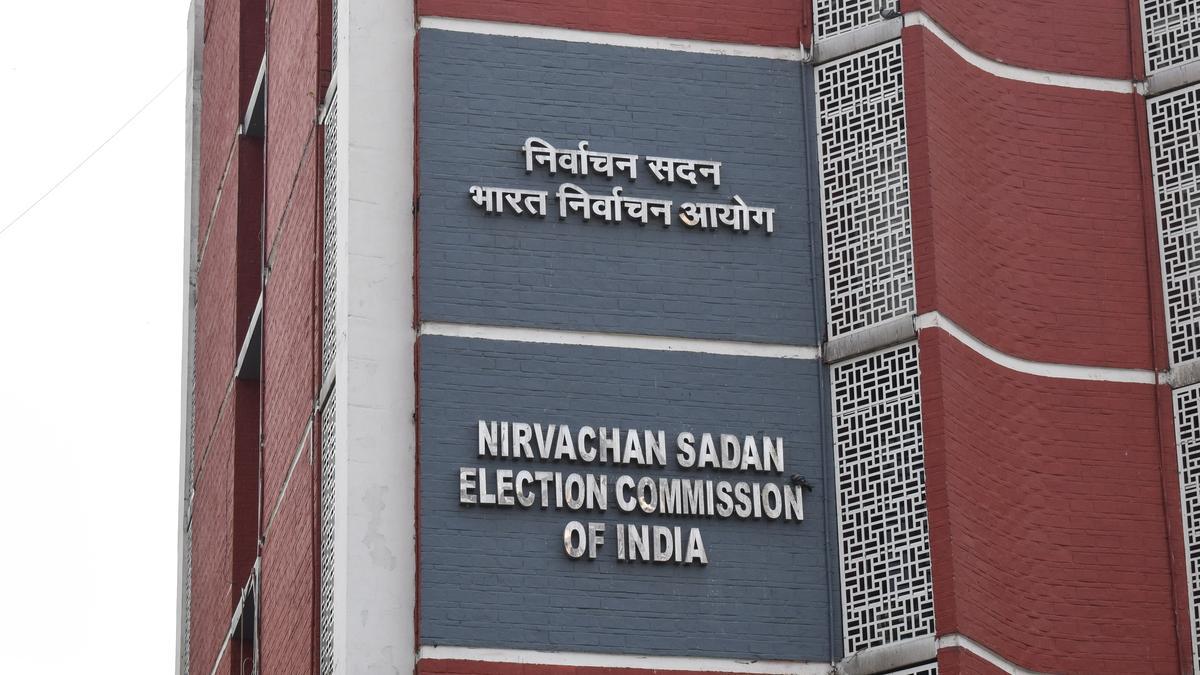
Election Commission of India. File | Photo Credit: Aman Raj Nearly four decades ago, the Supreme Court had warned that if a Chief Election Commissioner (CEC) functions in a way that he considers himself superior and his word final, the Election Commissioners (ECs) would be rendered “non-functional or ornamental”.The court had held that leaving the “exclusive and uncontrolled” powers of the Election Commission of India (ECI) in the hands of one person would violate democratic rule.The observations of the apex court in S.S. Dhanoa versus Union of India (1991), highlighting the importance of a collegial and multi-member ECI to democracy, still echo even as allegations of unilateral conduct, authoritarianism and subversion against CEC Gyanesh Kumar highlight friction within the poll panel.A Constitution Bench in the T.N. Seshan case, which upheld a multi-member ECI, quoted the Dhanoa judgment’s reasoning that “vast discretionary powers, with virtually no checks and balances, should not be left in the hands of a single individual and it was desirable that more than one person should be associated with the exercise of such discretionary powers”.The court had reasoned that a single and wise individual may be able to withstand all the pulls and pressures which many may not. However, it is politic to entrust the affairs of the ECI with more than one hand for the sole reason that the institution is armed with vast powers and is accountable to none.The spirit of the judgment is reflected in Section 18 of the Chief Election Commissioner and Other Election Commissioners Act, 2023, which requires the ECI to conduct its business unanimously or by the opinion of the majority consensus.The court had said that the CEC must be able to conduct himself at meetings he chairs in a manner that he is able to win the confidence of his colleagues on the Commission and carry them with him. On the other hand, this would prove difficult if the CEC, who is the chairman of a multi-member ECI, treats the other members of the Commission as his subordinates.Editorial | Deep rot: On the Election Commission of India’s functioning during its SIRThe T.N. Seshan judgment held that ECs were indeed a part of the Election Commission and “must have a say in decision-making”. The court had at the time rejected an argument that the ECs’ role was restricted to merely tendering advice to the CEC.The ECI is not the only multi-member body, the court had noted. Other public institutions like the Public Service Commission and the National Commission for SC/ST too are multi-member bodies. They too function by the rule of majority.A multi-member ECI has to conduct its work in cooperation, appreciating and respecting each other’s points of view, the court had said. Published - September 26, 2026 08:04 pm IST
A ‘superior’ CEC renders Election Commissioners ‘non-functional’, Supreme Court had warned
Full Article
Original Source
Read the full article at Thehindu →KhanList aggregates and links to publicly available news content. We do not host full articles from third-party sources. Always verify important information with original sources.