
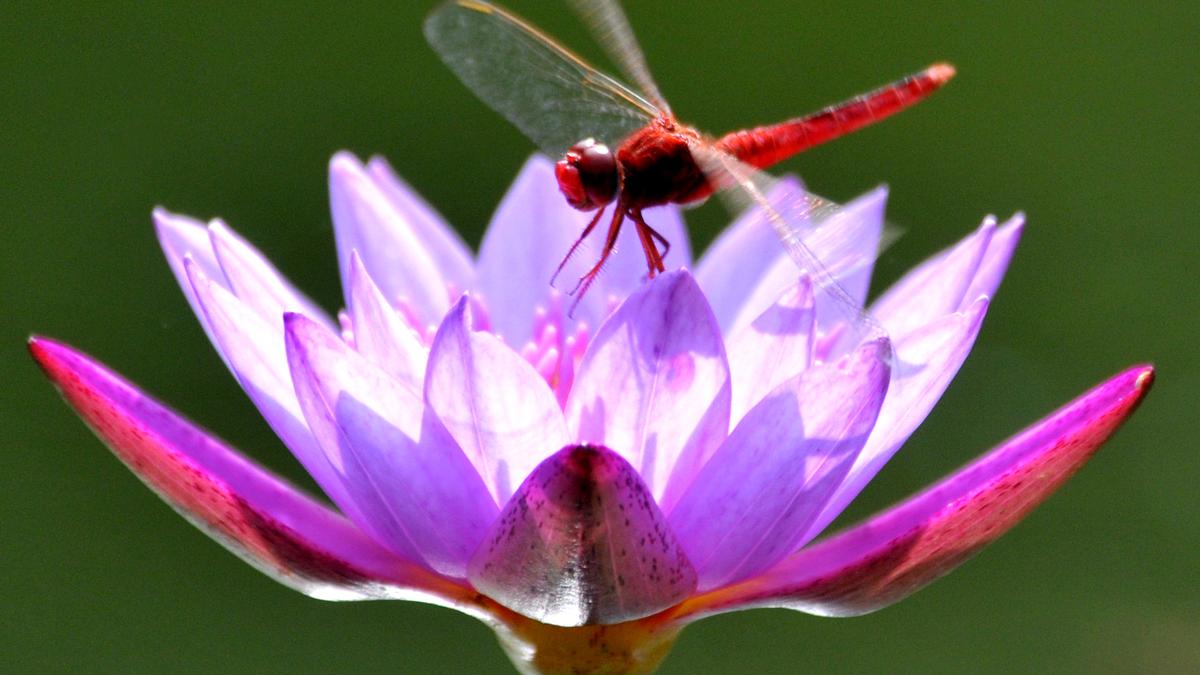
Rising above the murkiest environments | Photo Credit: K.R. Deepak The water is shallow, muddy and low in oxygen. Yet, rising above this squalor is a flower of astounding beauty. The lotus is a timeless symbol of purity and the triumph of the spirit.Growing in slow-moving water, the lotus is remarkably well equipped to thrive even in the murkiest environments. Beginning life underwater, its long, flexible stem shoots upwards, yielding large, waxy leaves that spread on the water surface, absorbing sunlight and air while repelling water and dirt. In time, buds appear on the stem above the leaves and unfurl into large, mature flowers with a conical seed pod at the centre. The pod produces heat, which keeps the flower warm and spreads its scent, making it a magnet for pollinators.This splendour lasts for a few short days. Then, the flower dries, the stem weakens, and the pod droops, releasing seeds back into the water. Lotus seeds are remarkably resilient and can remain viable for centuries. Researchers have successfully germinated seeds as old as 1,300 years! The flower’s splendour lasts only for a few days. | Photo Credit: K. Murali Kumar Cultural capitalOriginally found in subtropical Asia, humans took lotuses all over the world. While they come in many colours and sizes, two species are widely recognised: the Sacred Lotus (Nelumbo nucifera), native to Asia and parts of Australia, and the American Lotus (Nelumbo lutea), native to North America and the Caribbean. The lotus has had an impact on art, literature and culture. | Photo Credit: K.R. Deepak Perhaps their greatest place, though, is in human culture. From kitchens to prayer rooms, the lotus has made its way into people’s lives across Asia. In India, it is the national flower. Its stem is a prized vegetable that is fried into chips, turned into pickle, and cooked in curries. The flower, meanwhile, is offered in temples and appears frequently in portraits of Hindu gods and goddesses.According to Hindu mythology, Lord Brahma emerged sitting atop a lotus that bloomed from Lord Vishnu’s navel and proceeded to create the universe from its petals and cosmic energy. That’s why he’s also called Padmaja (born of the lotus) and Kamalasana (seated on the lotus), while Padmanabha (one with a lotus navel) is another name for Lord Vishnu. Even in Buddhism, the lotus is a central motif. Prince Siddhartha Gautama, who became the Buddha, is compared to a lotus that is born in water, grows in water, but rises above it, unsmeared.Given its place in everyday life and sacred beliefs, it’s not surprising that the lotus has left its imprint in art, architecture and literature. Ashokan pillars, Buddhist art, Mughal monuments, the works of the Sanskrit poet and playwright Kalidasa… it abounds in human creations across the ages. Few flowers can claim to have travelled so effortlessly between the natural and human world Published - November 27, 2026 11:00 am IST
A short history of the lotus
Full Article
Original Source
Read the full article at Thehindu →KhanList aggregates and links to publicly available news content. We do not host full articles from third-party sources. Always verify important information with original sources.