
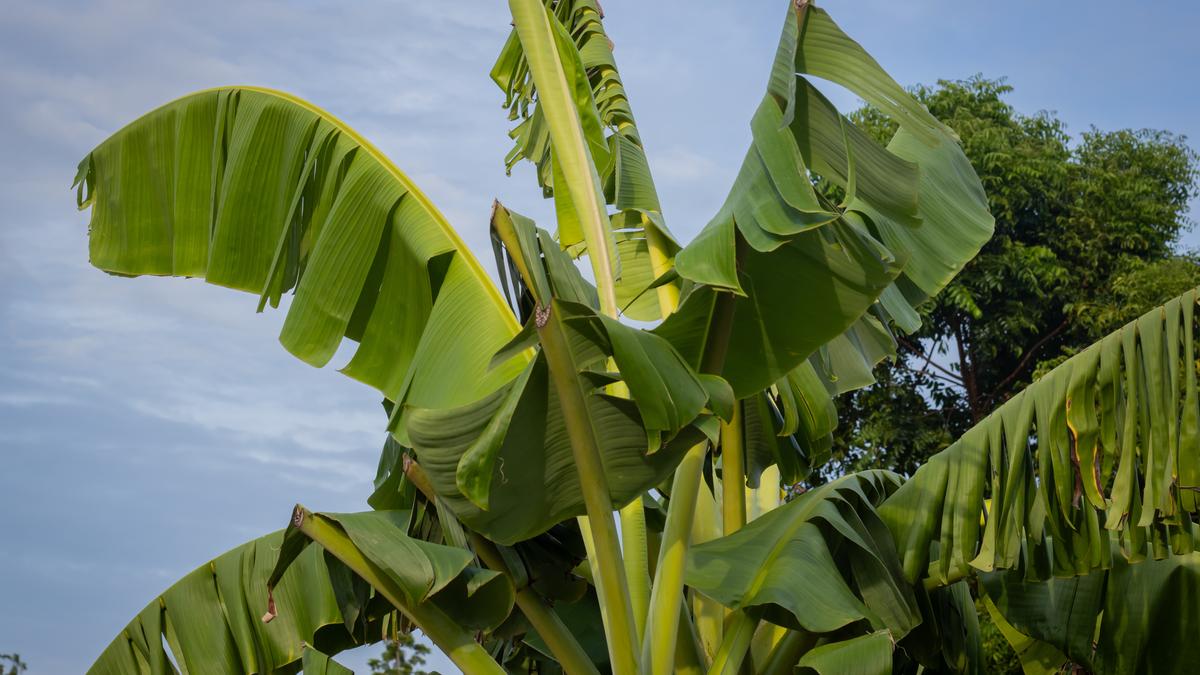
Looks like a tree and its fruits are classified as berries. | Photo Credit: Getty Images/iStockPhoto Thousands of years ago, in the moist tropics, humans began to grow a giant herb that shot into the air, forming a false trunk that made it resemble a tree. It had large leaves and a hanging cluster of flowers which yielded fruits that botanists classify as berries: bananas!Some of the earliest evidence of banana cultivation comes from the Kuk swamp in Papua New Guinea. Eventually, it spread to Asia, from where Arab traders and European explorers carried it westward. In India, banana cultivation goes back at least 5,000 years and the plant is closely knitted into culture, cuisine, and religious traditions. It’s used as decoration in festivals and weddings. The raw fruit is cooked and eaten. The ripe fruit is offered to deities. Its leaves are used to serve food. In fact, the Macedonian emperor Alexander the Great is believed to have first feasted on the fruit during an expedition in the Indian subcontinent. The Nanjangud rasabale variety was given the Geographical Indication tag in 2005 to boost the crop. | Photo Credit: M.A. Sriram Preserving diversityWild bananas were full of hard seeds. Human cultivation gradually created soft, seedless varieties that grow from underground stems and are easy to peel and eat. This, however, reduced the banana’s natural genetic diversity. Global trade worsened the problem by championing one or two varieties. Even in India, which has hundreds of local varieties and is one of the largest banana producers worldwide, the foreign Cavendish favoured by trade has been gaining ground. Luckily, local varieties like Chinia, Rasthali, and Nendran remain popular. It’s important that you look out for these, when you go to buy bananas.Growing different varieties is essential to preserve diversity. If only one or two varieties are grown, threats like climate change and disease could wipe out the entire crop. This is precisely what happened to the Gros Michel variety that virtually disappeared after an outbreak of the Panama disease in the 1950s and 1960s.Price of popularityBy the early 20th century, feasting on bananas had become so widespread that St Louis in the U.S. passed a law banning people from throwing banana peels on streets, even as comedians were regaling audiences with the banana-peel tumble! However, a far darker story was unfolding in countries like Guatemala and Honduras, where workers were overworked and underpaid by the foreign companies that owned the hugely profitable banana plantations. Yet local governments did nothing to stop such exploitation. Instead, they took bribes to protect corporate profits. This inspired the term ‘banana republic’ for politically unstable nations dominated by foreign commercial interests and a corrupt ruling class.Who knew that a banana packed such a punch, not just full of carbohydrates, but also culture, comedy, and cautionary tales! Published - October 30, 2026 09:45 am IST
A short history of the banana
Full Article
Original Source
Read the full article at Thehindu →KhanList aggregates and links to publicly available news content. We do not host full articles from third-party sources. Always verify important information with original sources.