
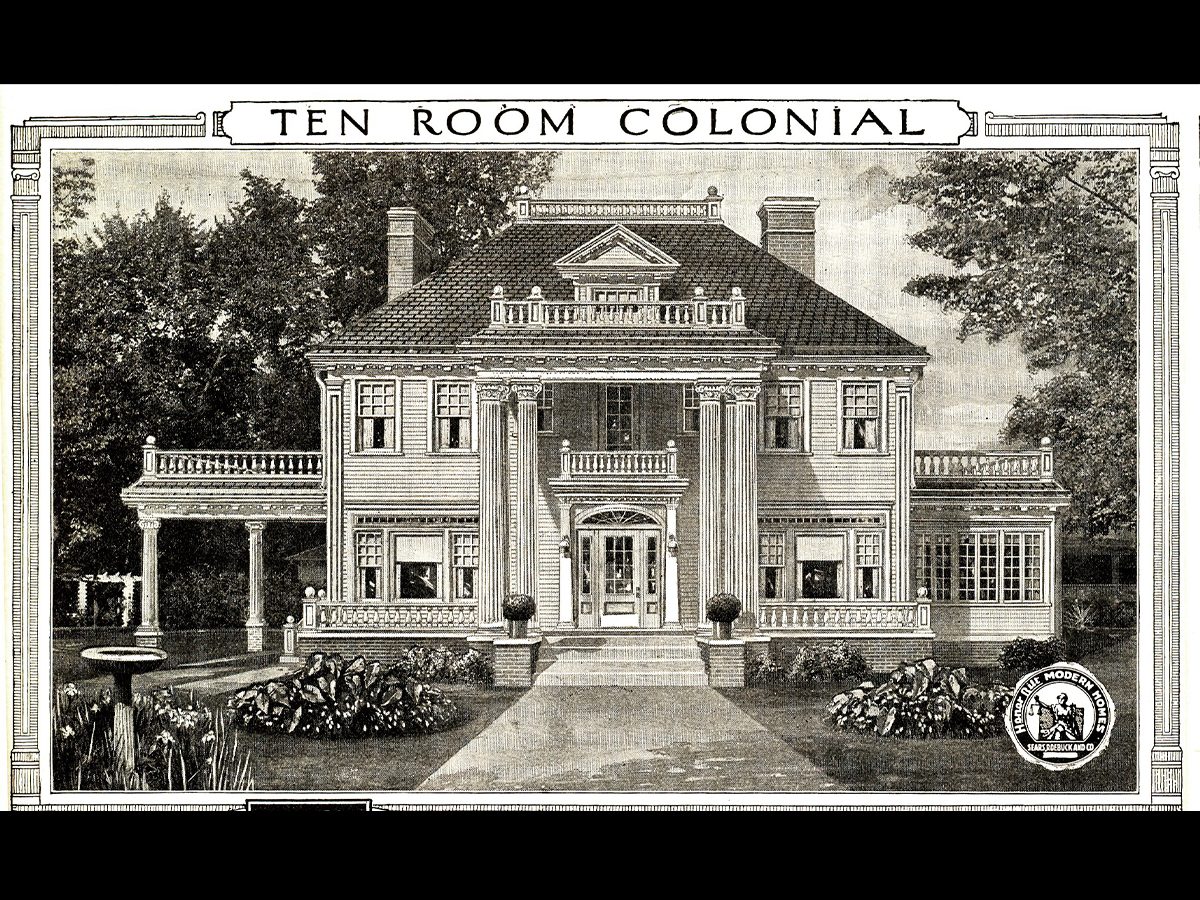
Not so long ago, flipping through a Sears Catalog was the modern version of home shopping. Even back then, someone could pick out a house and order the materials to build it. The supplies would arrive by train, along with instructions for putting it all together. Customers could choose anything from a modest bungalow to a spacious family home, and many of those houses are still standing today. While some have changed considerably over the years, they may contain clues to their origins. One is a series of letters and numbers stamped on pieces of wood that have been holding the house together for decades. Sears Catalog Modern Home No. 145. Photo Credit: Sears, Roebuck & Co./ Wikimedia Commons When Americans ordered their homes from Sears In 1908, according to the Sears Archives, Sears, Roebuck and Co. published its first catalog dedicated to houses. The Book of Modern Homes and Building Plans featured 22 designs ranging in price from $650 to $2,500. Customers could browse illustrations of the houses and examine their floor plans before deciding which one to purchase. Sears eventually began offering mortgages, too. “The Hazelton” model No. C2025 from the Sears catalog, 1916. Photo Credit: Sears, Roebuck & Co./ Wikimedia Commons Ordering the house didn’t mean that a fully assembled building would arrive at the individual’s property. The company shipped building materials that the buyer or a hired builder would then use to construct the home. According to the Federal Reserve Bank of Richmond, the materials arrived by rail at a nearby depot, leaving customers responsible for arranging transportation to the building site. This helps explain why many kit homes can be found within a mile or two of a railroad station. Sears began offering precut lumber in 1915. Instead of preparing the lumber on-site, builders received pieces already measured, cut, and marked to match the building plans. Intended to make construction easier, the markings have since become valuable to people researching the history of their homes. “The Natoma” model No. C2034 appearing in the 1916 Sears Roebuck Catalog. Photo Credit: Sears, Roebuck & Co./ Wikimedia Commons Rosemary Thornton, an author who has written several books about Sears houses, recommends looking for stamped lumber in the attic or basement. The markings generally consist of a letter and a number. They are often less than an inch tall and appear near the edge of a board. The photo below, taken by Thornton, shows an example of stamped lumber. The markings correspond to numbered pieces in the construction manual, helping builders identify the materials they needed as they assembled the house. A photo of stamped lumber found in a Sears catalog house. Photo Credit: Rosemary Thornton/ Wikimedia Commons A homeowner might also discover an old shipping label on the back of a baseboard or piece of window trim. Much like the numbers, some of these labels can help establish where the materials originated. Even bathroom fixtures can offer a clue. Thornton points out that Sears homes built during the 1930s often have a small, circled “SR” cast into the lower corner of the bathtub. Similar markings can sometimes be found underneath kitchen and bathroom sinks. A comparison of a Sears kit home “Barrington Model” and an insert from the Sears Catalog. Photo Credit: RkosinCL/ Wikimedia Commons How researchers identify Sears homes today Finding a number stamped on a beam doesn’t necessarily mean a house came from a Sears catalog. Sears also sold building materials separately, and other companies sold kit homes. The Sears Archives recommends first establishing when a house was built and then looking through catalogs published around that time. Homeowners can compare the placement of windows, the shape of the roof, and the arrangement of rooms with the original catalog illustrations and floor plans. A 2020 photo of a Sears catalog house in the Academy Hill Historic District of Greensburg, Pennsylvania. Photo Credit: Andre Carrotflower/ Wikimedia Commons Historical documents can also help authenticate a Sears home. Since the company offered mortgages between 1911 and 1933, local property records may contain evidence of the original purchase. Building permits and an original bill of sale can also provide valuable information. Houses that closely resemble those in the catalogs can still be difficult to identify. Owners may have added rooms, moved walls, or replaced original features over the years. Many of these homes are still standing, and some people living in them may not even realize they were ordered from a catalog.
A Sears customer could order a house by mail. In some attics, the lumber still has its address.
Full Article
Original Source
Read the full article at Upworthy →KhanList aggregates and links to publicly available news content. We do not host full articles from third-party sources. Always verify important information with original sources.