
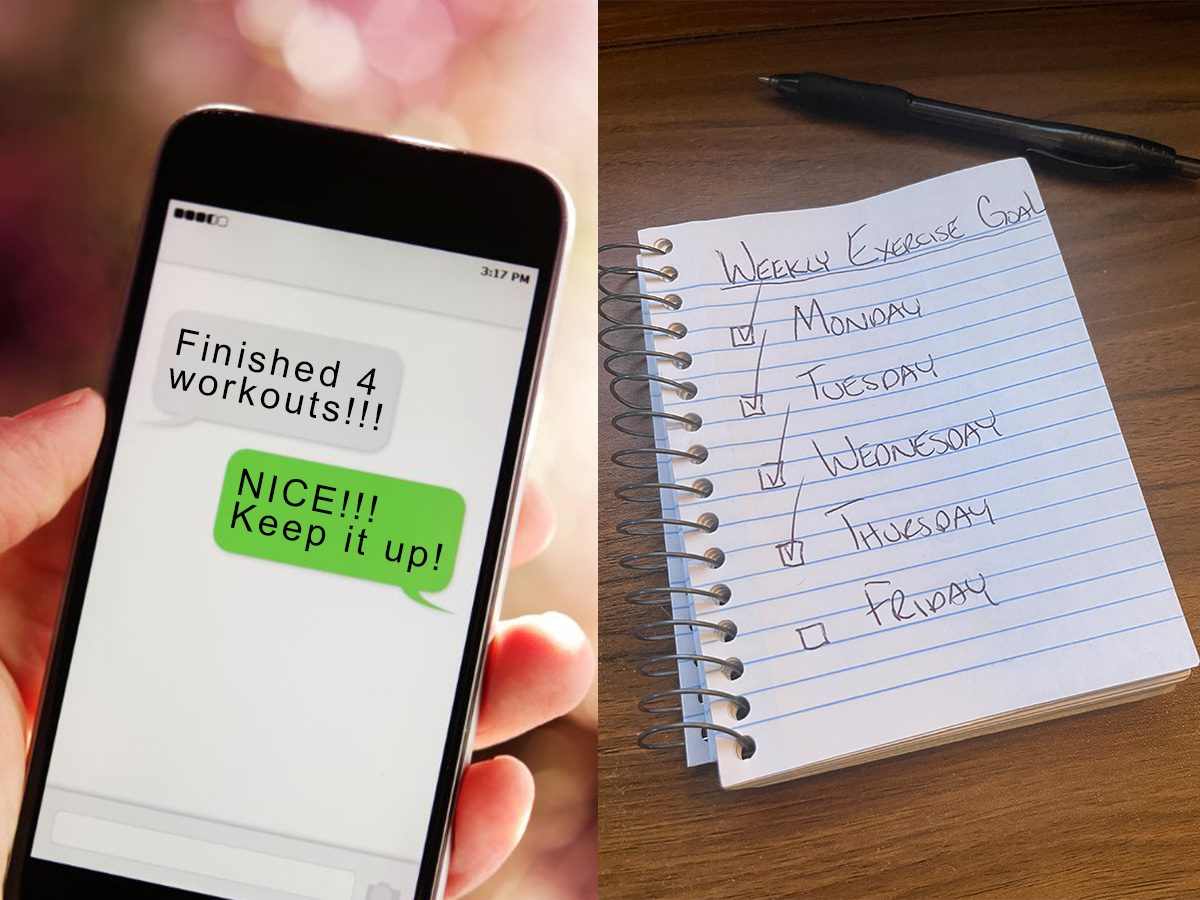
Setting a goal might be easy. Following through can be much harder. A 2016 review published in the Psychological Bulletin examined 138 studies involving nearly 20,000 participants and identified two practices that could help people reach their goals. The first was keeping a record of progress instead of just trying to remember how things were going. The second was sharing the results with someone else. Neither requires an elaborate system or complicated plan. A man takes selfies to track his fitness goals. Photo Credit: Canva What did the researchers discover? The review covered a wide range of goals, from improving health to changing habits. In the studies, some people were encouraged to track their progress, while others weren’t. Researchers wanted to see if that made a difference. It did. People who were prompted to monitor their progress tended to do so more often. That increase in tracking could explain why they were more successful at reaching their goals. A 2025 study published in Computers & Education offered a more recent example. Over five weeks, researchers followed 84 college students. Those who received help monitoring their progress reported greater success in reaching their goals than students who were only asked to reflect on their efforts. The study didn’t find improved academic performance, however. Smiling friends talk in the park. Photo Credit: Canva Two simple practices made a difference Not every approach to tracking progress produced the same results. One thing that stood out was writing things down. Studies where people kept a physical record of their progress showed larger improvements. That could mean keeping a written log, marking completed activities on a calendar, or finding another way to document what they’d done. The second finding involved sharing progress with someone else. Studies in which participants reported their outcomes or made them public also tended to show better results. That didn’t mean everyone had to announce their goals to the world, though. These findings came from comparisons across studies, so the researchers couldn’t say for certain that combining both practices would work better for everyone. Writing goals on a calendar. Photo Credit: Canva Putting these findings into practice Someone trying to exercise more might keep a weekly log of completed workouts. A person learning an instrument could jot down the number of practice sessions. Someone interested in art could mark the days they spent painting or sculpting. The idea isn’t to write down a goal and then forget about it. It’s to keep a record of what happens afterward. Writing “exercise three times a week” is a plan. Checking off each completed workout shows how much of that plan actually happened. Sharing those updates doesn’t have to be complicated either. A quick message to a friend, family member, or accountability partner once a week could be enough to let someone else know how things are going. These are everyday examples inspired by the research, not specific routines the researchers tested. If you struggle to stick with a new habit, tracking your efforts and sharing occasional updates with someone else may help. Even a few checkmarks on a calendar and a little accountability might make it easier to follow through.
A review of 138 studies found goal tracking worked better with two simple details
Full Article
Original Source
Read the full article at Upworthy →KhanList aggregates and links to publicly available news content. We do not host full articles from third-party sources. Always verify important information with original sources.